

There’s something almost comical about gardening in New England. One week you’re watching snow fall on your raised beds, and the next you’re out there in a t-shirt, wondering where the last three months went. That’s April here, and honestly, I wouldn’t trade it for anything.
If you’re in Zone 6a like I am (hello, NH Seacoast neighbors!), April is the month when the garden goes from “please don’t look at this” to genuinely exciting…fast. The soil is workable, the seed packets are calling, and there’s actual stuff to do out there. But there’s also a fair amount of cleanup standing between you and all that spring excitement, especially if you’re anything like me and your fall garden put-away was… let’s call it relaxed.
No judgment here. I’m a devoted spring and summer gardener who loses all enthusiasm for being outdoors the moment the temperature drops. The garden gets a little or a lot left behind come November. But it turns out April is very forgiving, and a few good hours outside can turn even the most neglected beds around.
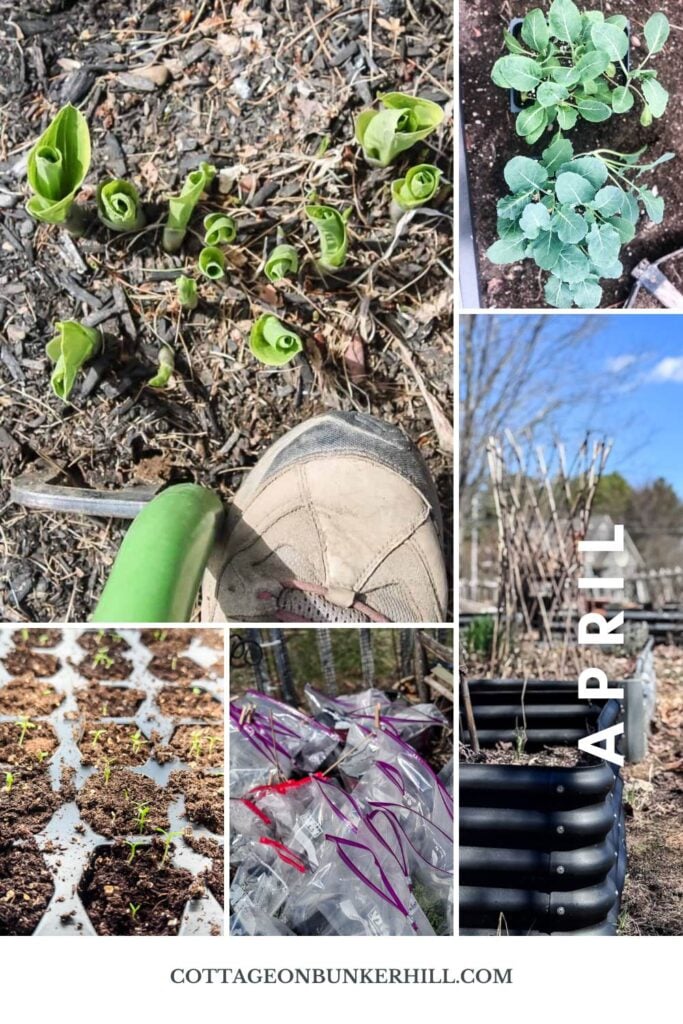
Here’s exactly what I’m working through this month, and what you should be doing in your Zone 6a garden too.

Welcome! I’m Jennifer from Cottage on Bunker Hill. A home gardener for over 20 years, I’ve spent the last 5 specializing in our cut flower garden, learning through trial, error, and a lot of dirty knees what actually works. My focus is on growing flowers with a purpose, whether for a vase on the kitchen table or for lasting projects, using simple, repeatable methods that fit into a real, busy life.
This post may contain affiliate links, which means we receive a small commission if you purchase through our links. See our disclaimer page for more information.
Start Here: The Great April Cleanup
Before anything gets planted, the garden needs a reset. And if you’re a reluctant Fall gardener like me, that reset is going to involve a little more work than you’d like to admit.
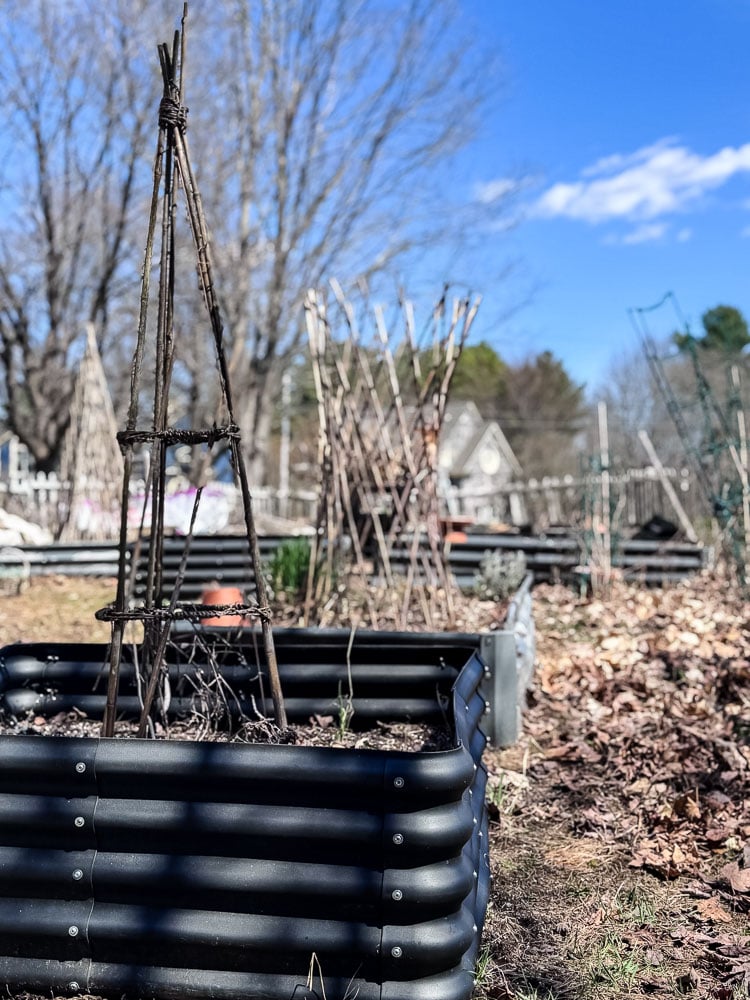
Here’s my situation every single April: my husband is a dedicated leaf raker. He works hard every Fall getting the yard cleared, and yet somehow, my fenced-in cutting garden and perennial beds are still absolutely buried in maple leaves come Spring. They blow in, they pile up, and I have made peace with it. Honestly? Leaving them works in my favor. A thick layer of leaves over your perennial beds acts as natural insulation through the winter, protecting the crowns of your plants from the worst of the cold. I leave them intentionally. That’s my story, and I’m sticking to it.
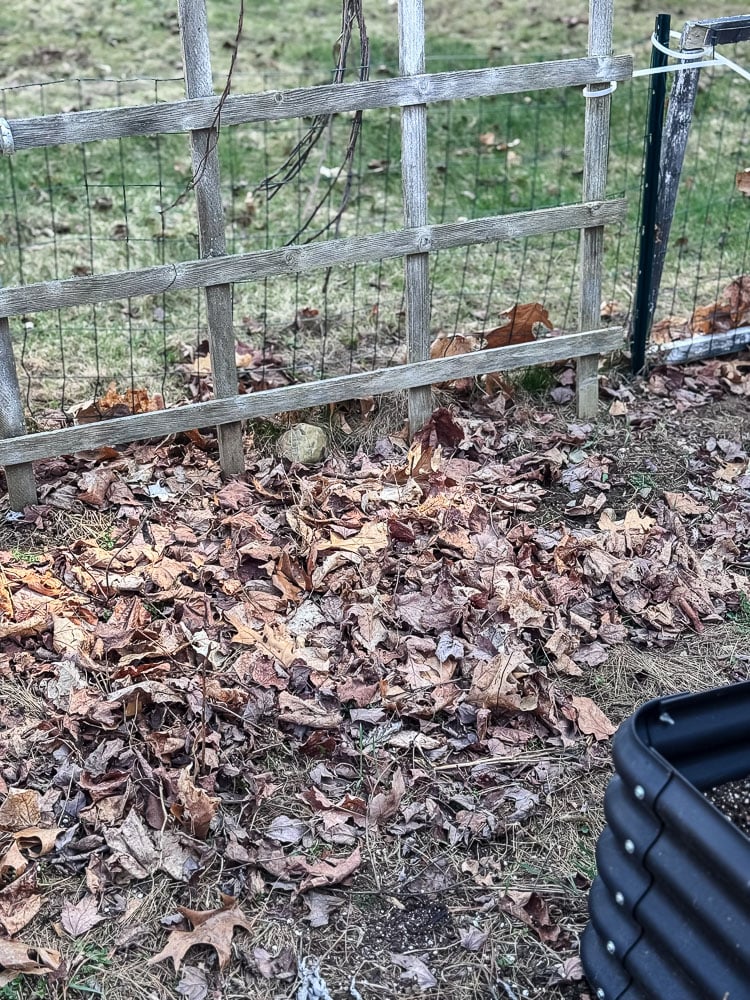
But by April, it’s time for them to go. Rake them out carefully, especially around perennials that are just starting to push up new growth. You’ll want to see what’s happening down there, and those tender new shoots need light and airflow.
The other thing you’ll find in my garden every April? Last season’s spent flower stems. I leave a good number of these on purpose. Dried seed heads are a genuinely valuable food source for birds over winter, and I love watching the goldfinches work through them in January. What I’m less proud of is the sheer quantity of stems I manage to leave out there. Let’s just say the birds are very well fed at my house!
So, spring cleanup at my place means tackling both the leaves and the leftover stems from basically the entire previous growing season. Pull the dead stems out at the base, clear the debris, and get a good look at your beds. You might be pleasantly surprised at what’s already coming up underneath all that mess.
Get Your Raised Beds Ready
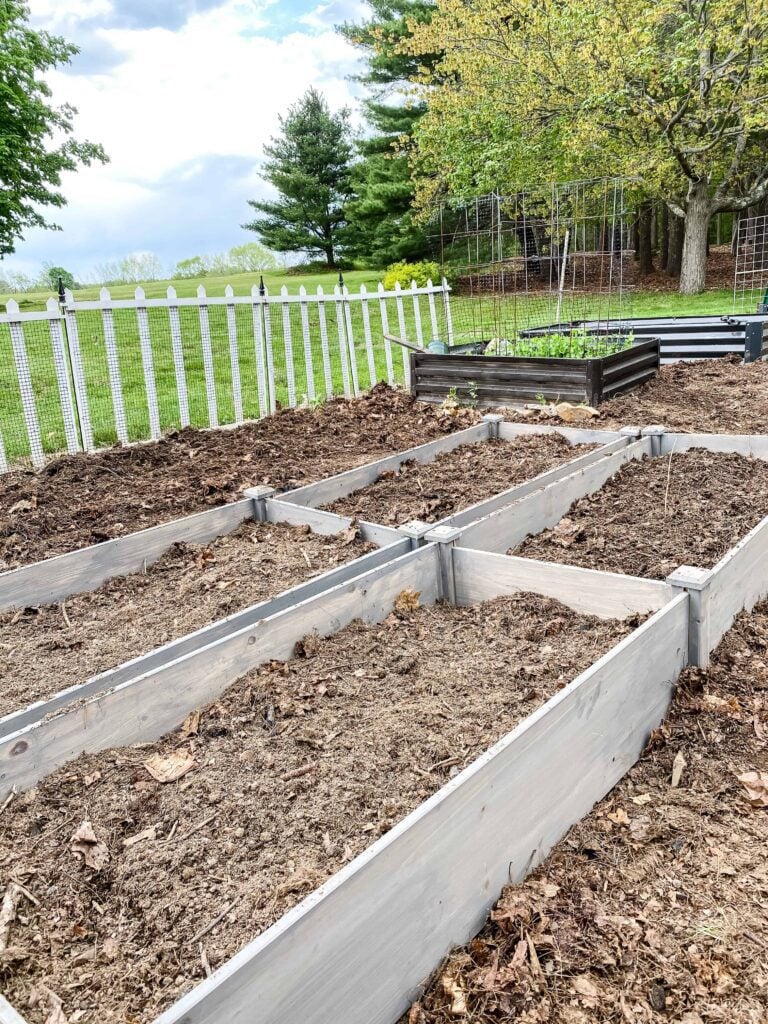
Once the cleanup is done, it’s time to turn your attention to your raised beds. And there’s one thing every raised bed gardener needs to do every single spring without fail: top them off.
If you have raised beds, you’ve probably noticed that by the time April rolls around, the soil level has dropped noticeably from where it was last fall. This is completely normal. Over winter, soil compacts under the weight of snow and rain, and organic matter breaks down and settles. My beds are open on the bottom, which means they’re constantly working with the native soil beneath, which I love, but it also means that annual topping off is just part of the routine.
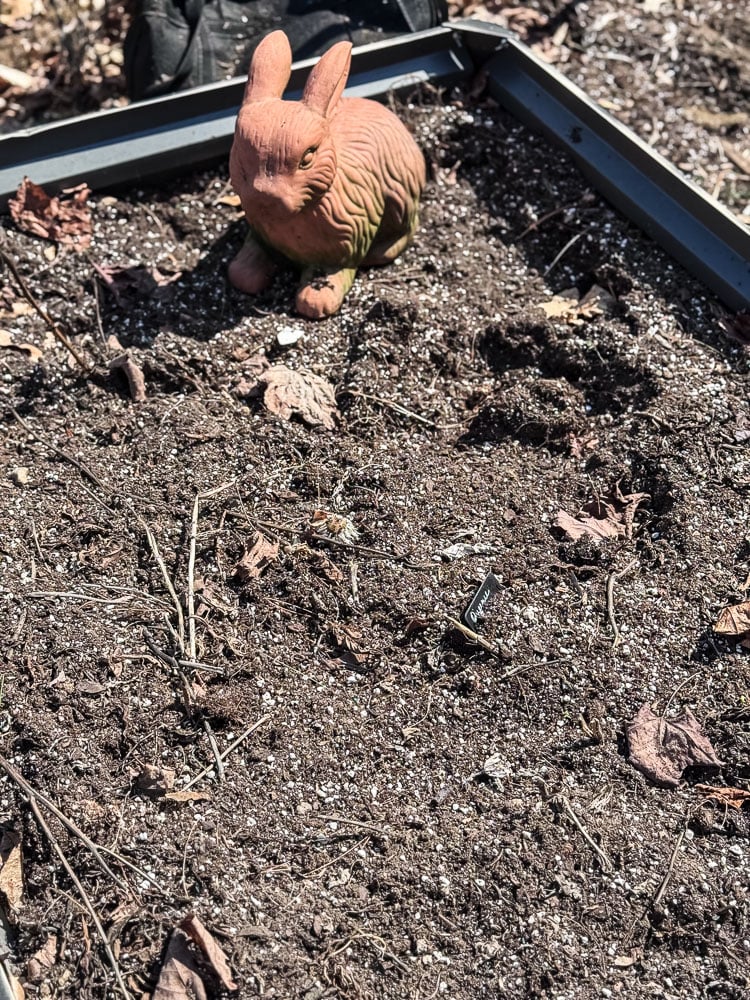
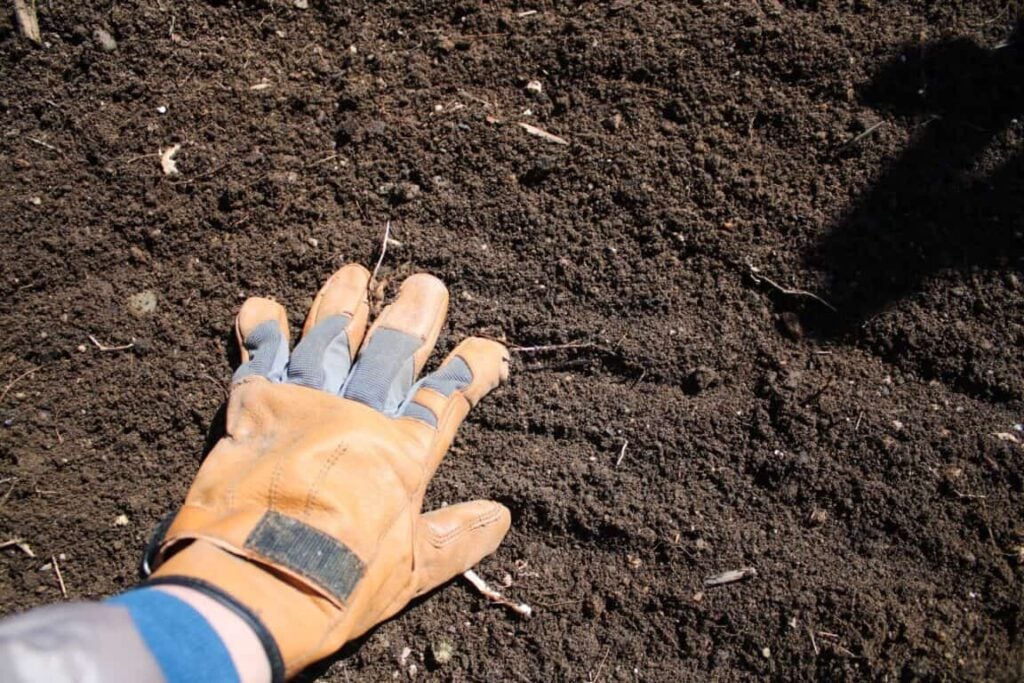
Before you plant a single thing, add a few inches of fresh compost, a quality garden soil mix, or a combination of both. Work it in lightly with a fork or your hands, level it out, and you’ll immediately notice your beds looking refreshed and ready to go. It takes maybe twenty minutes per bed and makes an enormous difference both for your plants and, honestly, for your motivation. There is something about a freshly topped raised bed that just makes you want to get things growing.

This is also a good moment to check your bed structure itself. Look for any boards that shifted or warped over winter, make sure everything is still level, and do any minor repairs before the season gets away from you.
Winter Sowing: Your April Payoff
If you’ve never tried winter sowing, let me just say, April is the month that will make you a believer!
For those unfamiliar, winter sowing is exactly what it sounds like: you sow seeds in recycled plastic containers (I use bags) sometime over the winter, leave them outside to do their thing, and let nature handle the germination process on its own timeline. No grow lights, no heated seed mats, no babysitting. It is honestly one of the most budget-smart, low-effort things you can do as a gardener, and the results are remarkably good.
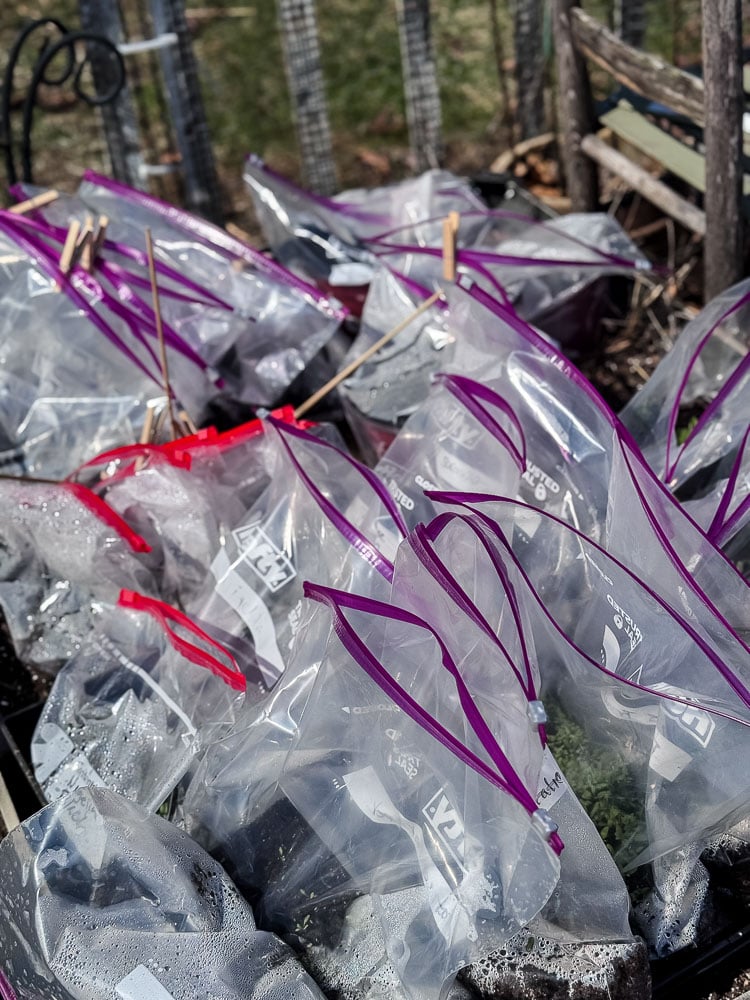
This year, I started over 20 varieties in my winter sowing bags: stock, statice, poppies, baby’s breath, violas, nigella, sweet sultan, Queen Anne’s lace, and so many more. And by April, most of them are absolutely thriving. Little green seedlings are packed in my bags, just waiting to get into the ground. The only ones that have been slow to the party are my snapdragons, which is apparently just a snapdragon thing. They’ll get there.
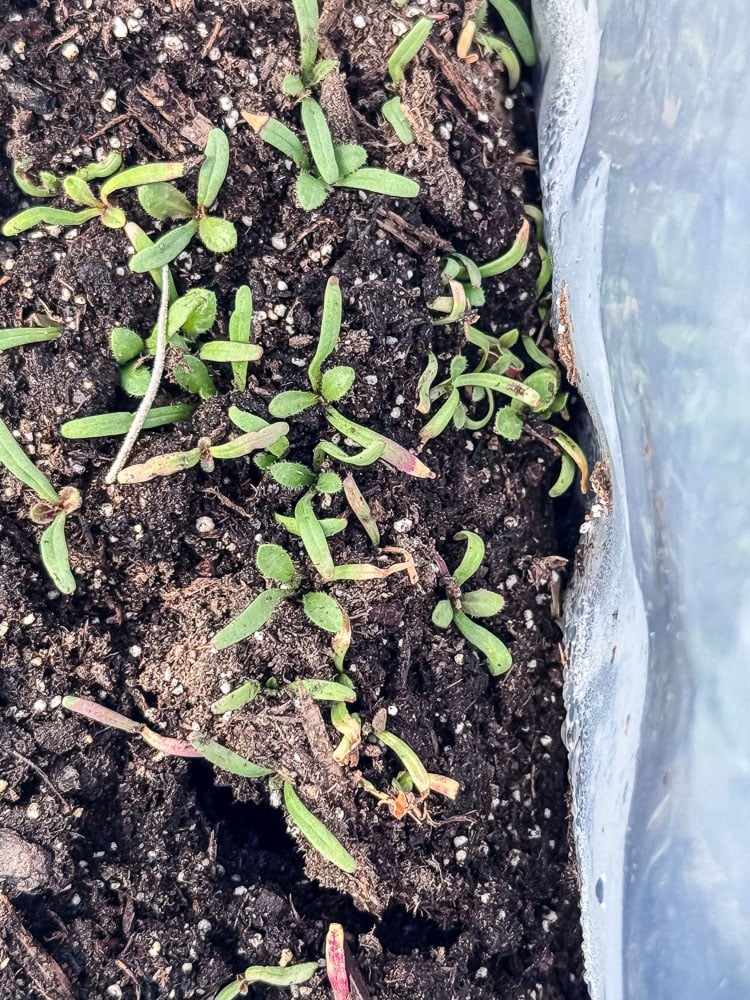
Once your raised beds are prepped and topped off with fresh compost, you can start transplanting your winter-sown seedlings out into the garden. If you have started yours in a sheltered spot, I would move the seedlings to your garden to adjust to wind and fluctuating temperatures before they go in the ground permanently for a couple of days. Zone 6a springs can still throw a cold night at you well into May, so keep an eye on the forecast and be ready to cover tender seedlings if needed.
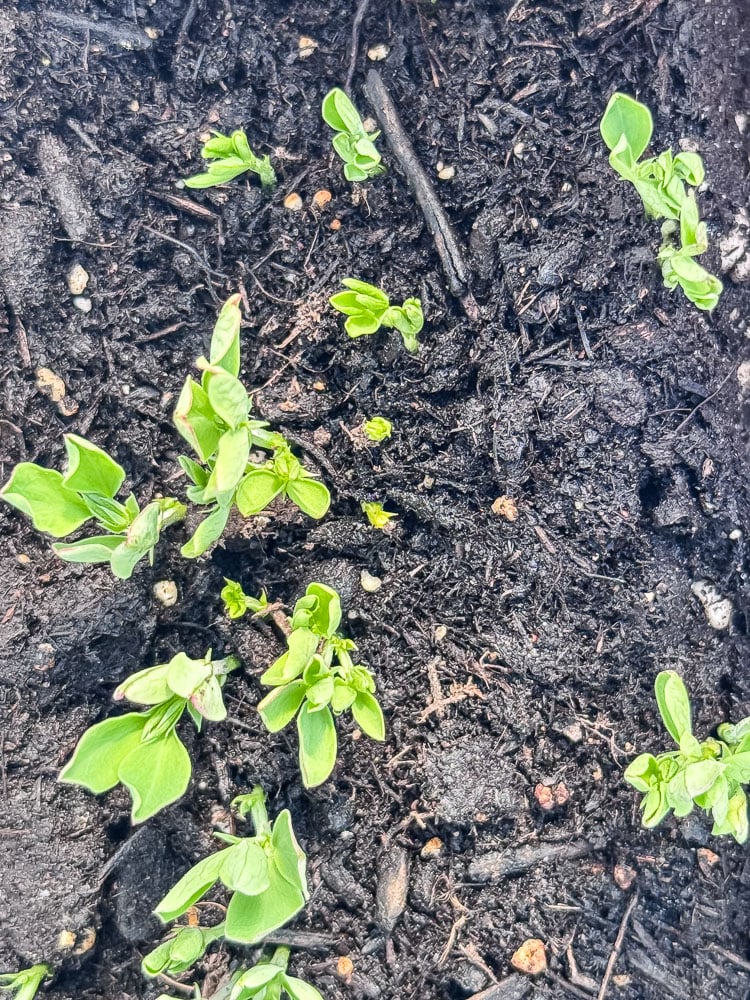
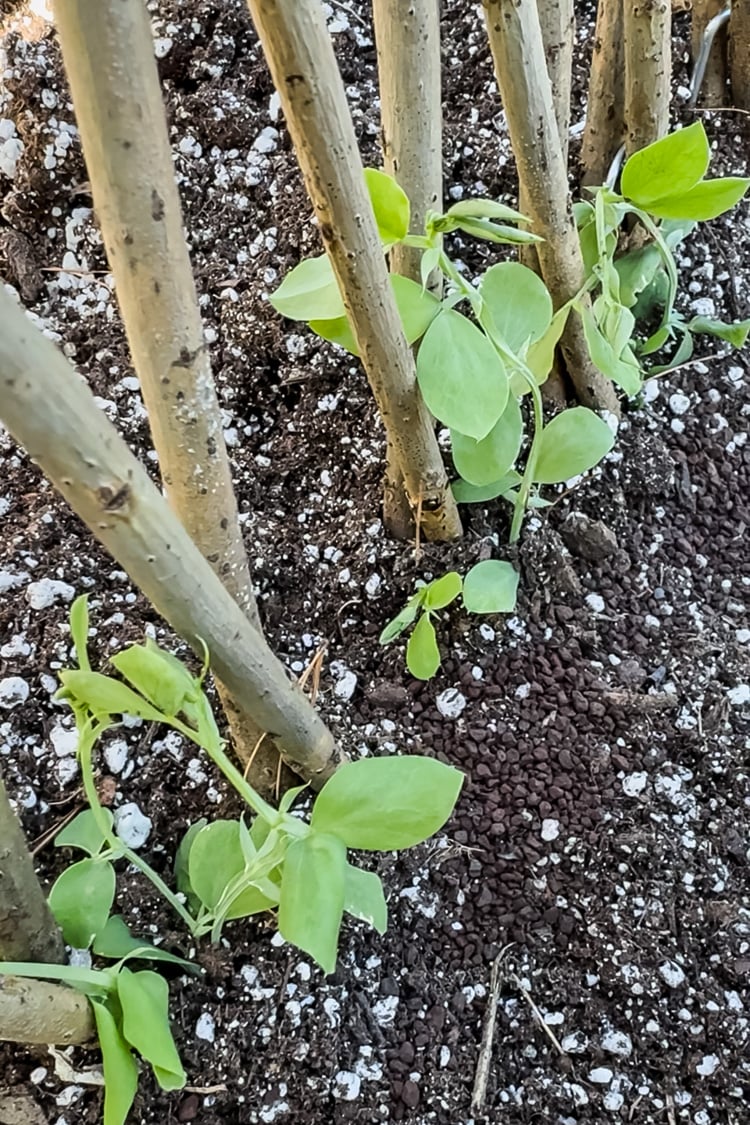
Your sweet peas are a priority here. Get those transplants in the ground as soon as your beds are ready. Sweet peas love cool weather and will actually struggle if you wait too long and let things warm up. They want to establish now, while the temperatures are still on the cooler side.
Just Plant the Peas. Seriously
If there is one thing I want every gardener reading this to do this April, it’s plant sugar snap peas and snow peas. I know that sounds dramatic, but I mean it. They are one of the simplest, most rewarding things you can grow, and if you’ve been putting it off because you’re not sure you’re ready, you’re ready. April is your moment (they can go in as soon as your soil is workable, but for me, this is usually April)

Sugar snaps and snow peas are direct sown right from seed, no starting indoors, no fussing. You just press the seeds directly into your prepared bed, water them in, and wait. They germinate quickly, they grow enthusiastically, and they will produce more than you expect. Plus, there is something deeply satisfying about eating something you grew yourself straight off the vine in your own backyard.

The one thing peas do need is something to climb. They’re natural scramblers, and they will reach for anything within range, so give them a trellis before they need it rather than after. I use a willow trellis in my garden, which I love. It looks beautiful, and it fits the cottage garden aesthetic perfectly. (I secure it with 6-inch garden staples at the base) Any simple trellis, netting, or even a few branches stuck in the ground will do the job, though. Don’t let the trellis question be the thing that stops you from planting.
Sow your seeds about half an inch to an inch deep, a few inches apart, and water well. That’s genuinely it. They’ll take things from there.
P.S. I will be completely honest with you, I eat most of mine standing right there at the trellis. Straight from the vine, still warm from the sun. This is not a problem. This is the whole point!
Indoor Seed Starting: Are You On Track?
April is a good time to pause and check in on your indoor seed starting situation, either to make sure you’re on track or to figure out if you still have time to get started.
For most warm-season flowers here in Zone 6a, the goal is to have seedlings ready to go outside after the last frost, which for us typically falls around the middle to end of May. Working backwards from that, most flowers need about six to eight weeks of indoor growing time before they’re ready to transplant. That puts your ideal seed starting window right around late March into early April. So if you haven’t started yet, don’t panic. You likely still have time for many varieties.
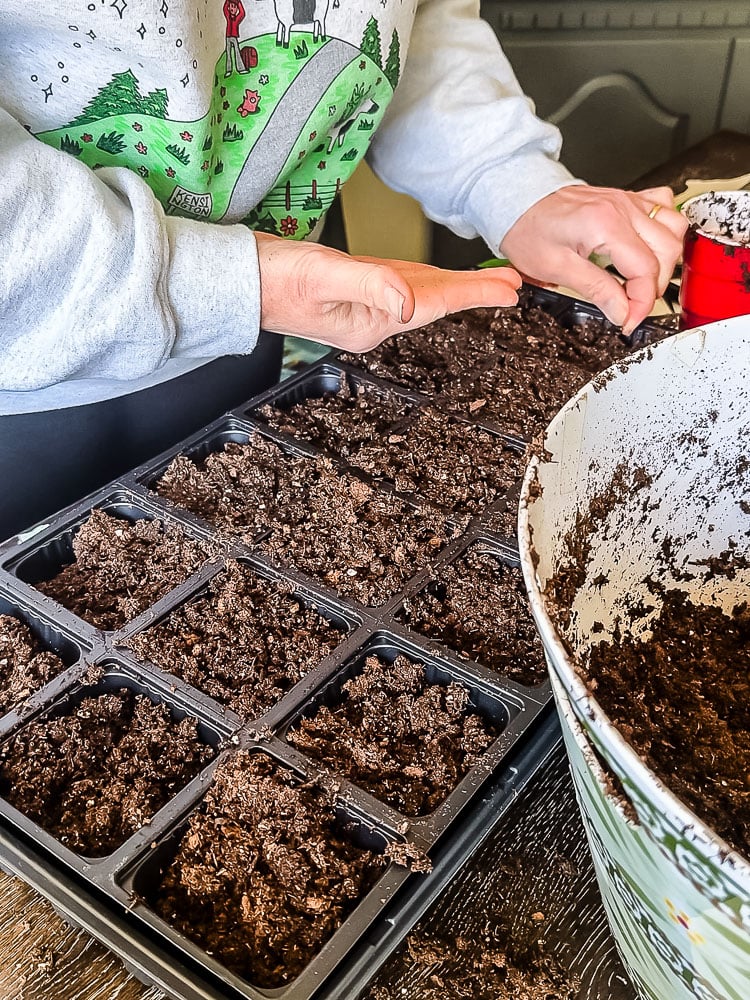
If you’re new to starting seeds indoors and aren’t sure where to begin, I have a whole post walking through the basics of seed starting that will get you sorted out. It covers everything from what supplies you actually need to how to avoid the most common beginner mistakes.
For my flower seeds, I started them last week, and they are growing happily under lights right now. I will wait until the end of May to plant outside, as they are tender flowers that would struggle if we get a late cold snap. May in New Hampshire will fool you if you’re not careful.
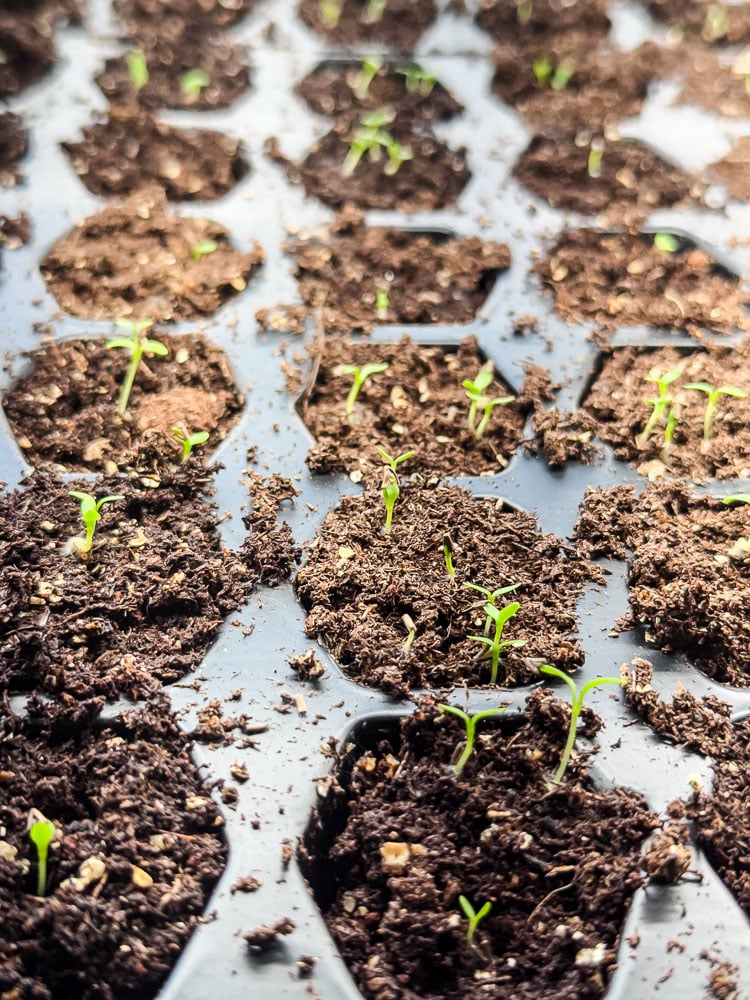
In the meantime, keep your seedlings under lights, make sure they’re not getting leggy, and start thinking about your hardening off plan for next month.
Cut Flower Garden Tasks for April
If you grow a cut flower garden, April is equal parts exciting and patience-testing. There is so much you want to do, and a fair amount you still have to wait to do! And knowing the difference is half the battle.
Here’s what I’m focused on in my cutting garden this month:
Get Your Cool-Season Hardy Annuals In The Ground
Once your beds are prepped, April is absolutely the right time to start getting your cold-tolerant flowers planted out. Sweet peas, we already talked about, but your winter-sown hardy annuals, things like nigella, larkspur, Queen Anne’s lace, and statice can handle the cool temperatures and light frosts we still see this time of year. Get those winter-sown transplants in the ground and let them start establishing while the weather is still on their side.
Direct Sow Where It Makes Sense
Some cut flowers actually prefer to be direct sown rather than transplanted, and many of them can go in the ground in April in Zone 6a. Larkspur, nigella, and calendula in particular like to be sown early and will reward you for it. Scratch up the soil surface, scatter your seeds, press them in lightly, and let the cool spring weather do the work.
Dahlias: Not Yet, But Start Planning
I know. You want to plant your dahlias. I want to plant my dahlias. But here in Zone 6a, dahlias go in the ground after your last frost date, for us, that means waiting until late May. Planting too early in cold soil just causes the tubers to sit there and sulk, and in the worst case, they can rot.
What you can do right now is get your tubers out and take a look at them. Check for any that didn’t survive storage: soft spots, rot, or anything that looks off. Discard anything questionable and inventory what you have. If you’re planning to order any additional tubers, do it now before the best varieties sell out.
Zinnias & Other Tender Annuals: Same Story
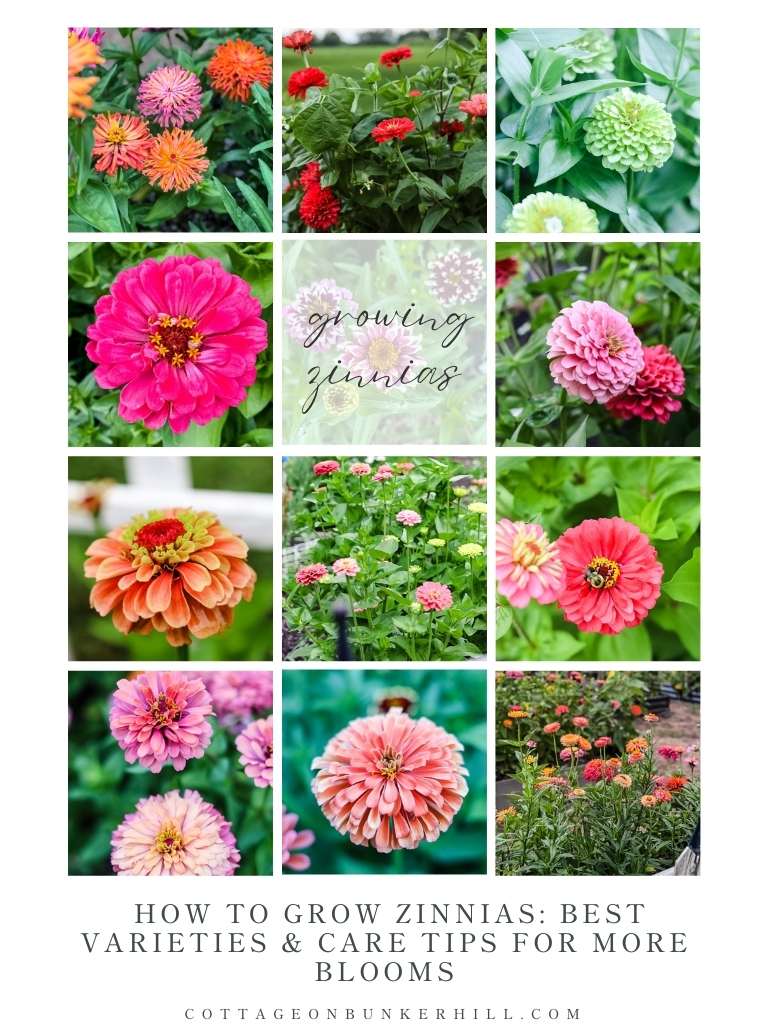
Zinnias, celosias, and other heat-loving annuals are still waiting in the wings. If you started them indoors, they should be growing well under lights right now. If you direct sow zinnias, wait until late May when the soil has warmed up. They germinate so quickly that there’s no advantage to rushing them into cold ground.
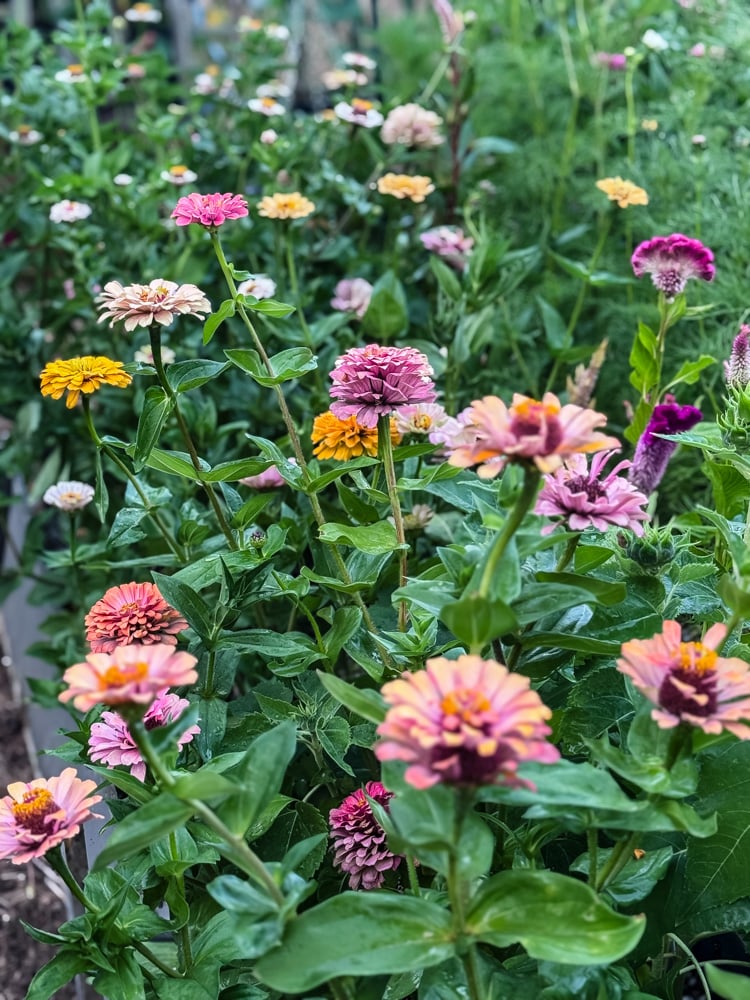
My zinnias are actually the LAST flower seeds that I plant! I am telling you that you should wait until the soil has warmed up, and so have the nights! They love warm temps and will grow quickly in the right conditions. They can go from seed to flower in a month with summer temps.
Don’t Forget the Vegetable Garden
My cutting garden gets most of the spotlight around here, but the back half of my garden is a happy mix of vegetables, herbs, and flowers all growing together and April is absolutely prime time to get those early cool-season crops in the ground.
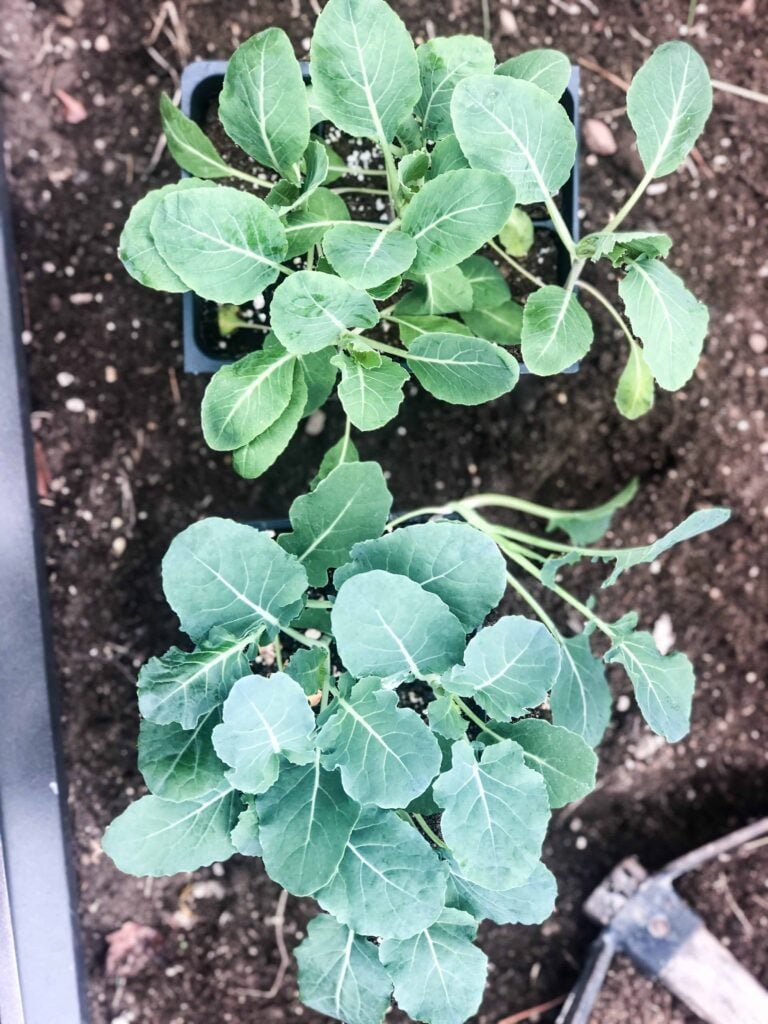
The vegetables that thrive right now are the ones that actually prefer cooler temperatures. Think broccoli transplants, lettuce, spinach, beets, radishes, and Swiss chard. I’ll be honest with you: I don’t even really like Swiss chard. But it is so beautiful in the garden that I grow it every single year anyway. No regrets.
Fresh broccoli and radishes are my personal favorites. There is nothing like going out to the garden and snapping off a head of broccoli that you grew yourself. Radishes are also one of the most satisfying things a new gardener can grow because they’re ready to harvest in just three to four weeks. Instant gratification, which we all need sometimes.
If you want the full rundown on what to plant now and exactly how to do it, I have a complete guide to early spring vegetables that walks you through everything, from bed prep, planting tips, and how to care for your cool-weather crops through the season. It’s all there!
A Few More April Garden To-Dos
While the cut flower garden gets a lot of my attention this time of year, there are a handful of other tasks worth working through in April that will set your whole garden up for a strong season.
Check in On Your Perennials
Once you’ve cleared away the leaves and debris, take a good, slow walk through your perennial beds and see what’s coming up. April in Zone 6a means a lot of your perennials are already pushing up new growth: hostas, salvia, iris, daisies, and catmint are usually among the first to show their faces. Make note of anything that didn’t come back, and start thinking about whether you want to fill those gaps with divisions from elsewhere in the garden or something new.

This is also a great time to divide perennials that have gotten too big or crowded. Many perennials actually benefit from being divided every few years, and early spring, when they’re just emerging but before they’ve put on a lot of growth, is one of the best times to do it. Dig, divide, replant, and water well.
Here are two plants I would encourage you to divide every 3 years (I love free plants!)
Feed Your Beds
Once your cleanup is done and your beds are topped off, give everything a boost with a balanced organic fertilizer or a layer of compost worked into the top few inches of soil. Your plants are waking up hungry, and they’ll thank you for it.
Tackle The Weeds Early
I know nobody wants to hear this, but April is genuinely the best time to get ahead of weeds. They’re small, the soil is moist, and they pull easily. The weeds you ignore in April are the ones that will be enormous and deeply established by June. A little time now saves a lot of frustration later.
Take A Look At Your Tools
Unglamorous but necessary. Sharpen your pruners, oil your tools, and replace anything that didn’t survive the winter. Starting the season with tools that actually work properly makes everything easier and more enjoyable.
Also, this is the time to stock up on supplies: think plant markers, twine, garden staples, garden clips, gloves, and planter pots.
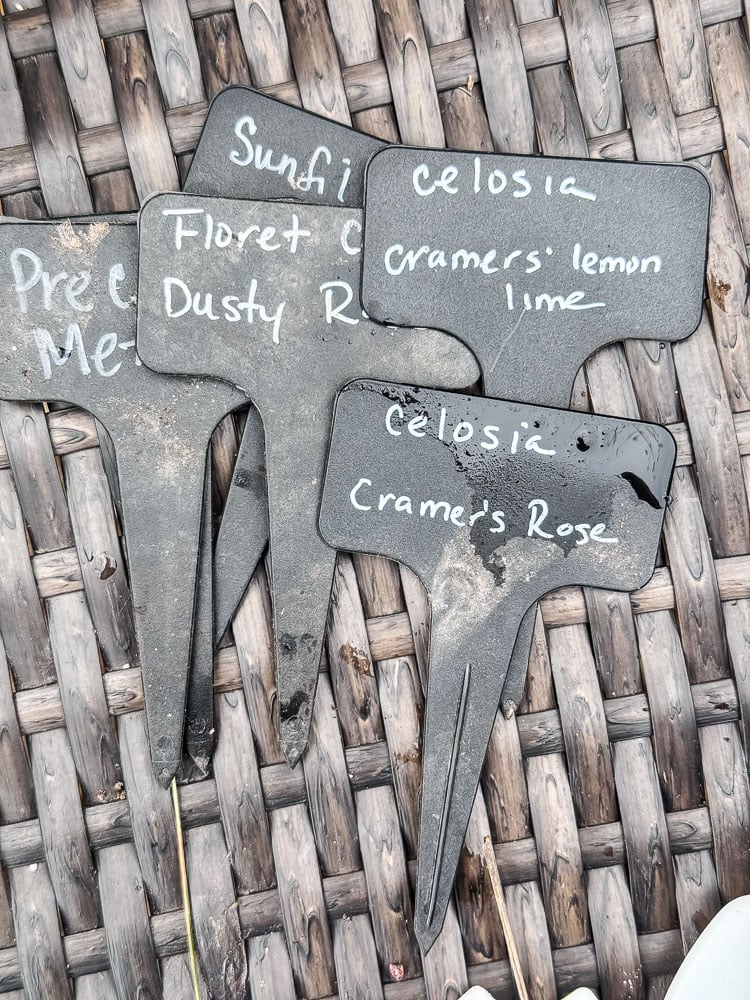
Those black plant markers in the photo? Still going strong after wintering outside. I left them out all season; they came through just fine, and I will absolutely be using them again this year. Buying new ones when the old ones work perfectly well is not something I’m capable of!!
Your Zone 6a April Garden Checklist
Cleanup & Bed Prep
Planting
Cut flower Garden
Indoor Seed Starting
General Garden Tasks
Get Out There!
April in a New England garden is chaotic and muddy and a little overwhelming and also completely wonderful. There is nothing quite like that first really good morning outside after a long winter, pulling leaves away from your perennial beds and finding green shoots underneath. It gets me every single time.
Don’t worry about doing everything perfectly or all at once. Work through your cleanup a little at a time, get your beds prepped, pop your peas in the ground, and enjoy the process. The garden doesn’t need to be Instagram-perfect in April. It just needs you to show up.
And if your garden looks a little rough right now because fall cleanup wasn’t exactly your priority… welcome to my world. We’re going to be just fine.
I’d love to know what’s at the top of your April garden to-do list this year. Drop it in the comments below!
xo, Jennifer
Cottage Garden
Favorite Products
Shop my gardening favorites! Raised beds, plant supports, & tools to make your garden grow.






My landscaping involves rocks, probably installed in the 80’s. It has sunk into the soil, making it hard to plant perennials. I have spent hours in one small bed alone and given up trying to plant in the two other beds. The perennials in those beds are tired, poor things. Can I just surround them with compost and use liquid fertilizer to revive them? You just cannot dig in those beds. i may have to resort to planting in pots and getting rid of those poor struggling perennials. Thanks!