Your month-by-month guide to the New England garden
If May is the busiest month in a New England garden, June is when you finally start to see the payoff. Everything you planted from the seedlings you nursed under grow lights, the flowers that I winter-sowed, the seeds you direct-sowed, is growing. Really growing!
The end of May and the beginning of June were a bit of a rollercoaster here. We had some chilly nights in the high 30s right around the time I was getting warm-weather plants in the ground, which meant a lot of watching the forecast and crossing my fingers. But we made it through, and the past couple of weeks, everything has really taken off. The veggie garden looks great, the cut flower half is filling in beautifully, and I have sweet peas blooming on their willow trellises right now. June is a good month.
Here’s a look at what’s been happening in the garden and what I’m focused on this month.

Welcome! I’m Jennifer from Cottage on Bunker Hill. A home gardener for over 20 years, I’ve spent the last 5 specializing in our cut flower garden, learning through trial, error, and a lot of dirty knees what actually works. My focus is on growing flowers with a purpose, whether for a vase on the kitchen table or for lasting projects, using simple, repeatable methods that fit into a real, busy life.
This post may contain affiliate links, which means we receive a small commission if you purchase through our links. See our disclaimer page for more information.
What’s Blooming Right Now
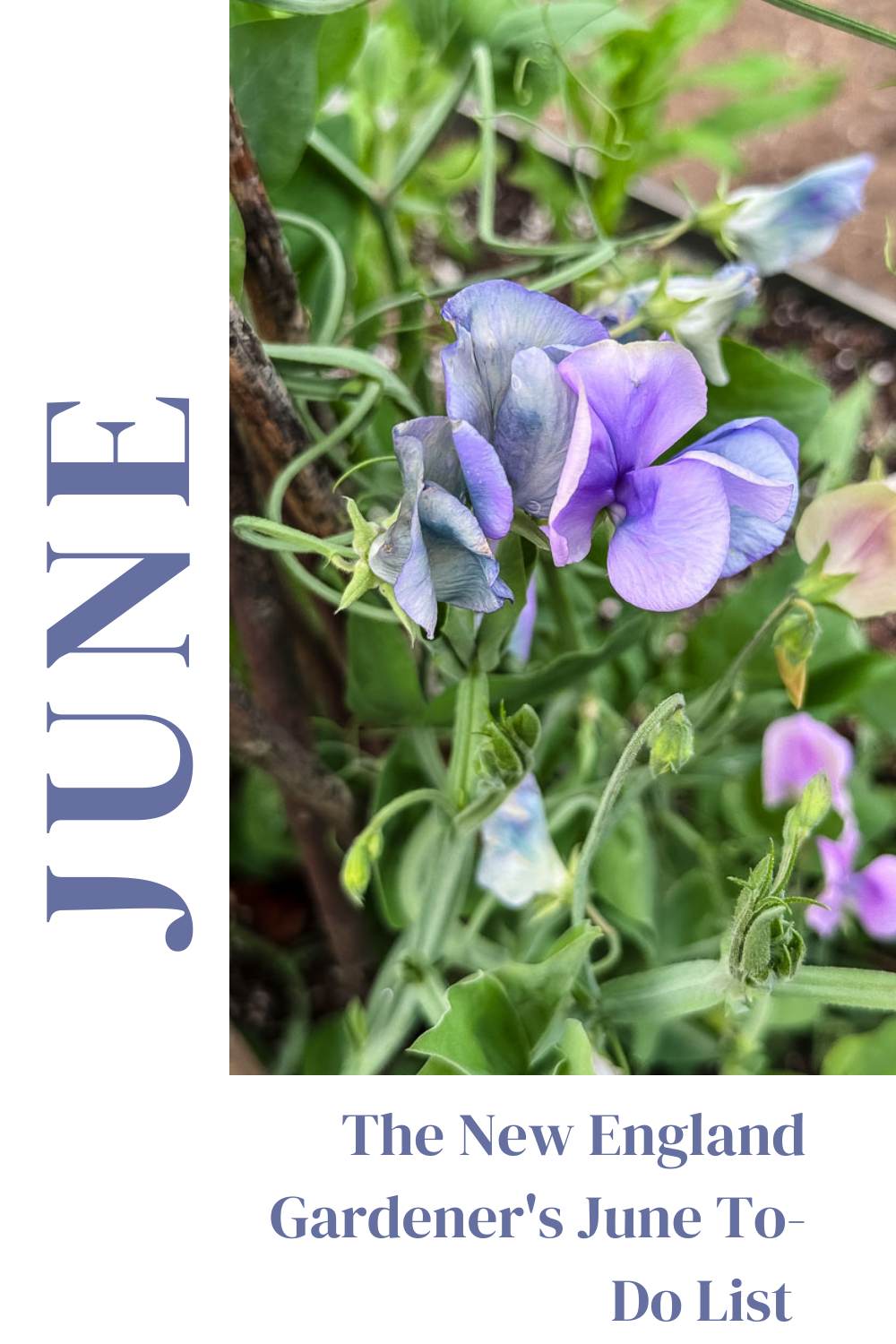
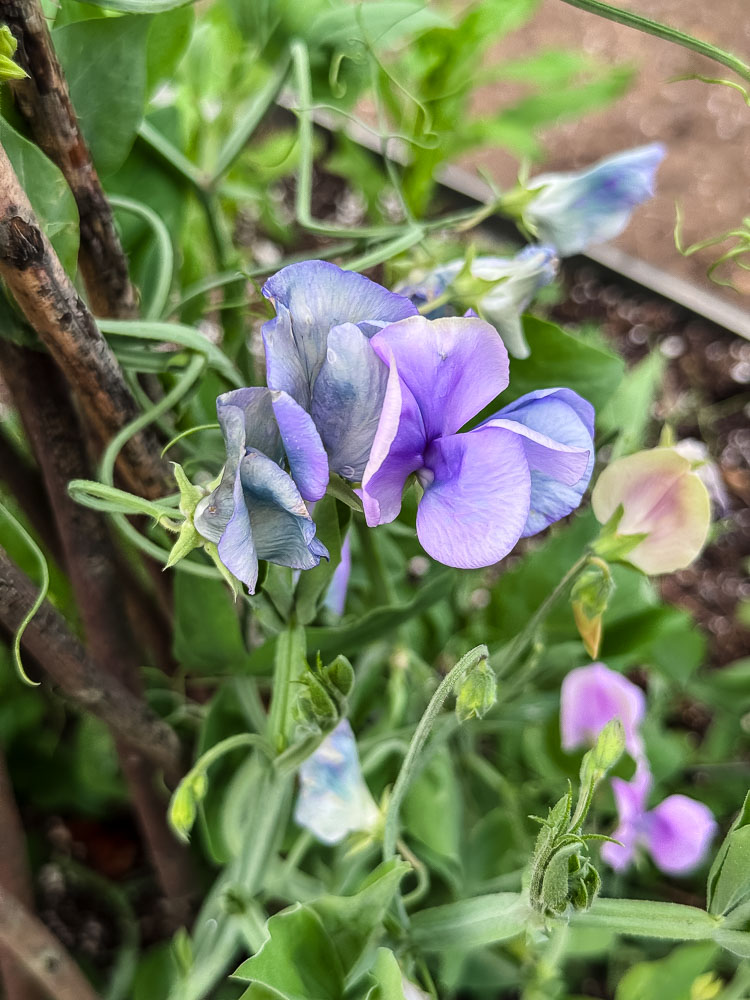
The cut flower garden is starting to take off. My winter-sown sweet peas are in full bloom on their willow trellises, and I honestly want to just stand out there and stare at them all day. This year I tried a new variety called Turquoise Lagoon, and it’s unlike anything I’ve grown before, deep denim blue when the bud is closed, and almost iridescent as it opens. I have sweet peas growing in multiple beds, and the fragrance is something else. Every time a breeze comes through while I’m working out there, the scent just rolls through the whole garden.
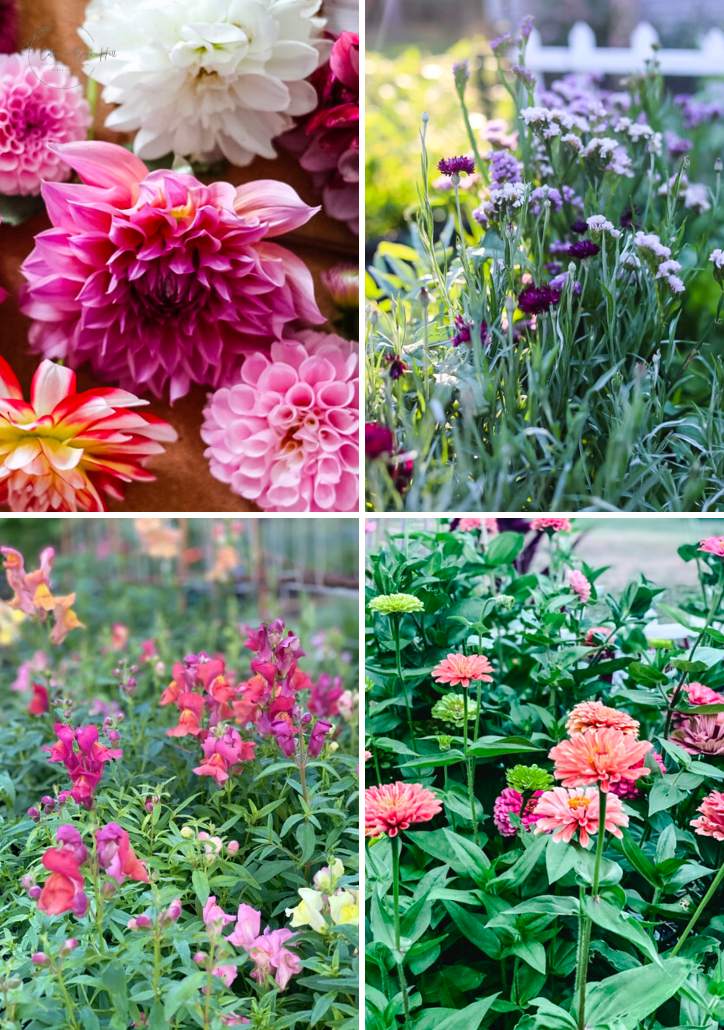
For the other early bloomers, many of the flowers that I had winter-sowed are in full bloom, including statice, sweet sultan, nigella, and baby’s breath, which means I’m already cutting and bringing bouquets inside.
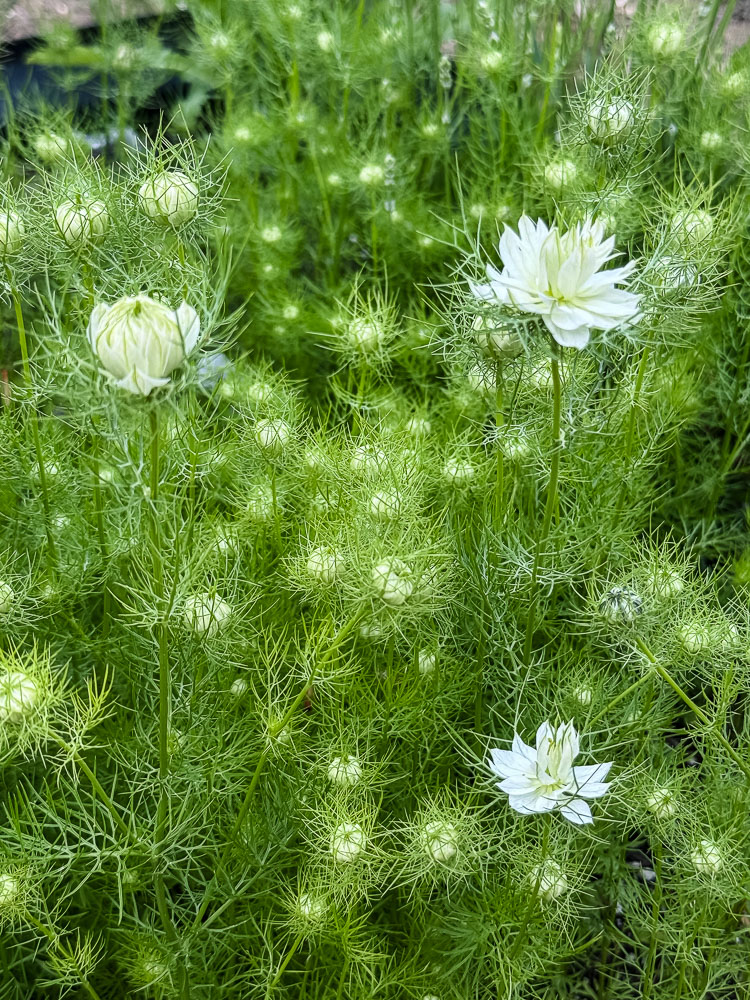
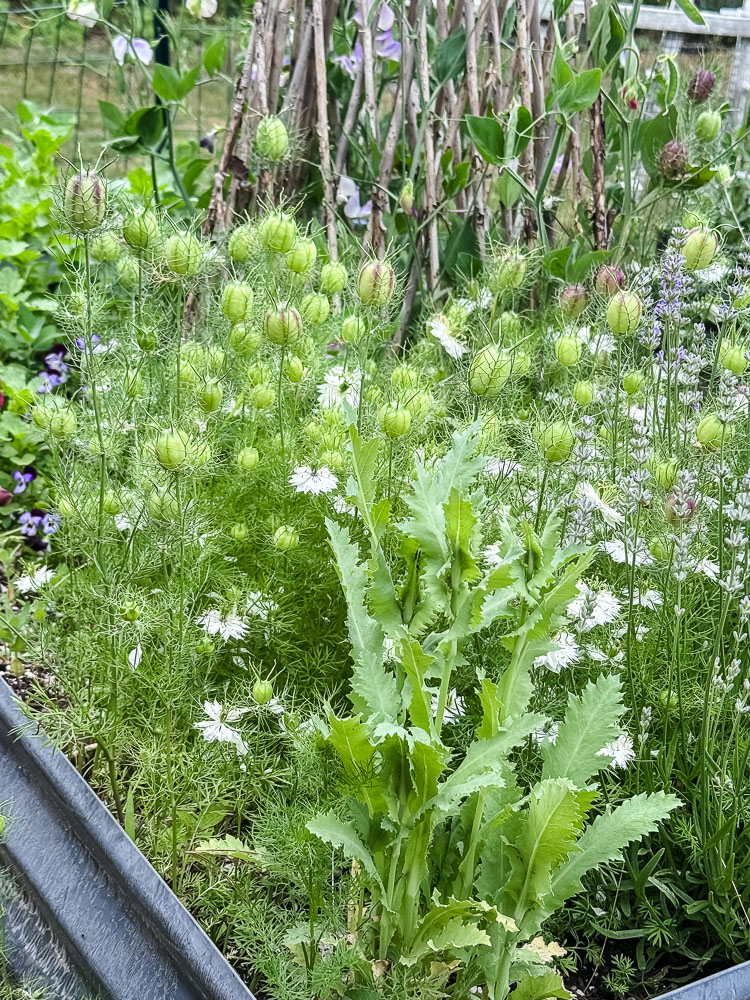
Nigella, or Love-in-a-Mist, is one of those flowers that took some patience to figure out. My first two attempts were complete failures, but the third year it finally flowered, and every plant you see in that spot now is self-seeded from that original success. I also winter-sowed a separate batch this year in a different part of the garden, so I have nigella coming in two places.
As pretty as the delicate white flowers are, I’ll be honest, I grow nigella mostly for what comes after. Once the flowers fade, they form the most incredible sculptural seed pods, and that’s really what I’m here for. The flowers have bloomed and are already going to pod this month, and I could not be more excited about it.
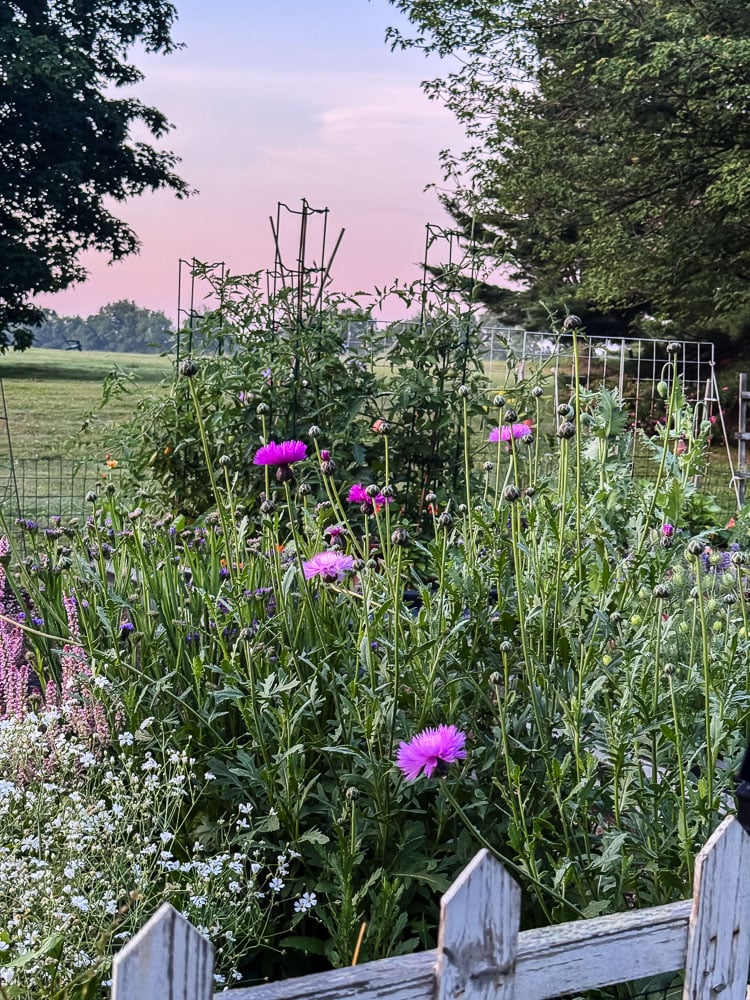
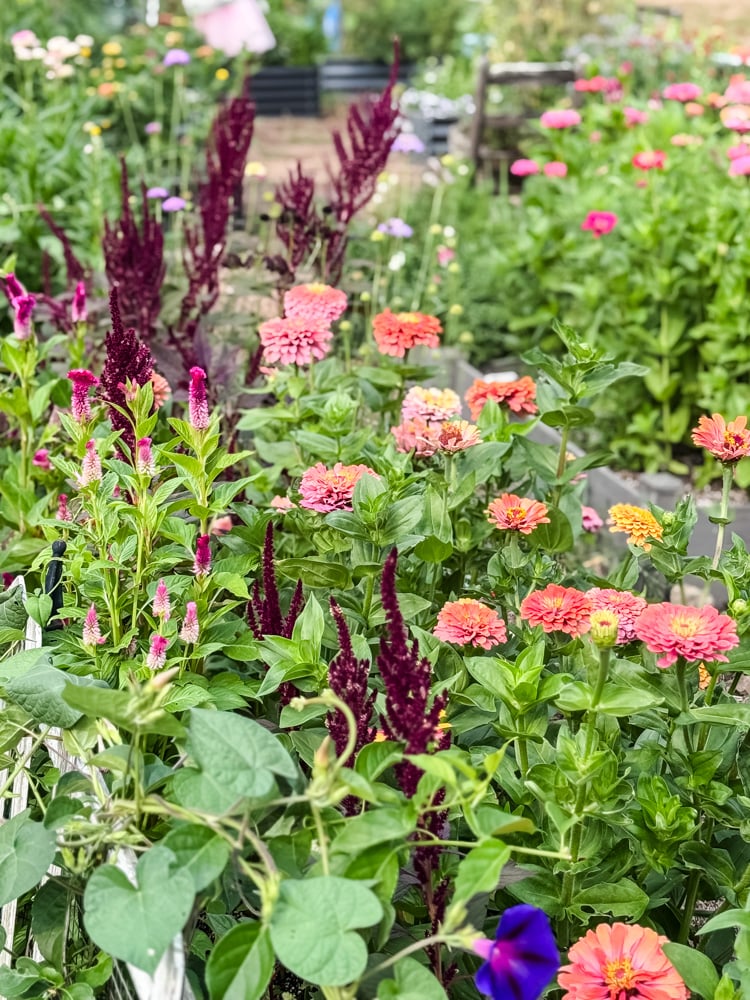
The rest of the cut flower beds are filling in at their own pace. The warm-weather annuals I planted out at the end of May, beginning of June, are getting established, and the zinnias I direct-sowed are up and growing. They won’t bloom for a few more weeks yet, but they’re on their way!
June garden checklist
Dahlias From Seed (Something New I’m Trying)
This year, I decided to take a break from dahlia tubers. The past 2 years have been a bit of a dahlia disaster! They started to bloom, but right around September, when they were finally hitting their stride, voles moved in and started eating the tubers. After all that work, it was so discouraging. So this year I decided to step back, skip the tuber investment, and try something different: growing dahlias from seed.
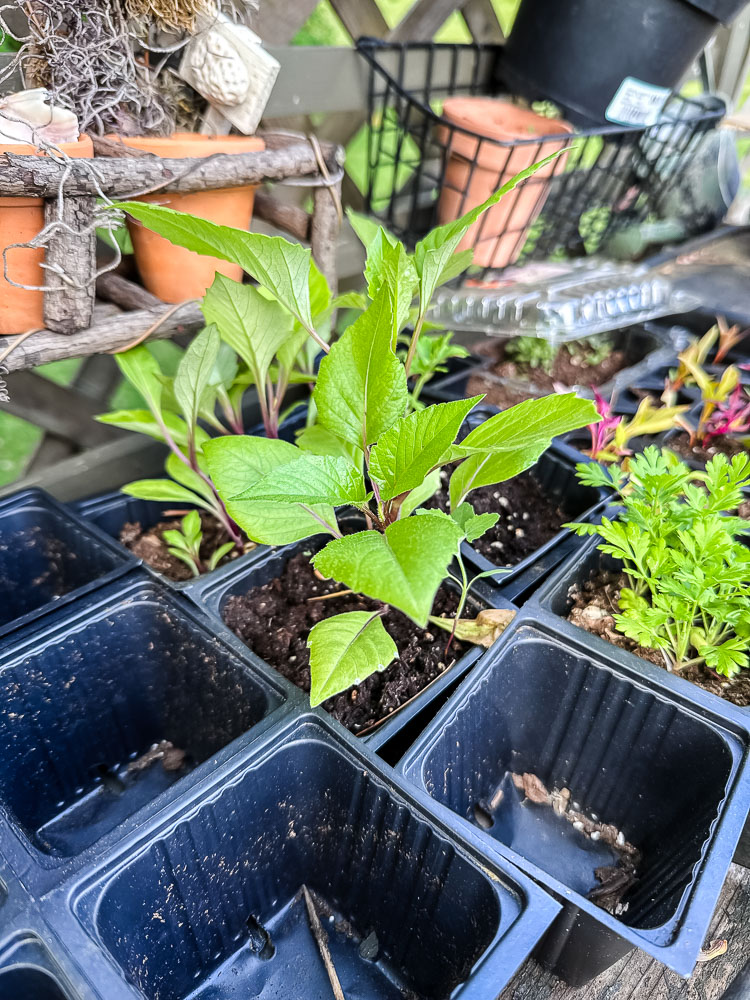
I picked up a pack of good dahlia seeds, started them indoors, and every single seed germinated. Every one! The seedlings grew up healthy and strong, and I’ve scattered them throughout the garden beds where they’re looking really great right now. Yes, dahlias from seed are less predictable than tubers. You don’t know exactly what colors or forms you’ll get, but at a few dollars for a full pack of seeds versus buying individual tubers, it felt like the right experiment for this year. I’m genuinely curious to see what blooms. I’ll report back!
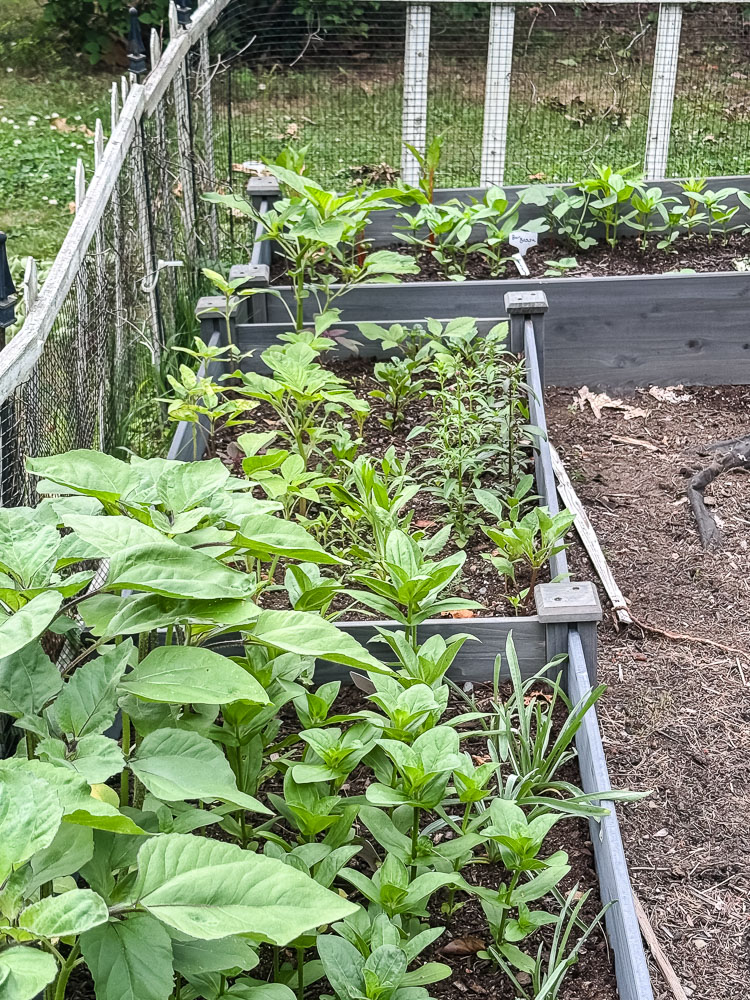
Pro Tip: Dahlia seeds are a budget-smart way to fill your cutting garden. One packet gives you dozens of plants. The trade-off is you won’t know what colors you’re getting until they bloom, which is honestly half the fun.


The Vegetable Garden
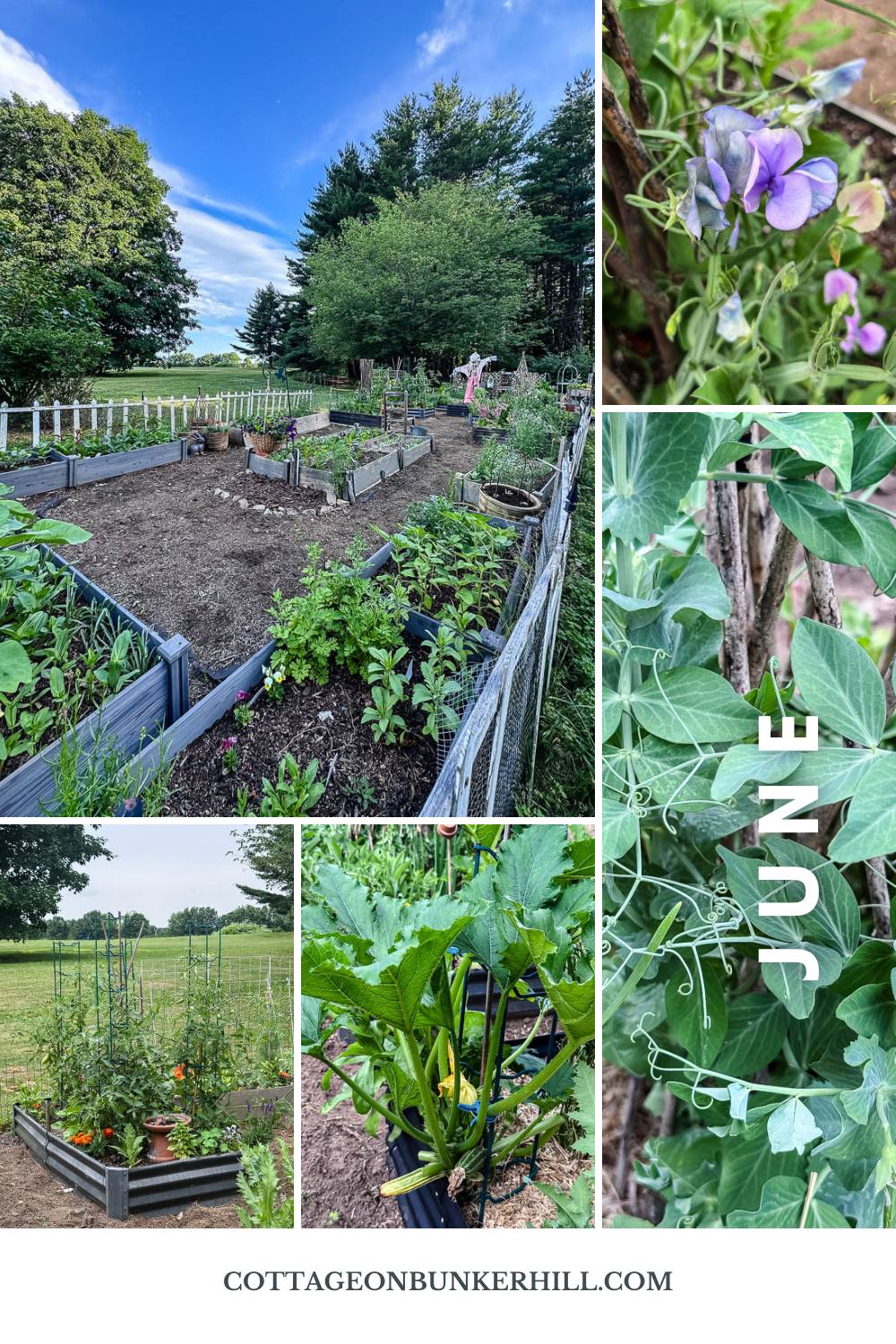
The veggie garden is looking really good right now. Everything is established and growing, which, after the chilly end of May, feels like a small miracle.
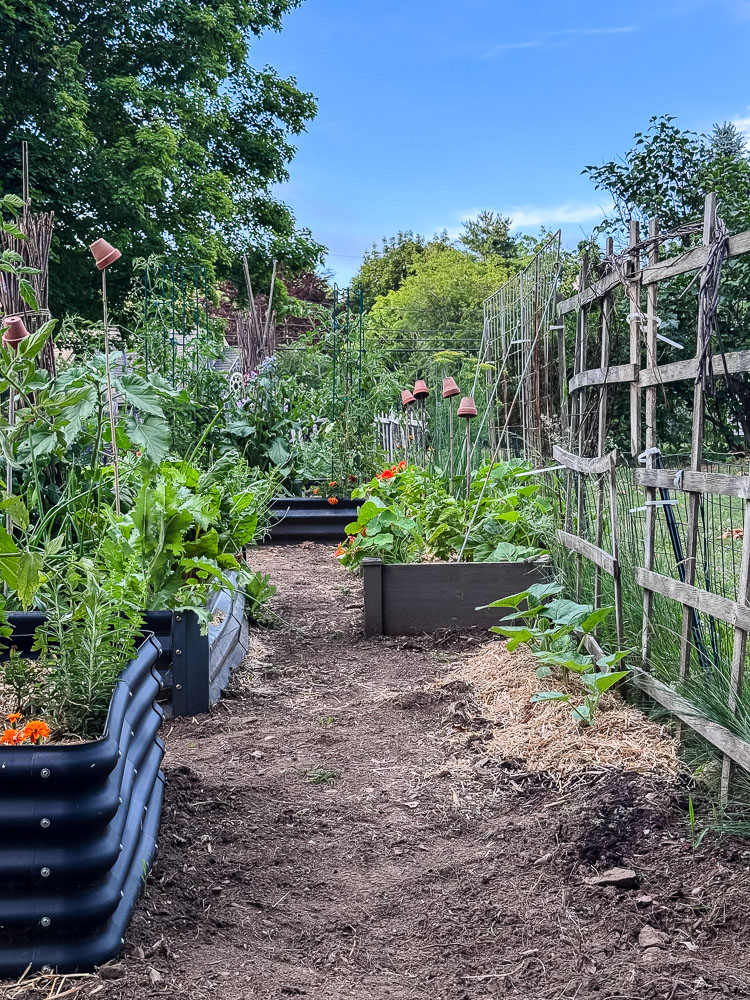
I’ve put hay down in the raised beds as mulch, which has made a big difference. It will help hold moisture on the hot New England days of July & August, keep weeds down, and make the beds look tidier. If you haven’t mulched your veggie beds yet, June is the time to do it before the heat of summer sets in.
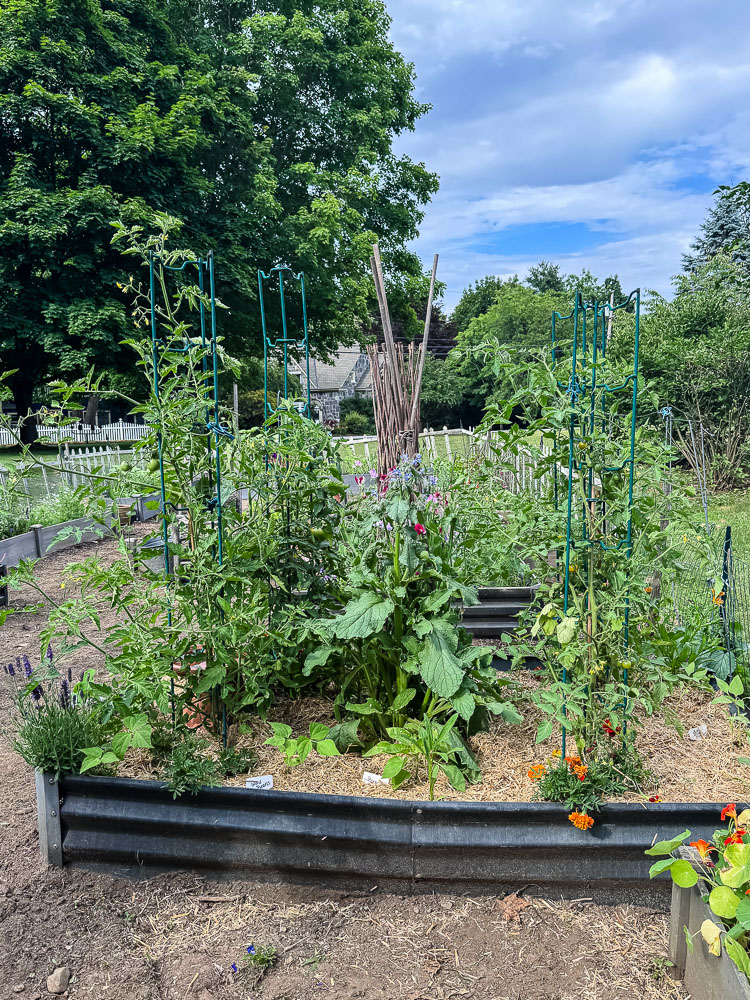
One thing I’ve had to deal with is reseeding some of the bush beans. For the second year in a row, a fair number didn’t germinate, which happens. I have beans planted in a few different beds, including next to the tomatoes, where they’re doing double duty as a companion plant. Beans fix nitrogen in the soil, which tomatoes love, so it’s a good pairing.
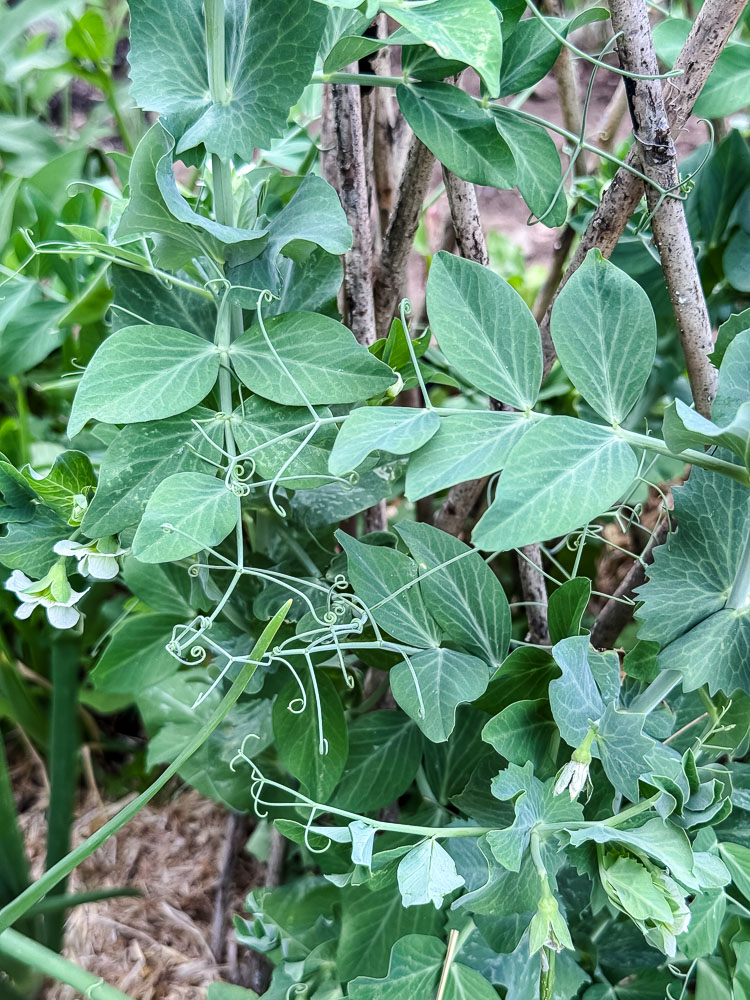
The snow peas and sugar snaps are finally ready to harvest after what felt like a very slow spring. They’re worth the wait. I’ve just been patient with them.
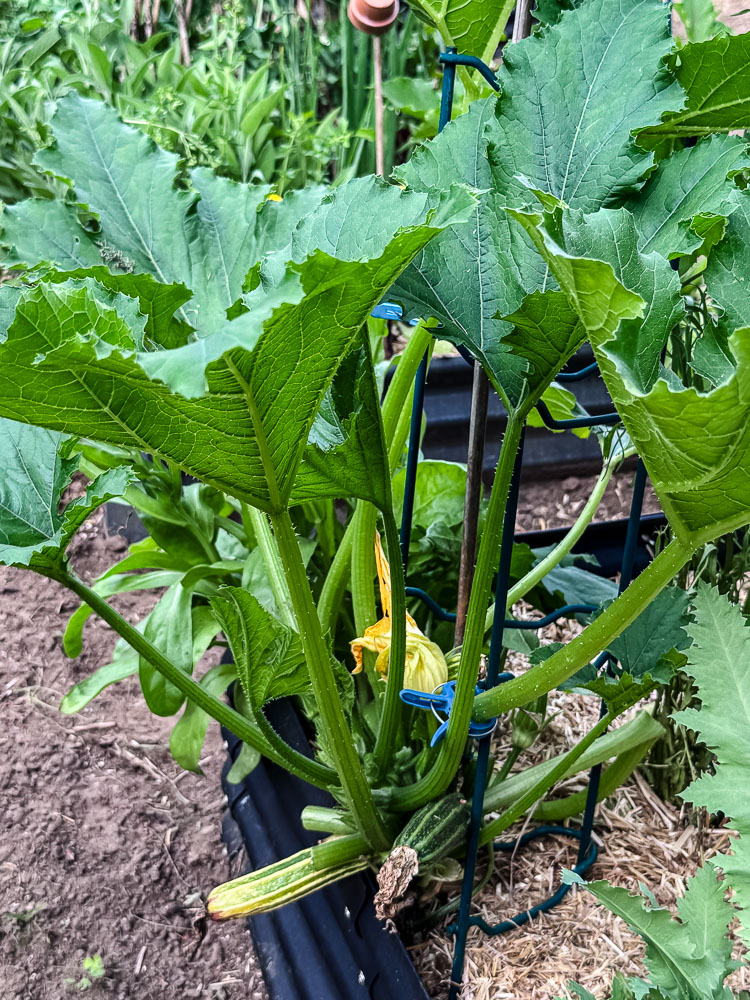
One thing I’m keeping a close eye on: summer squash leaves for pest eggs. No issues yet, but I’m checking the undersides of leaves regularly. Getting ahead of squash vine borers and squash bugs early makes all the difference.
Cucumber Check-In
If you’ve ever lost a cucumber to the ground, hidden under a leaf, yellow and enormous by the time you find it, then vertical growing is going to change your life. I train all of my cucumbers up trellises in the raised beds, and the difference it makes is significant. It saves space, keeps the fruit off the soil, and makes harvesting so much simpler because you can actually see what’s there.
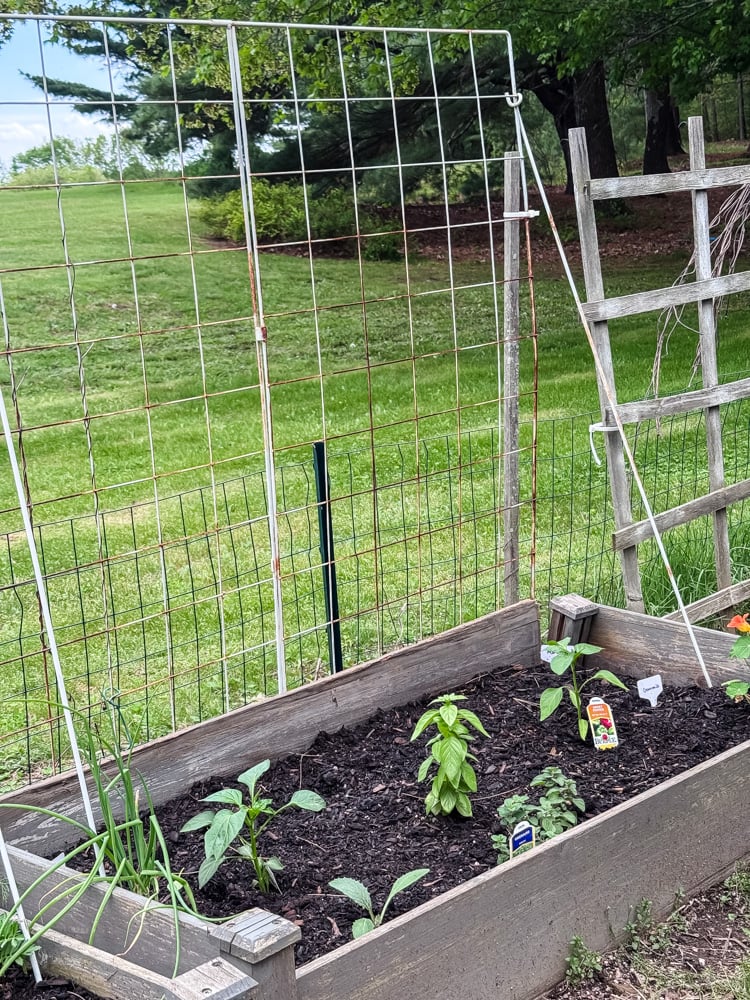
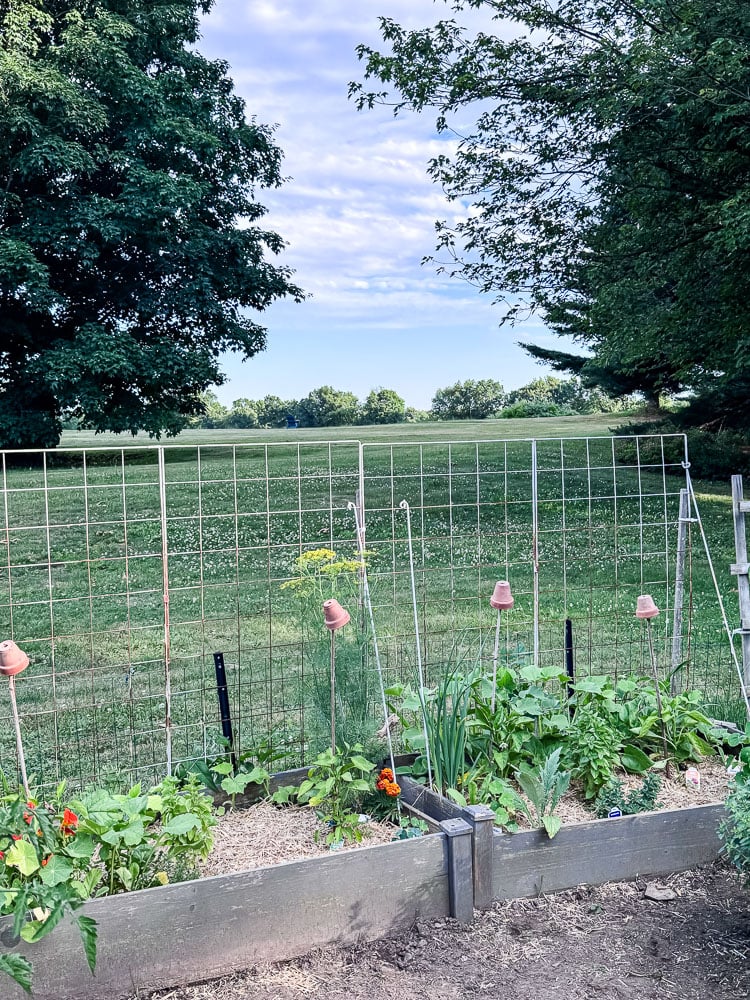
Here’s the progress from the beginning of June until now because the growth over the past few weeks has been really something to see. This is one of those methods that sounds like extra work but actually makes the whole growing season easier.
June veggie garden checklist
Pro Tip: If your lettuce bolts during a hot spell, pull it and plan to replant in late summer for a fall harvest. Lettuce prefers the cooler temps on either end of the season. (Grab seeds while they are still in the store!)
Growing Zucchini & Summer Squash Vertically
This is something new I’m trying this year, and so far I’m really excited about it: growing zucchini and summer squash vertically in the raised beds. Squash plants are notorious space hogs, and training them upward instead of letting them sprawl has been a game changer for keeping the beds manageable.
I’m using vegetable supports in the beds and securing the upper leaves and stems to them as the plants grow. I’ve also been removing the lower leaves to improve airflow at the base of the plant. Good airflow helps prevent powdery mildew, which squash is prone to. And it’s working! I already have lots of squash coming in, so the plants are clearly happy.
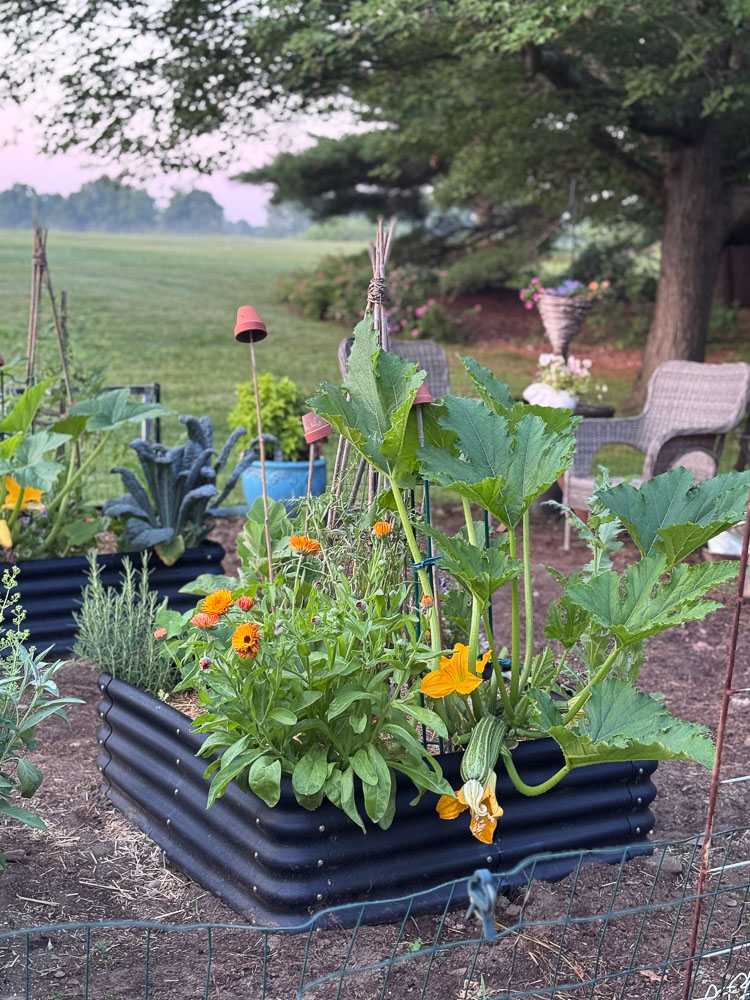
If you’ve ever felt like squash took over your entire garden, vertical growing is absolutely worth trying.
Vertical squash checklist
June In The Garden: Final Thoughts
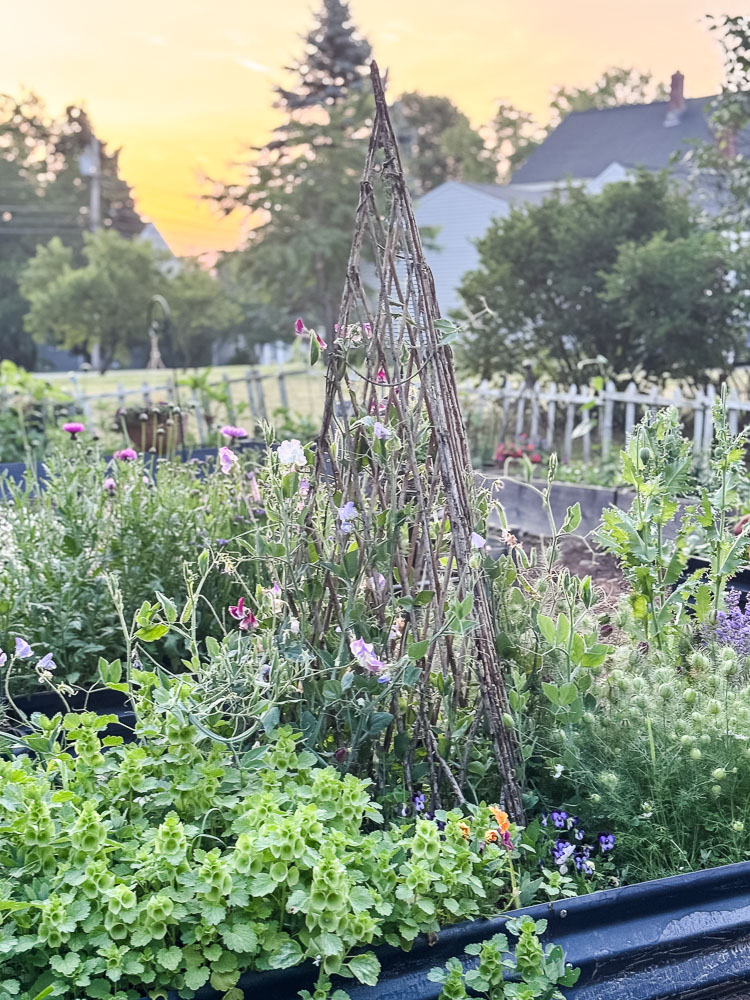
June is the month when the garden starts giving back. After all the prep and planting and waiting, things are actually growing and blooming and producing, and that never gets old no matter how many years you’ve been doing this.
A few things I’m reminding myself of this month: check the squash leaves, keep cutting the sweet peas, and don’t panic when something doesn’t go as planned (looking at you, bolted lettuce). The garden is always teaching you something.
I’ll see you back here for the July checklist, which, in a New England garden, is really all about keeping up with the harvest and staying ahead of the heat.
shop the post
standing beds: Amazon
cuke trellis: amazon
Tomato ladder: Amazon
willow tower: home depot
metal raised beds: home depot

xo, Jennifer