

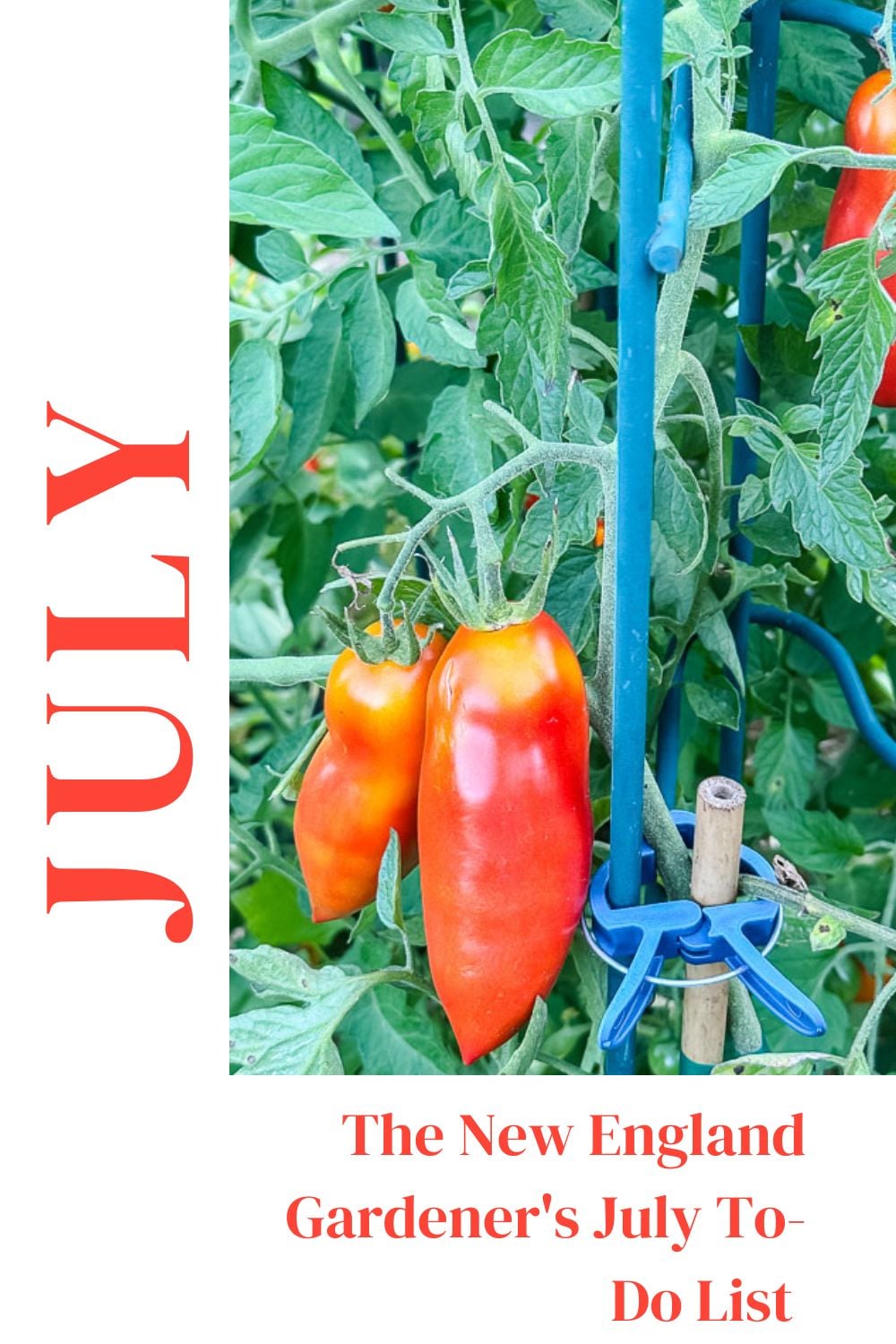
If May is the busiest month and June is when things start to take off, July is when the garden finally pays you back. All of those early mornings spent hardening off seedlings, all of that bed prep and planting and waiting July is the reward. Everything triples in size almost overnight, the harvests start coming in faster than you can keep up with, and there is nothing quite like walking out to the garden and coming back inside with dinner.
July was a hot one here in New Hampshire! We had stretches of 90-plus degree days, which is not exactly typical for us. The heat pushed everything into high gear, but it also meant keeping a close eye on containers, which dry out fast when temperatures spike. We got lucky with decent rainfall this month, so I wasn’t hand-watering constantly, but on the 98-degree days? Yes, absolutely.
Here’s what July looked like in the garden and what to focus on this month.

Welcome! I’m Jennifer from Cottage on Bunker Hill. A home gardener for over 20 years, I’ve spent the last 5 specializing in our cut flower garden, learning through trial, error, and a lot of dirty knees what actually works. My focus is on growing flowers with a purpose, whether for a vase on the kitchen table or for lasting projects, using simple, repeatable methods that fit into a real, busy life.
This post may contain affiliate links, which means we receive a small commission if you purchase through our links. See our disclaimer page for more information.
The Harvest Is Here
This is what we do it all for. July brought the first real harvests of the season: summer squash and zucchini, green onions, the tail end of the snow peas and sugar snaps, tomatoes, and green beans. There is something so satisfying about eating food you grew yourself, and July is when that really starts to happen consistently.
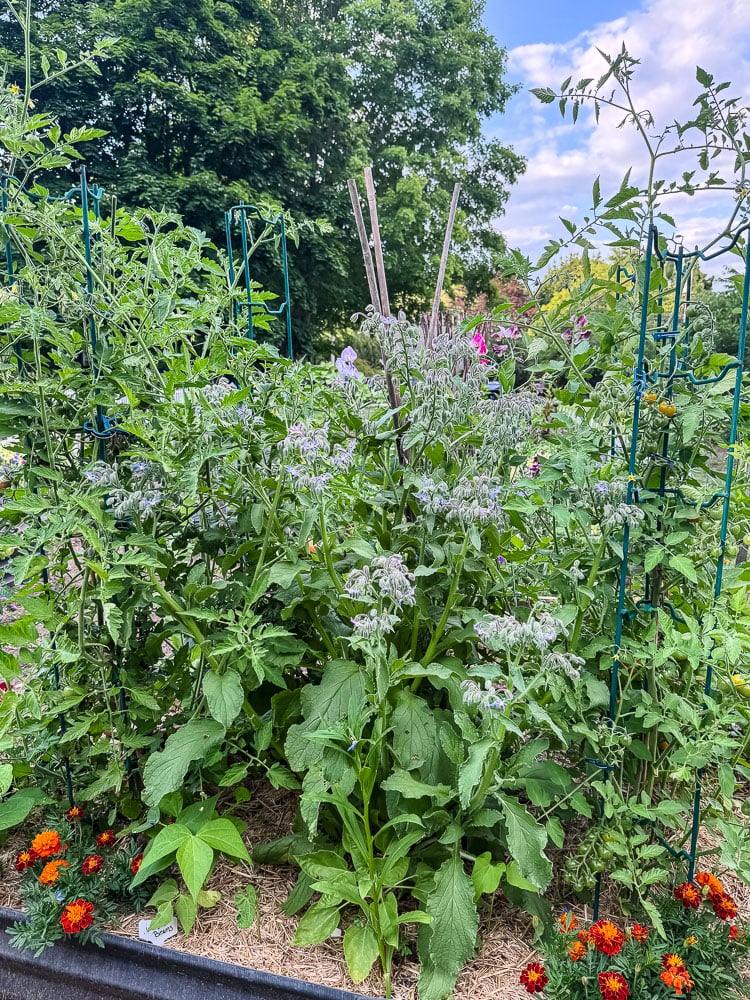
My tomato plants have tripled in size since June! In this raised bed, you can see how it all filled in with a mix of veggie plants, herbs, and flowers. I planted wax beans next to the tomatoes that benefit from a little shade. The borage growing in the center is almost as tall as the tomatoes! The fun part of gardening is finding volunteer plants growing; in this bed there are some dwarf sunflowers and also a strawflower that has reseeded itself.
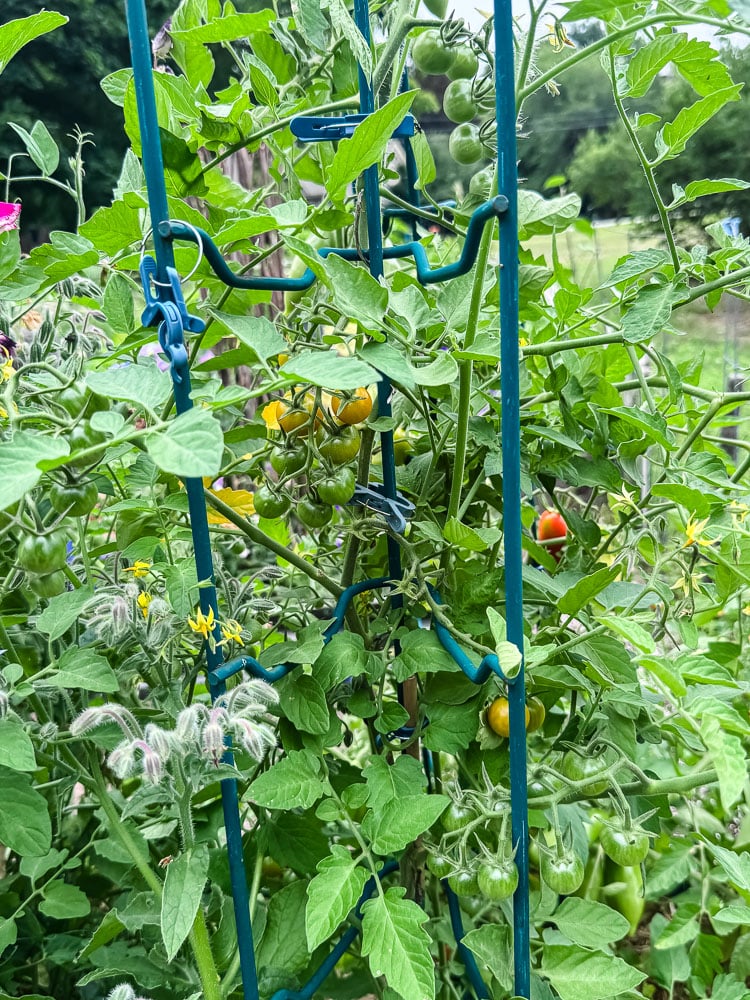
The summer squash and zucchini have been non-stop. If you’ve grown zucchini before, you know that you have to stay on top of harvesting or you’ll end up with vegetables the size of small boats. I check the beds every day at this point. The green beans have been great too, especially planted alongside the tomatoes where they’ve been happy all season.
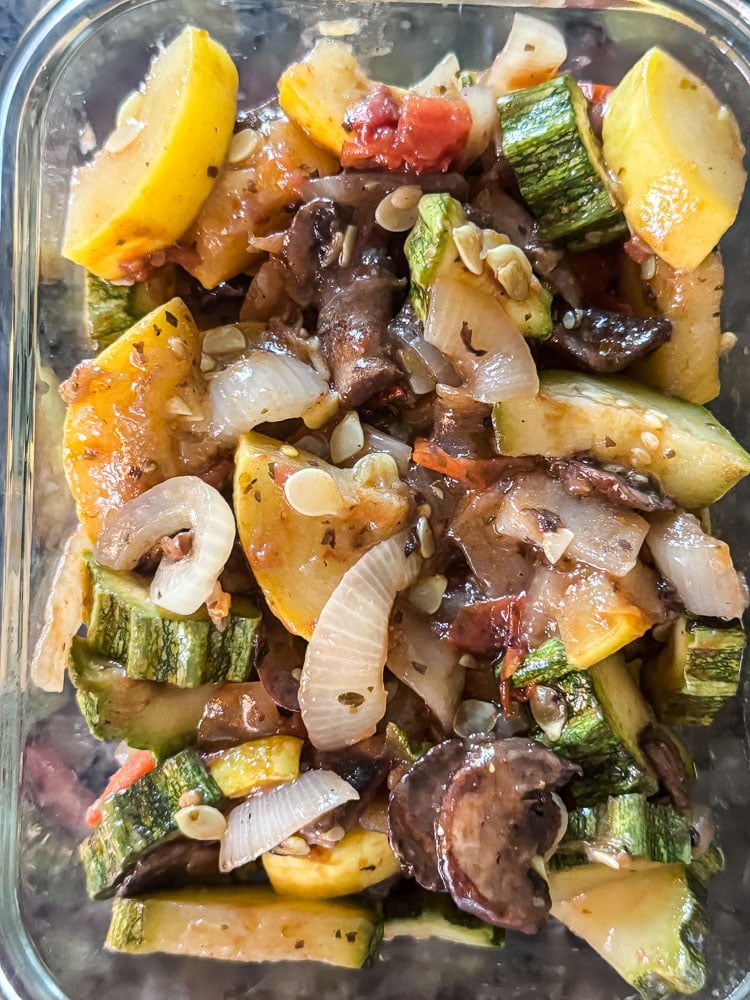
My go-to lunch lately has been sauteed garden veggies & grilled chicken. Nothing fancy but so delicious and tastes just like summer!
The snow peas and sugar snaps are winding down now, and it wasn’t a great season for me! They had a slow spring but made up for it, and I’ve been enjoying what there was. But I will plant another crop for Fall harvest.
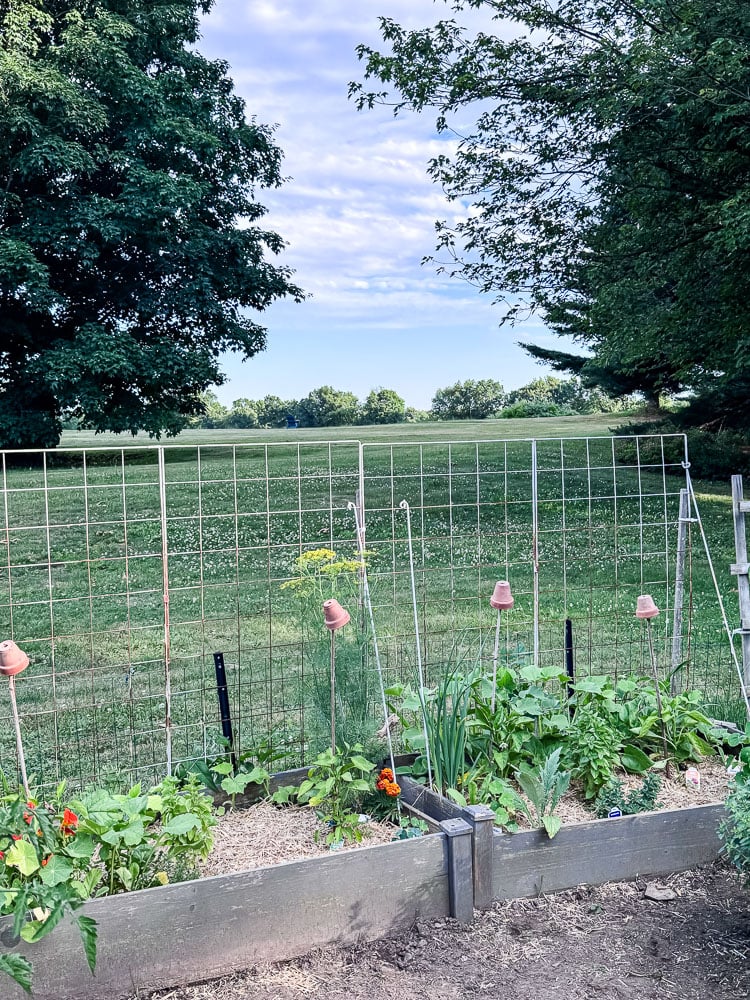
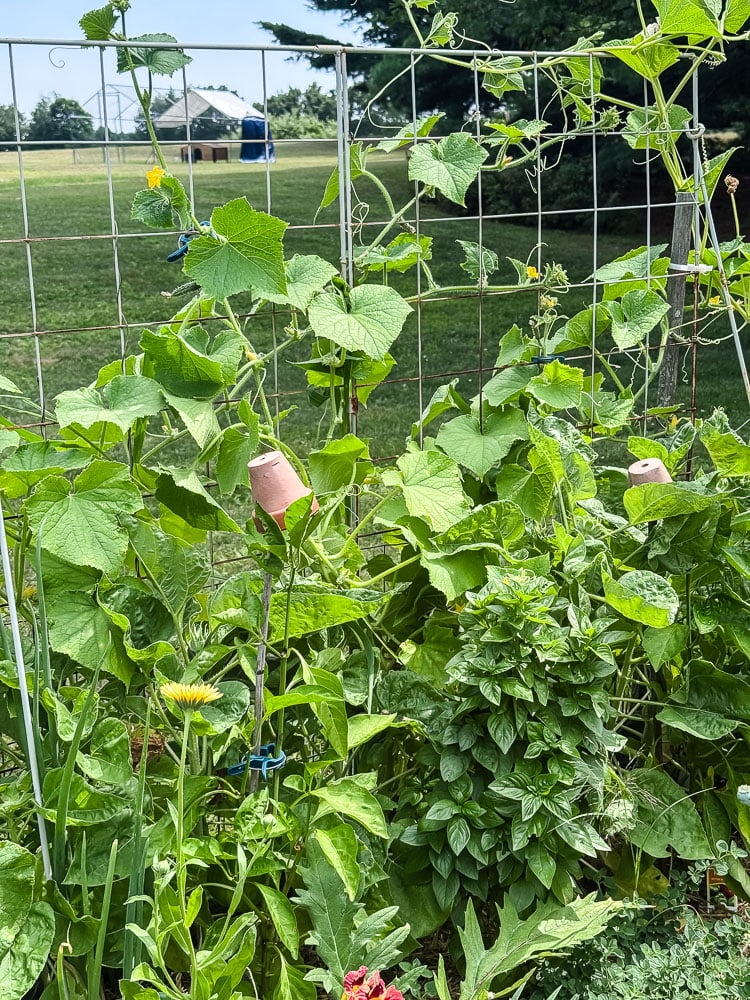
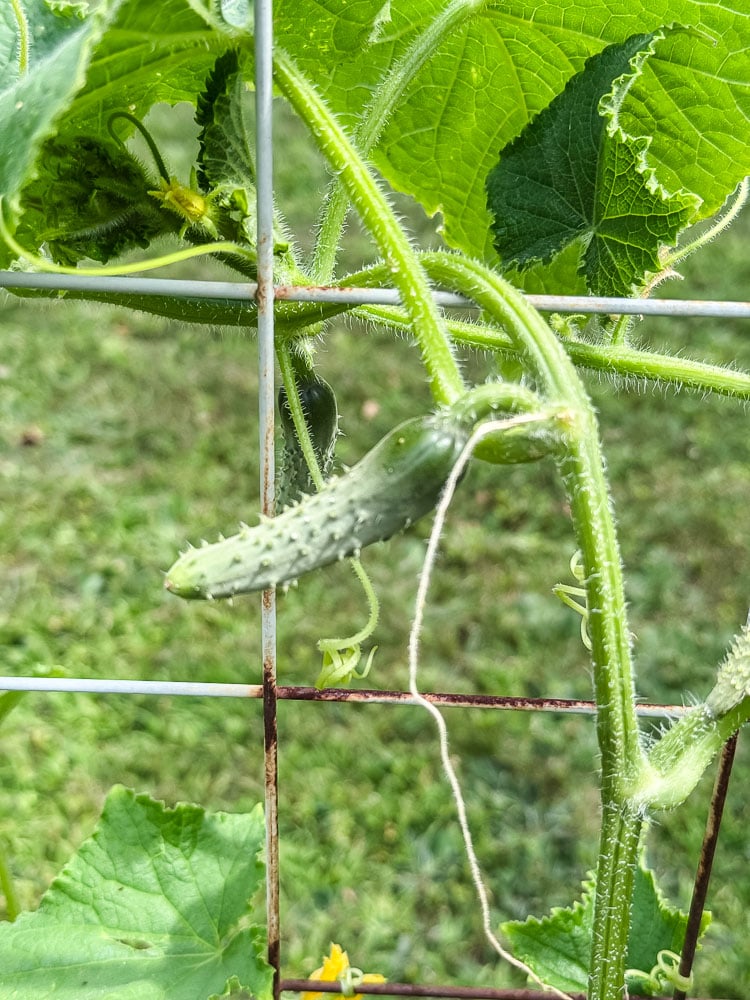
No cucumbers yet, but the plants have gone crazy!! Look at the June compared to July photos! These beds have really filled in the past few weeks.
July harvest checklist
Garden Tip: Zucchini left on the plant too long signals the plant to stop producing. Harvest small and often for the best yield all season.


Managing The Heat
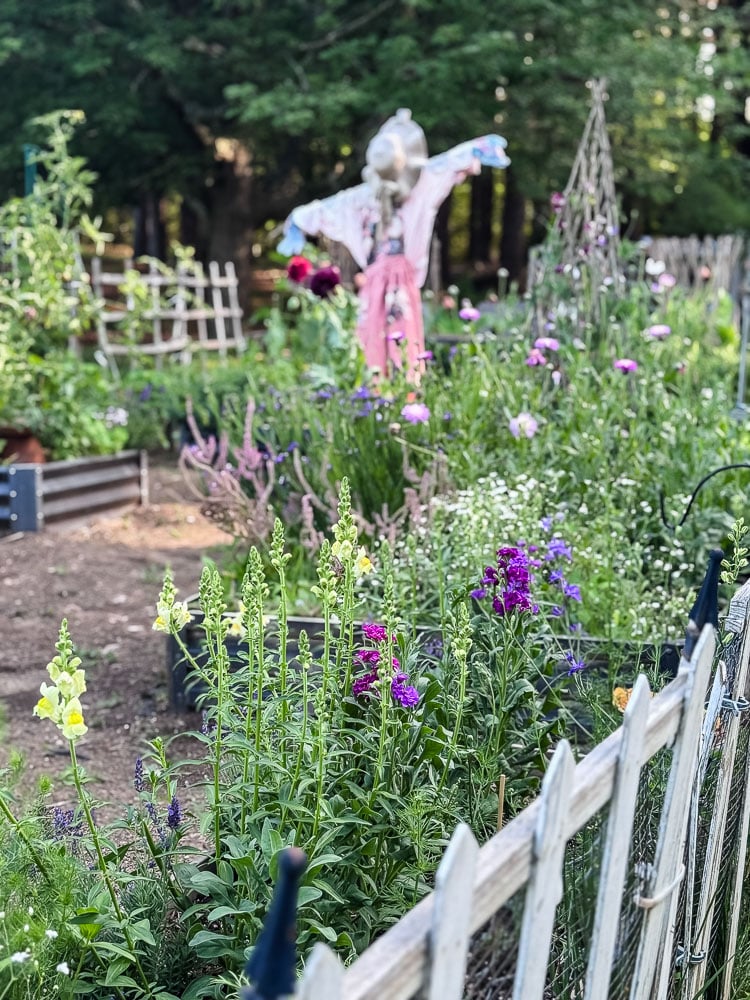
July heat in New Hampshire is no joke this year. We hit 99º at one point, which is not something this zone 6a gardener takes lightly. The raised beds held up well. The hay mulch I put down in June really earned its keep this month, keeping the soil from drying out too quickly between waterings.
Containers are a different story. They dry out so much faster than in-ground or raised bed plantings, and in extreme heat they can go from fine to bone dry in a single afternoon. I was checking containers daily and watering them more than anything else in the garden. If you have a lot of containers, a heat wave week is the week to pay close attention.
We were fortunate to have enough rain throughout the month that I wasn’t hand-watering everything constantly, but on the hottest days, I wasn’t taking any chances.
heat management checklist
Staying Ahead Of The Pests
July is when garden pests really show up, and this year is no exception. I’ve spotted squash bugs on the squash plants (and other plants too) and have been checking the undersides of leaves regularly for egg clusters. Squash bugs are sneaky! They hide well, and their eggs are easy to miss if you’re not looking closely. I remove any eggs I find immediately and keep a close eye on things. I have 2 ways that I get rid of the eggs: sometimes I just tear that section of leaf away, or I wrap a piece of duct tape around my fingers, sticky side out, and pull the cluster off that way.
I’m also on active tomato hornworm watch. Hornworms are masters of camouflage. They blend in perfectly with the tomato foliage, and by the time you notice the damage, they’ve been at it for a while. I check the plants every few days, looking for their telltale calling card: black droppings on the leaves below where they’re feeding. They really give me the creeps!!
No major infestations to report yet, and I’d like to keep it that way. Staying on top of pest scouting in July makes the rest of the season so much easier.
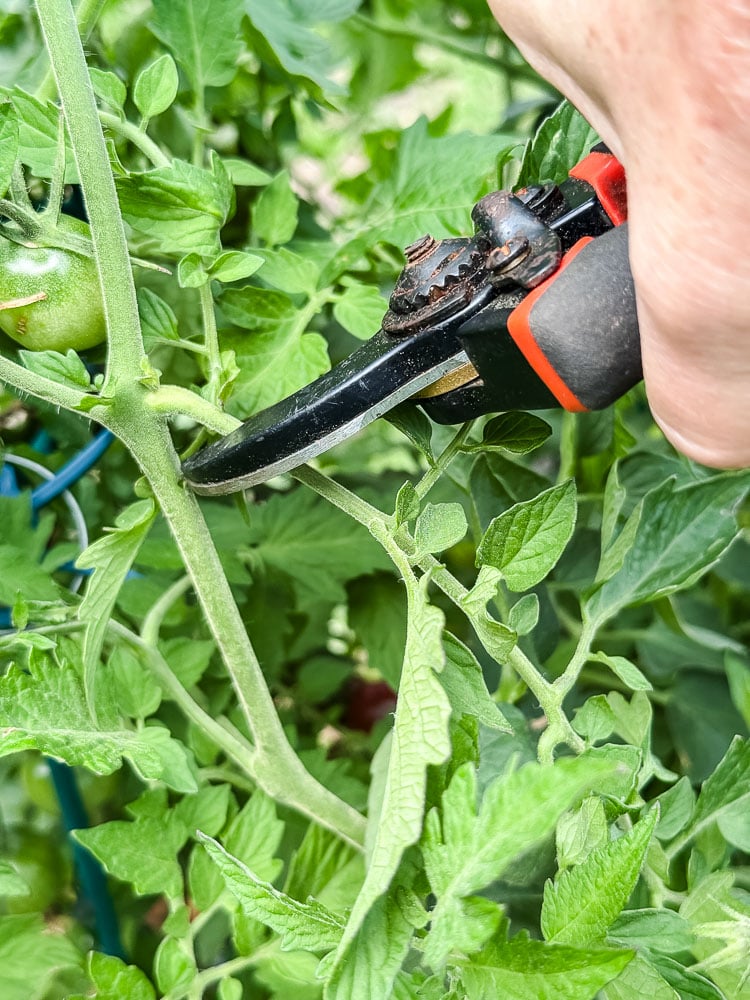
My tomato plants have gotten so dense and lush that I took a few minutes today to do a little thinning. I trimmed out any branches that weren’t carrying fruit or flowers. Nothing productive, nothing worth keeping. Better airflow through the plant means healthier plants overall, and after dealing with blight in previous years I’m not taking any chances. A little pruning now goes a long way later in the season.
Annoying pest checklist
The Cut Flower Garden
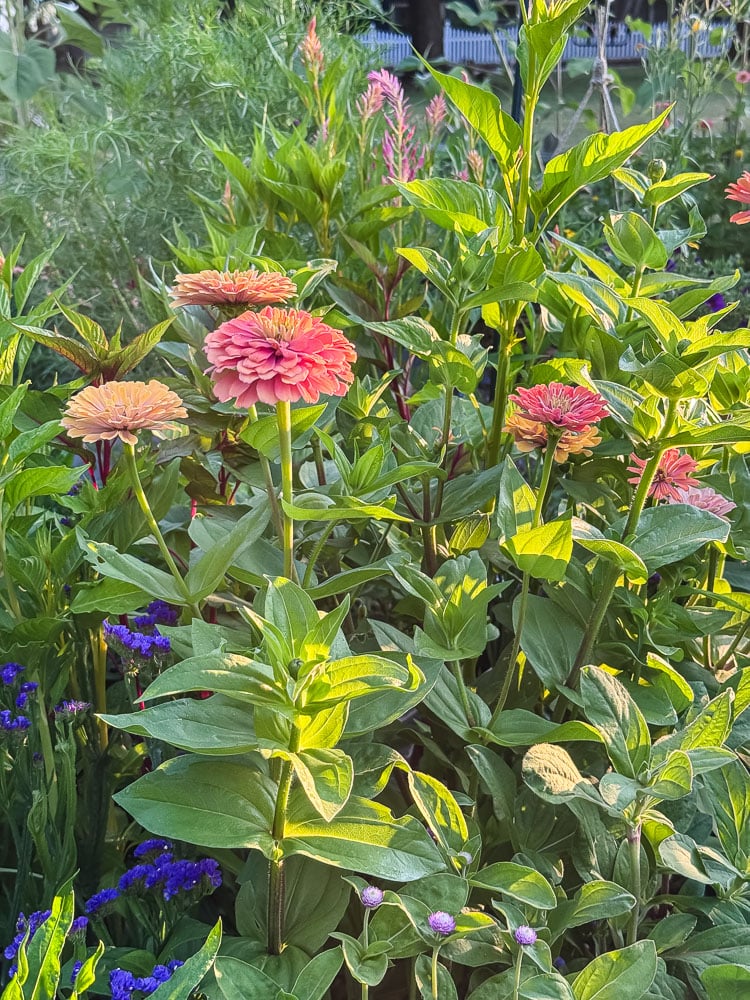
The cut flower garden is mostly coming into its own now. Things are blooming, the beds are full, and I’m starting to cut more regularly. The dahlias are not flowering yet, which is completely normal for New Hampshire. Dahlias are a late-season flower here, and I fully expect them to hit their stride in August and September. The dahlia plants I started from seed this year are looking healthy and strong, and I am so curious to see what they produce.
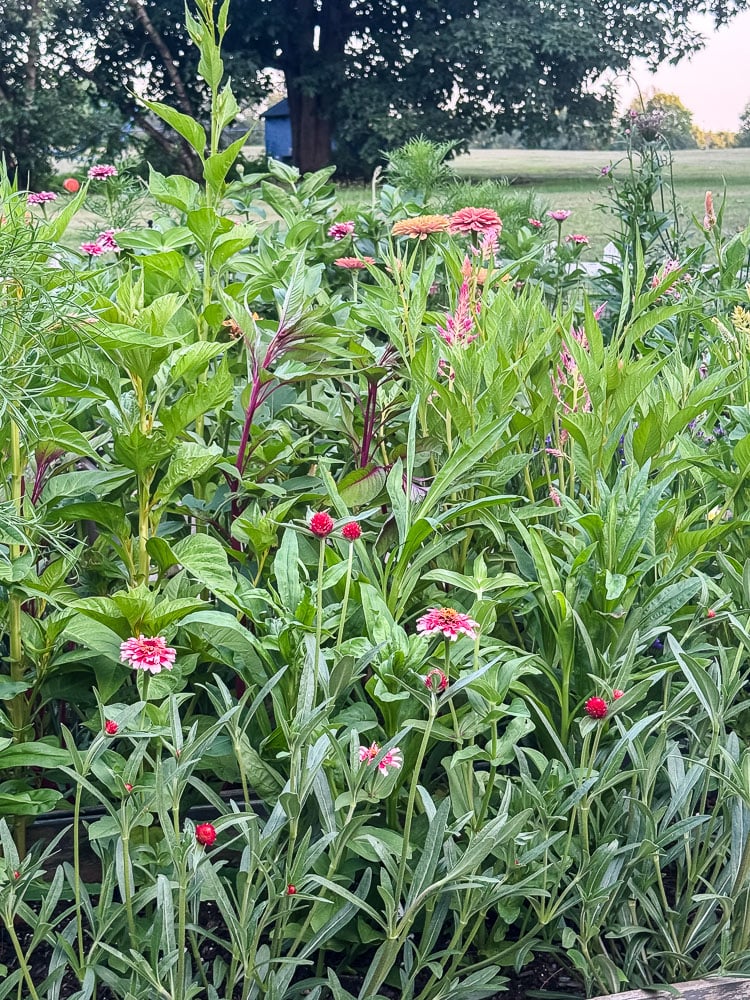
I’m planning a dedicated cut flower garden journal post to really dig into what’s growing, what’s blooming, and how the season is unfolding out there — there’s too much to do it justice in a checklist format. Stay tuned for that.
Cut garden checklist
End Of July: Looking Ahead
The standing raised beds that held lettuce and broccoli have been empty since everything bolted in the heat earlier this season. At the end of July, I’ll be direct sowing seeds in those beds for a late-season crop. Lettuce, spinach, and other cool-season greens planted in late July and August will be ready to harvest in the fall when the temperatures drop back down — and fall-grown lettuce is some of the best of the year.
July is also a good time to take stock of what’s working and what isn’t. Walk the garden with fresh eyes and make notes. What do you wish you’d planted more of? What took up too much space? What pest showed up that you weren’t prepared for? Those notes are gold come January when you’re planning next year’s garden.
end of July checklist
July In The Garden
July is the month that makes all the hard work worth it. The harvests, the blooms, the garden that looks completely different than it did just a few weeks ago — this is it. This is what we’re doing it for.
Stay on top of watering during heat spells, keep harvesting so your plants keep producing, and do not skip your pest scouting. A few minutes checking leaves every few days can save you a lot of heartbreak later in the season.
I’ll see you back here for the August checklist. Which in a New England garden means dahlias are finally coming (hopefully!), the tomatoes are in full swing, and we start thinking about the season winding down (not yet, but soon).
xo, Jennifer
shop the post
standing beds: Amazon
cuke trellis: amazon
Tomato ladder: Amazon
willow tower: home depot
metal raised beds: home depot


