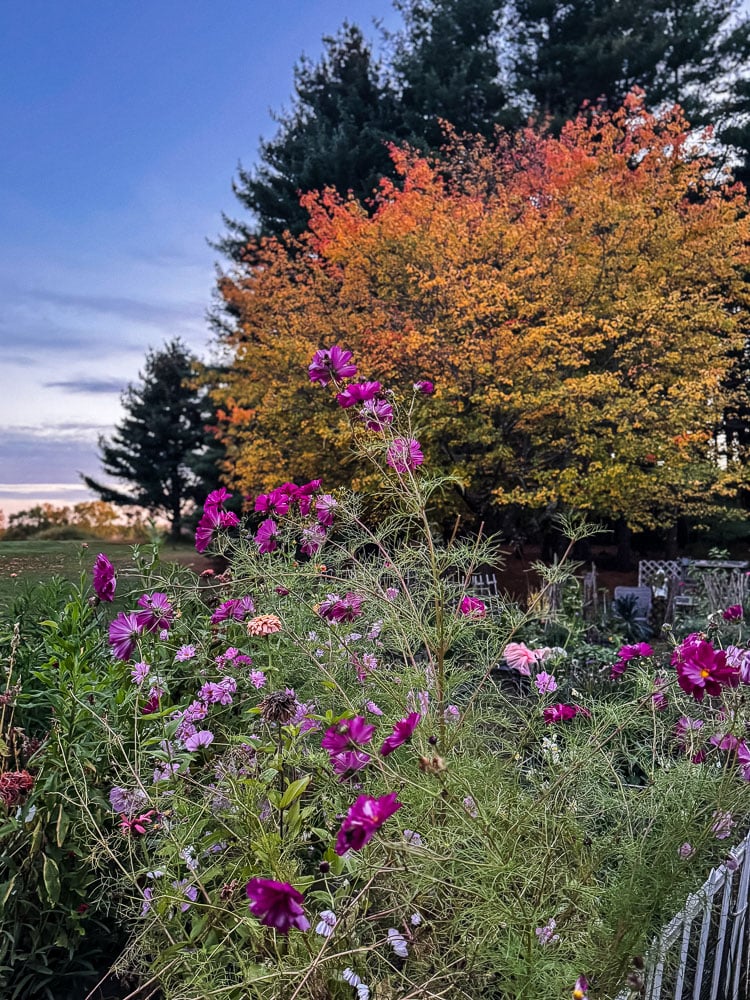
Last night we barely dodged our first frost. It dipped to 35 degrees, which was close enough that I went out and cut every flower I could before bed, just in case.
And honestly? The garden is tired. My zinnias are well over four feet tall, but the blooms have slowed way down. The veggies are done for the year. It was a productive summer, and you can tell.
If your garden looks the same right now, this is your sign to start putting it to bed. Not all at once, and not perfectly. Here’s what I do at the end of the season in my Zone 6a raised beds, and what you can safely skip.
Walk The Garden First & Take Notes
Before you pull a single plant, grab your phone and take a slow lap. Snap a photo of each bed and jot down what thrived, what struggled, and what you’re never growing again.
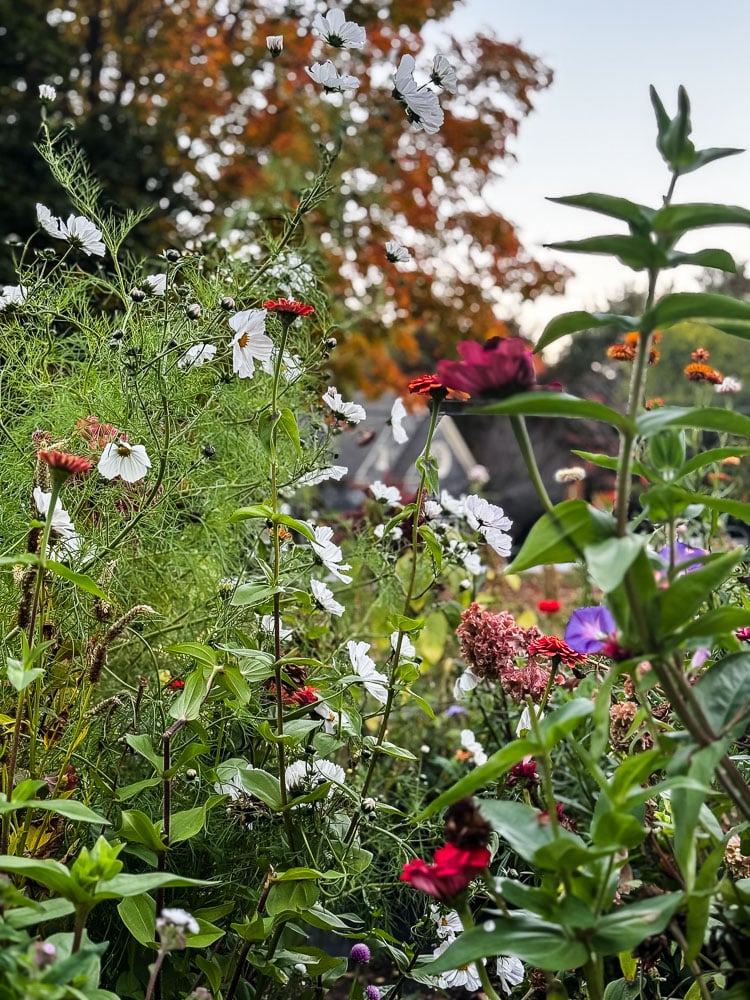
I’m probably different from most of you reading, where I take thousands of photos and videos of my garden from start to finish because of this job. But you have to trust me when I tell you that by February you will not remember which zinnia was the showstopper.
By documenting your garden and taking a few notes, it will make next year’s seed order smarter and maybe cheaper (but I always find new things to add to cart!!)
Cut What You Can Before The First Frost
When the forecast dips into the mid-30s, go cut whatever is still blooming. Frost turns zinnias, cosmos, celosia, and dahlias to mush overnight, so every stem you bring in is a win.
Fill every jar and pitcher you own. End-of-season bouquets are a little scrappy, with shorter stems and smaller blooms, but that’s part of the charm. Anything past its prime can go straight to drying or the flower press.
I frantically went out and clipped every viable stem and filled a couple of mason jars with flowers- I called them my ‘we had a good run’ bouquets because it’s truly been a spectacular growing season here in New Hampshire in 2026.
Save Seeds Before You Clear
This is the free part of gardening, and it’s the step most people skip. Before you pull your flowers, leave a few seed heads to dry right on the plant.
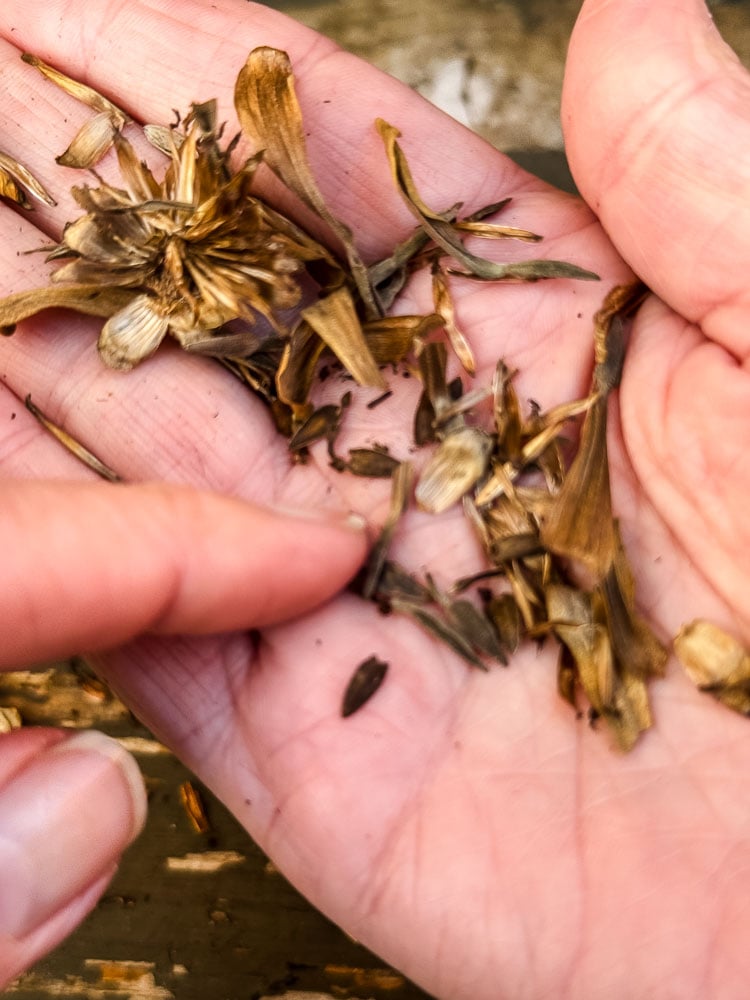
Here’s what I’m saving this year:
- Zinnias: let the heads dry brown and crispy. The seeds hide at the base of each petal.
- Cosmos: collect the slender dark seeds once the centers turn brown.
- Marigolds: pull the dried heads and slide the seeds out of the papery base.
- Nasturtiums: gather the chunky seeds once they turn tan, or scoop them up where they’ve dropped. They look like big peas.
- Nigella: wait until the pods are dry and rattle when you shake them.
- Poppies: same rattle test, then tip the pods over a bowl like a salt shaker.
- Celosia: shake the dry plumes into a paper bag to catch the tiny, shiny black seeds.
One honest note: if you are growing multiple varieties of zinnias and cosmos, be aware that they cross-pollinate freely, so saved seed may not look exactly like the parent plant. I think of it as a fun surprise, not a problem.
Store seeds in labeled paper envelopes somewhere cool and dry. I’m walking through the whole process in my seed saving guide.
Pull The Finished Veggies
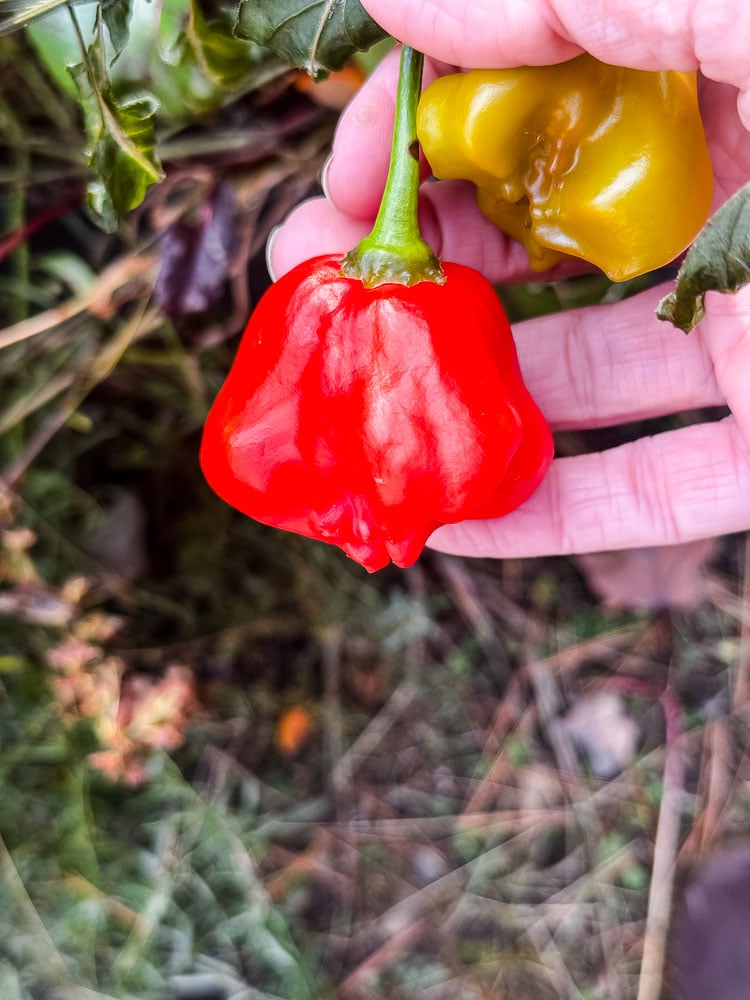
My vegetable beds are pretty much done; I plucked the last couple of peppers. The next step is to completely pull out the plants. Healthy tomato, squash, and pepper plants can go straight into the compost.
The one rule worth following: anything diseased, like blighted tomato leaves or mildewy squash, goes in the trash. You don’t want to just spread it back into your beds next spring!
Leave Some Things Standing
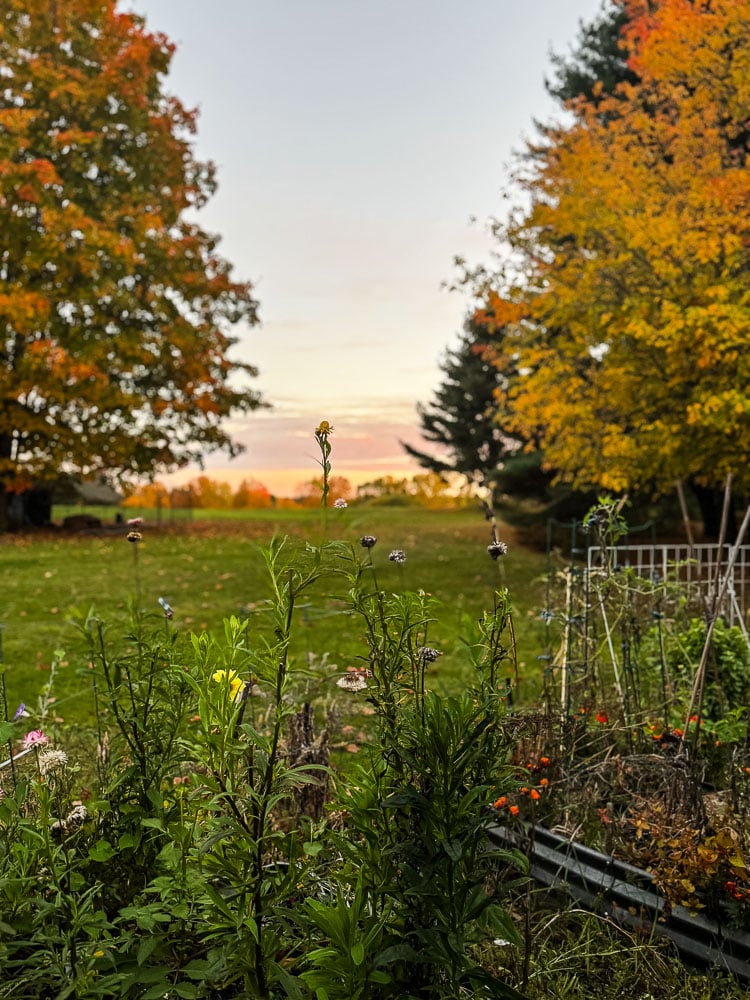
You don’t have to clear everything. Seed heads you aren’t saving can stay put for the birds (goldfinches love zinnias and cosmos), and hollow stems give beneficial insects a place to spend the winter. Cut perennials back to 12 to 18 inches instead of to the ground, and let fallen leaves stay where they land in the beds.
Personally, I love leaving things in the garden for some winter interest; plus it’s pretty covered in snow.
A slightly messy fall garden isn’t lazy. It’s habitat. It’s also less work, which I’m never going to argue with.
Harvest & Dry Your Herbs
My herbs still look great, which means it’s time to harvest before a hard frost decides for me. Basil goes first, since it won’t survive a single frosty night. Thyme, sage, and oregano can handle some cold, but they’re at their most flavorful now. Rosemary is iffy in Zone 6a, so harvest it, or I might pull it and pot it to bring inside. One of my rosemary plants was a Trader Joe’s topiary that I got last winter, and once Spring came, I decided to let it be free and grow in the garden
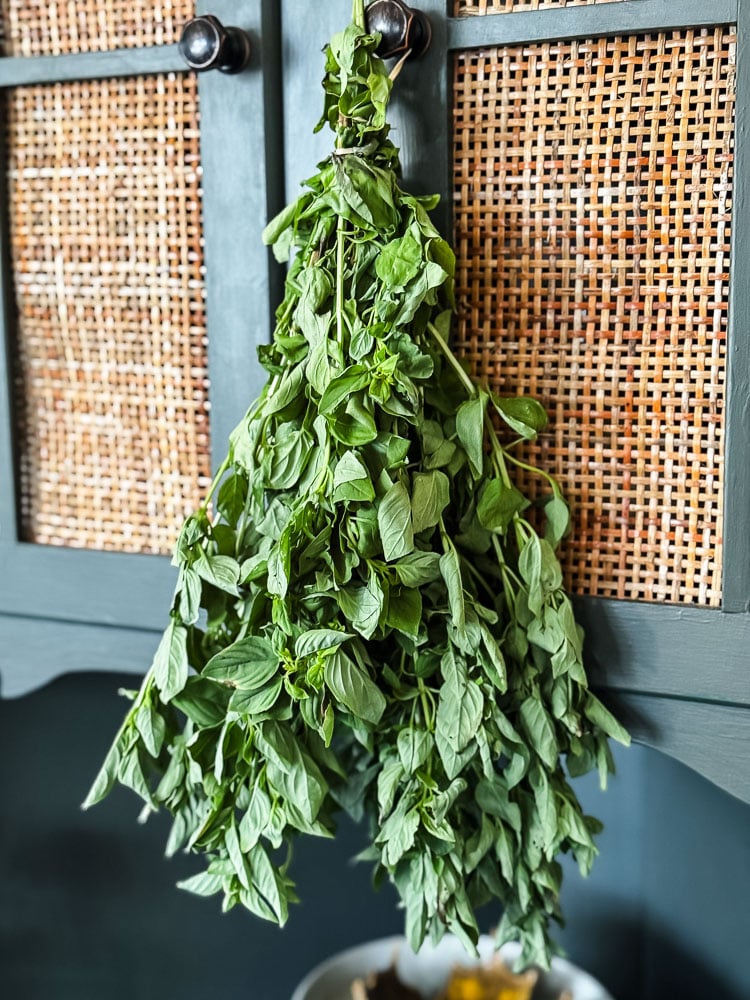
To air-dry:
- Bundle 5 to 8 stems with twine.
- Hang them upside down somewhere dry with good airflow.
- Wait one to two weeks, until the leaves crumble when you touch them.
- Strip the leaves and store them in labeled jars.
Want to do something prettier with them? Try making a wreath or swag
Get Those Spring Bulbs Planted!
My tulips are going in this weekend. In Zone 6a, the planting window runs from about mid-October until the ground freezes, once the soil has cooled down.
- Plant bulbs 6 to 8 inches deep, pointy end up.
- Space them 4 to 6 inches apart, or closer if they’re for cutting
- Water once after planting, then leave them alone until spring.
Feed The Beds And Clean Up Your Tools
Once a raised bed is cleared, don’t leave the soil bare all winter. Top it with an inch or two of compost and a layer of shredded leaves. The leaves are free, they protect the soil, and by spring they’ve started breaking down into exactly what your beds need.

Then the boring-but-worth-it part: drain and coil your hoses, clean and oil your pruners, and stack empty pots somewhere dry. Future you will be grateful. We forgot and left a hose on last year, and it cracked the copper pipe inside!!
Helpful Tips: What Not To Do
- Don’t cut everything to the ground. Leave some stems and seed heads for birds and overwintering bees.
- Don’t fertilize now. It pushes tender new growth right before a freeze.
- Don’t compost diseased plants. Trash them instead.
- Don’t leave hoses hooked up. A hard freeze can crack both the hose and the spigot.
- Don’t try to do it all in one weekend. The garden will wait. Pick away at it on the nice afternoons.
Wrapping Up The Season
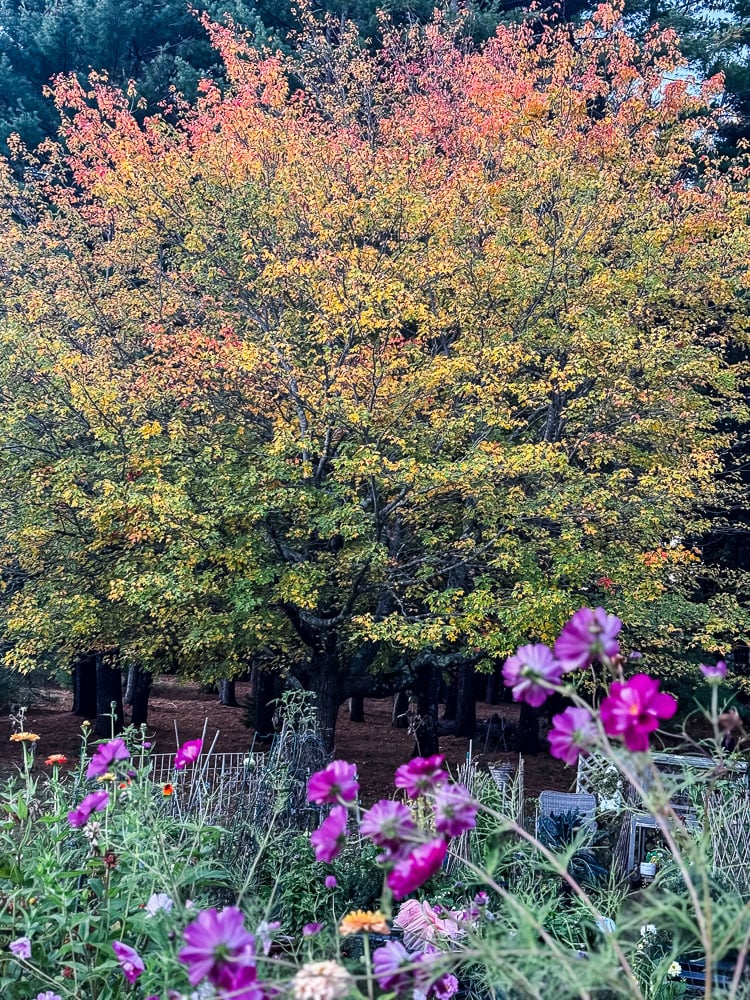
There’s something nice about a garden winding down. It did its job all spring and summer, and now it gets to rest. So do we, a little. I actually love to sit back once the garden is put to bed and just scroll through all the photos and videos to see what I loved, what I want to change, and what plants I won’t bother with next year. And before I know it, it’s time to start planning next year’s garden!
What’s still hanging on in your garden right now? Tell me in the comments.
xo, Jennifer
Cottage Garden
Favorite Products
Shop my gardening favorites! Raised beds, plant supports, & tools to make your garden grow.