If you’ve ever put a beautiful bunch of garden flowers into a vase and felt like something was just… off, I’d be willing to bet the flowers weren’t the problem. The vessel was.
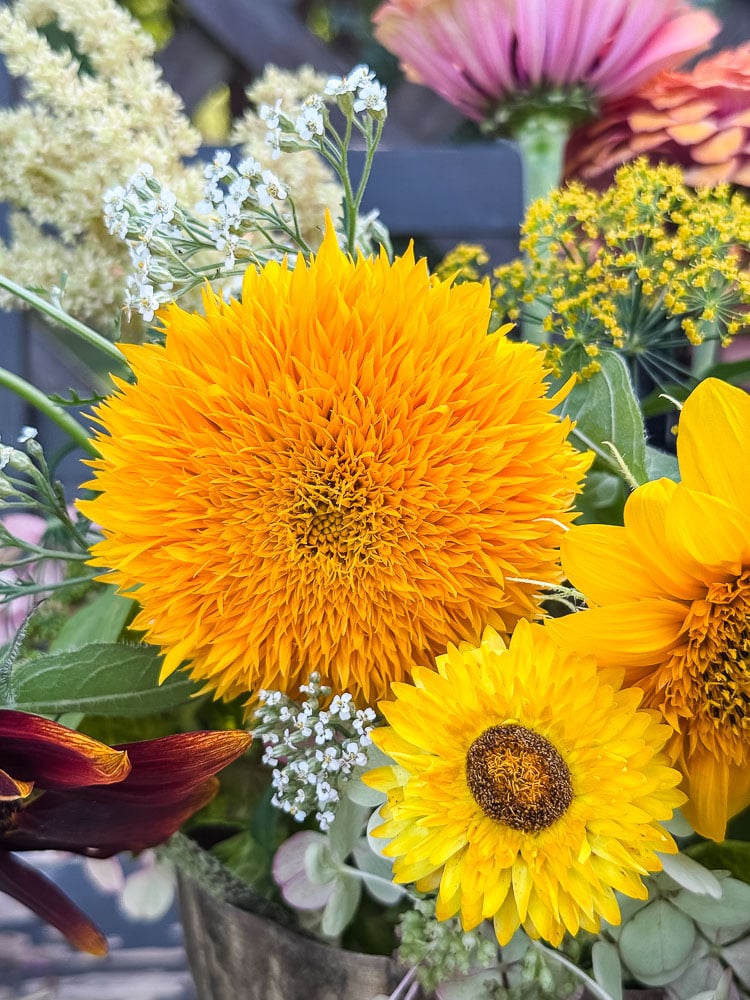
How do I choose the right vase for flower arrangements?
Match the vessel height to your stems; flowers should be roughly one and a half times the height of the container.
Narrow necks hold stems in place for beginners; wide mouths give you more arranging freedom.
Don’t overlook color: dark matte vases add drama, aged metals are versatile, and neutral ceramics let the flowers lead.
And think beyond fresh flowers: a good vase works year-round with dried stems, branches, and grasses.
This is the thing nobody really talks about when it comes to flower arranging. We spend all our energy thinking about which flowers to grow, which ones to cut, how to condition them, and then we grab the nearest jar and wonder why the arrangement doesn’t look the way we pictured it. The container is doing just as much work as the flowers, and once you start paying attention to it, everything changes.
This is the second post in my flower arranging series. If you missed the first one, a beginner’s guide to putting together a simple garden bouquet, you can take a look at that one too.
Today we’re going deeper on vases: what to look for, how vessel color sets the whole mood of an arrangement, and why a good collection of containers will serve you every single month of the year, not just when the garden is blooming.

Welcome! I’m Jennifer, and I’ve always believed nature is the most beautiful art supply. For years, I’ve been preserving New England’s blooms and foliage through pressing, drying, and crafting. Let me show you how to capture a little bit of the season and bring it indoors—simply and beautifully.
This post may contain affiliate links, which means we receive a small commission if you purchase through our links. See our disclaimer page for more information.
The Vessel Shapes the Whole Arrangement
Here’s the simplest way I can put it: the vessel determines everything that happens above it. The height of your arrangement, how wide it spreads, whether stems stay put or flop around, whether the flowers look relaxed and garden-gathered or structured and intentional — all of that starts with the container.
A wide-mouthed vessel gives you freedom and a loose, abundant look. A narrow-necked bottle does the arranging for you, holding stems close together and fanning them out gently. A tall vessel calls for tall drama. A low oblong bowl creates something that sits like a centerpiece, wide and horizontal and meant to be admired from all sides.
None of these is wrong. They’re just different, and learning to match the vessel to the moment is one of the most useful skills you can develop.
What to Look For: My Simple Vessel Checklist
When I’m at the thrift store scanning the shelves, which is honestly where I find most of my favorites, here’s what I’m thinking about:
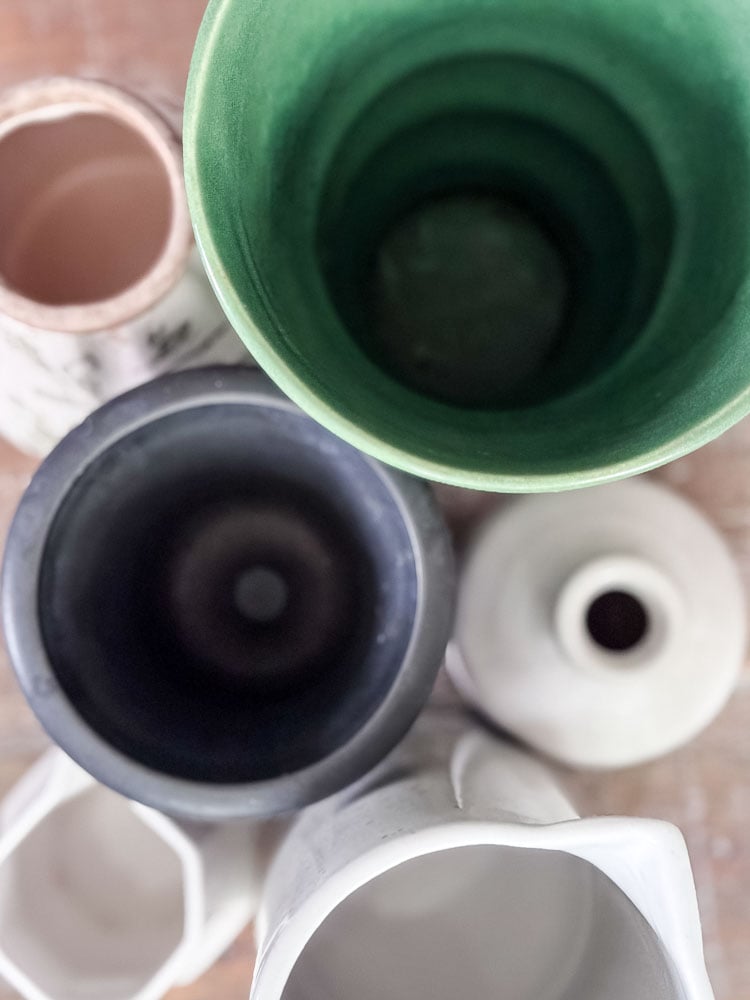
Height. Does this vessel call for tall stems or short ones? A general rule: the flowers should be roughly one and a half times the height of the container. A tall vessel wants larkspur, sunflowers, or dramatic amaranth branches. A low bowl wants a tumbling abundance of shorter stems like dahlias, gomphrena, feverfew.
Opening size. Wide mouths give you arranging freedom and work beautifully with a floral frog or chicken wire inside. Narrow openings do the work for you, which is fabulous for beginners or for days when you just want to push some stems in and have it look effortless.
Shape and silhouette. Footed bowls and urns create a formal, elevated look that makes even simple flowers feel special. Straight-sided cylinders are clean and modern. Pitchers and crocks are casual and farmhouse-friendly. An oblong vessel creates a low, horizontal arrangement that feels almost sculptural. Mason jars are unpretentious and perfect for small, cheerful arrangements. None of them is better than the others — it’s about what you’re going for.
Color and material. More on this in a minute, but vessel color is one of the most powerful and underused tools in arranging.
Scale. A tiny bud vase and a giant urn both have their place, but you need enough stems to fill what you’re working with. Nothing looks sadder than three flowers rattling around in a container that wants fifteen.
How Vessel Color Changes the Whole Mood
This is the part I want to spend some time on because I think it’s genuinely underestimated.
Most people default to clear glass or white ceramic vessels, and there’s nothing wrong with that. Neutral containers let the flowers do the talking, and that’s usually exactly what you want. But vessel color can do something really interesting when you lean into it intentionally.
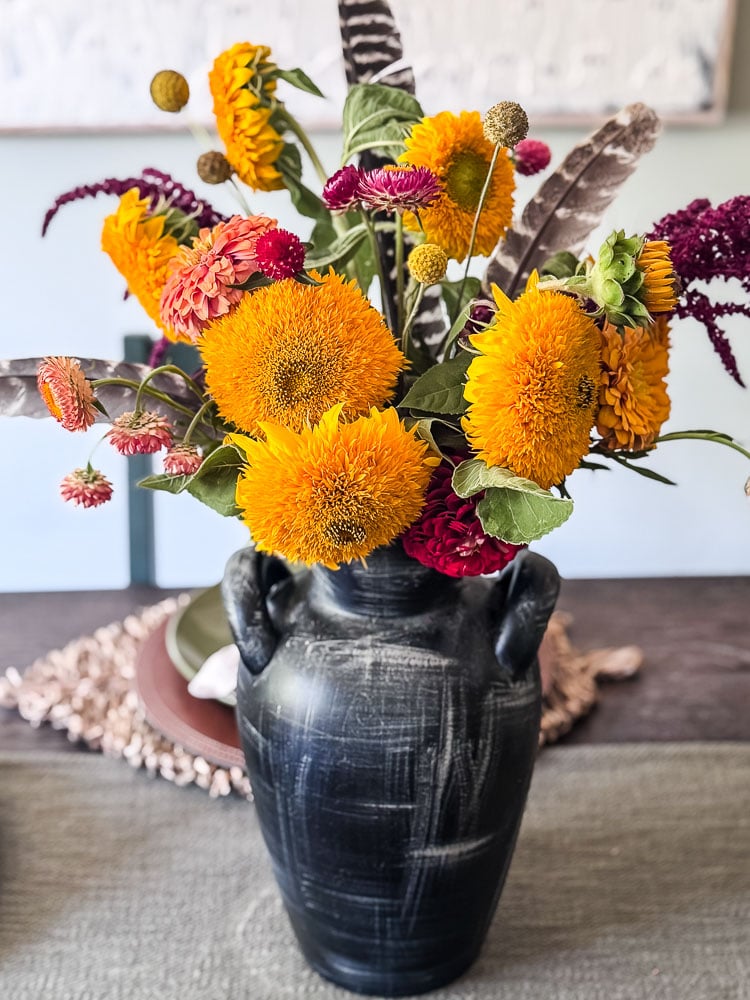
Take the black-handled urn in the photo above. I found it at the thrift store with a dated painted ivy design on it, not exactly my style. A little paint later and it became one of my most-used and most-loved vessels. The matte black finish against those golden teddy bear sunflowers, red zinnias, coral strawflowers, and deep amaranth is dramatic in the best possible way. It looks moody and intentional, like something out of a still life painting. The same flowers in a clear glass vase would have been pretty. In that black urn, they’re striking.
Here’s how I think about vessel color:
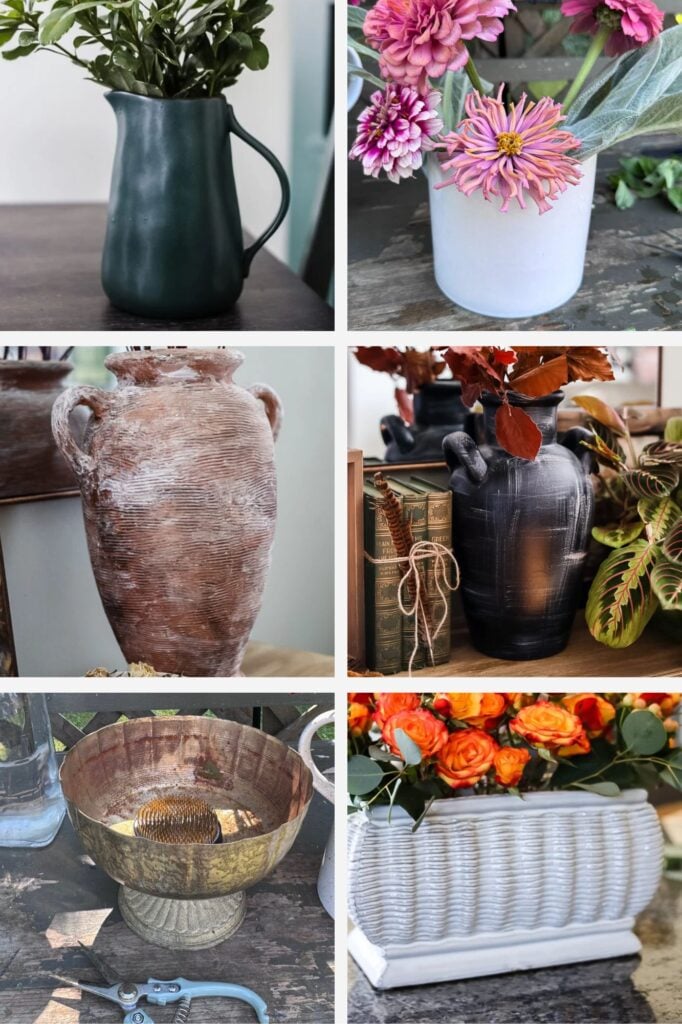
Dark and matte vessels: black, charcoal, deep navy add drama and moodiness. They work particularly well with warm, saturated flower colors: golds, reds, deep oranges, burgundy. The contrast is everything.
Aged metals: silver, pewter, verdigris brass add warmth and a collected, layered feeling. They’re incredibly versatile and work with almost any flower color because the patina reads as neutral.
White and cream ceramics: classic, clean, and endlessly useful. They recede and let the flowers lead.
Earthy stoneware and terracotta tones: warm and grounding. These work beautifully with the loose, garden-gathered aesthetic and are especially good for late summer and fall arrangements.
The white oblong vessel I have filled with coral tea roses, another thrift store find, is a perfect example of a neutral vessel that elevates through shape rather than color. Low, wide, horizontal, and the coral roses pooling inside it look like something from a proper flower shop.
The takeaway: don’t just think about whether a vessel is pretty. Think about what it will do to the flowers you put in it.
The Thrift Store is the Best Place to Build Your Collection
I want to spend a minute on this because I think it’s genuinely important: you do not need to buy brand new vases. Thrift stores, estate sales, antique shops, and your own kitchen cabinets are full of containers that are perfect for cut flowers, and they’re almost always a fraction of what you’d pay retail.

And don’t pass something up because it’s not perfect as-is. I’ve made over so many thrifted vases and vessels to get the Pottery Barn look that I love. You would be shocked at what a little bit of paint can do on a piece with good bones! Always look at the shape first and the surface second.


The navy blue textured vase above is one of my favorite thrift store makeovers. I saw the shape of the shiny red vase and knew I could turn it into something I loved! Check out the transformation process.
Here’s what I look for specifically:
Vintage ironstone pitchers and crocks. Heavy, beautiful, and they work with almost any cutting garden flower. I use mine constantly.
Footed bowls and compotes. These are the ones that look the most impressive with the least effort. A low, wide, footed vessel filled with an abundant mix of flowers looks like you know exactly what you’re doing.
Tall handled vessels and urns. These are incredibly versatile; more on this below, but the height and the handles add drama and architectural interest that a plain cylinder never quite achieves.
Small bud vases and bottles. I collect these obsessively. A single stem of lisianthus in a little glass bottle on a windowsill is one of my favorite things in the world.
Anything with an interesting shape or patina, or anything with good bones that a little paint could transform.
A Note on Floral Frogs
If you are not using floral frogs yet, please start. A floral frog is a small weighted disc with spikes; you anchor it to the bottom of your vessel, and then you press your stems directly into it. It holds everything exactly where you put it and makes wide-mouthed vessels infinitely more manageable.
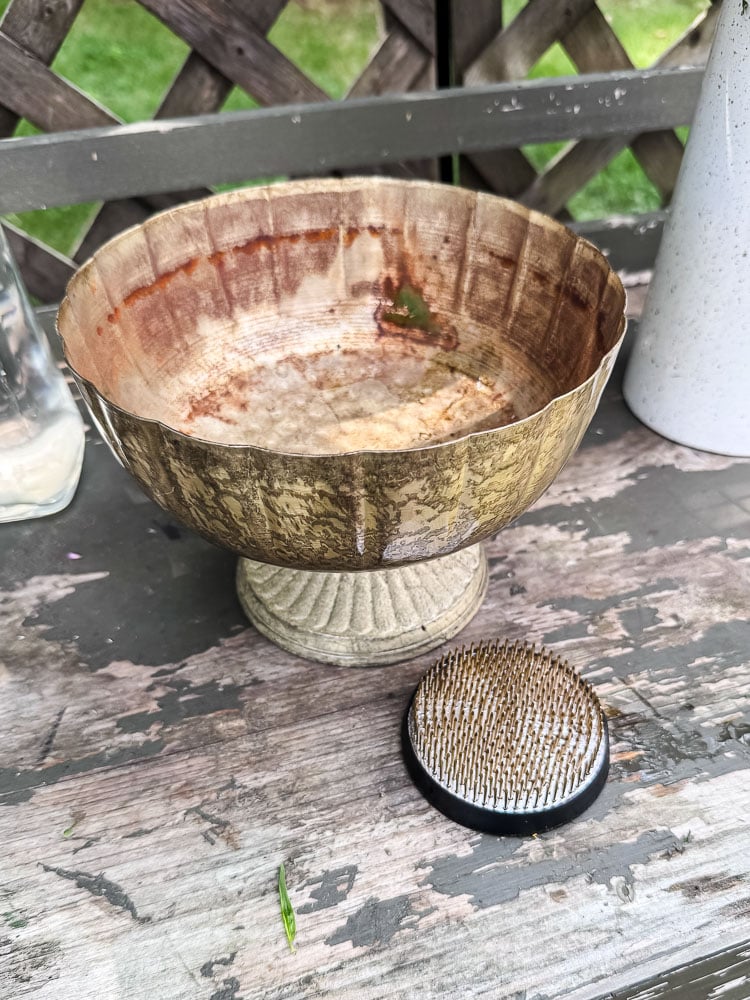
They’re one of those tools that once you have them, you can’t imagine arranging without them. This is the one I have, and I like that it is heavy and stays put on the bottom of my containers
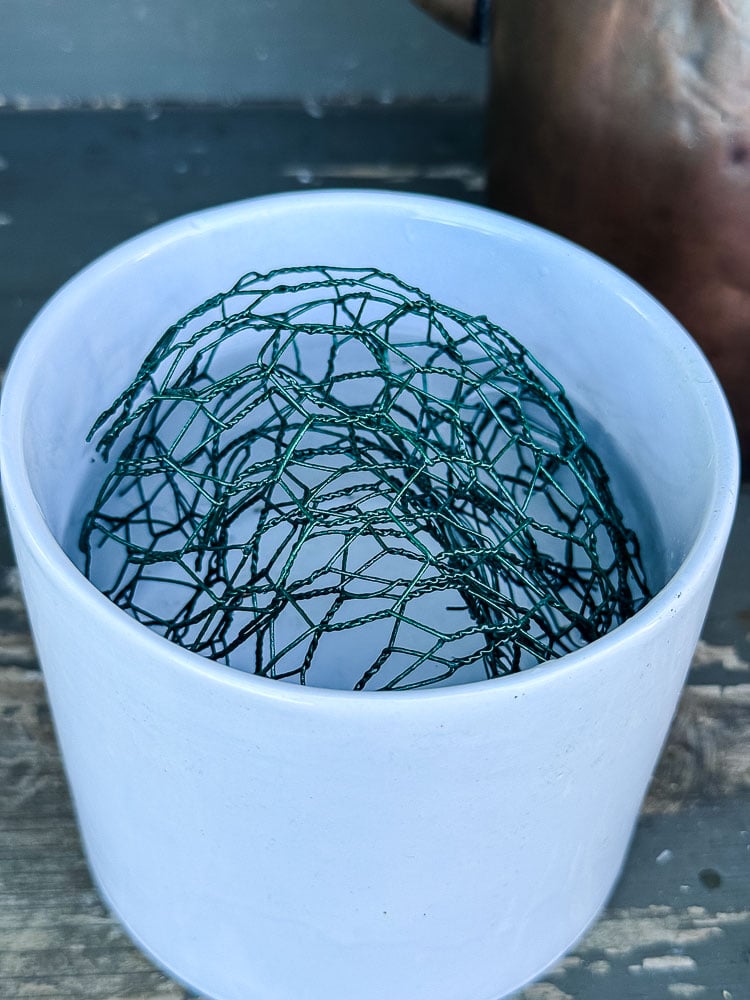
Chicken wire is another option for larger vessels; crumple it loosely inside and use it as a grid to push stems through. Less precise than a frog but very effective for big, abundant arrangements where you want things to spill and spread.
Your Vessel Collection Works Year-Round-Not Just When Flowers Are Blooming
This is the part I really want you to hear, especially if you’re just starting to build a collection of containers: a good vessel isn’t just for fresh flowers. It’s for every season, every mood, and every month of the year.
In my house, the same vessels that hold garden bouquets in July are holding something completely different by October, and by January they’re doing something else entirely. Here’s how I think about it through the seasons:
Spring & Summer
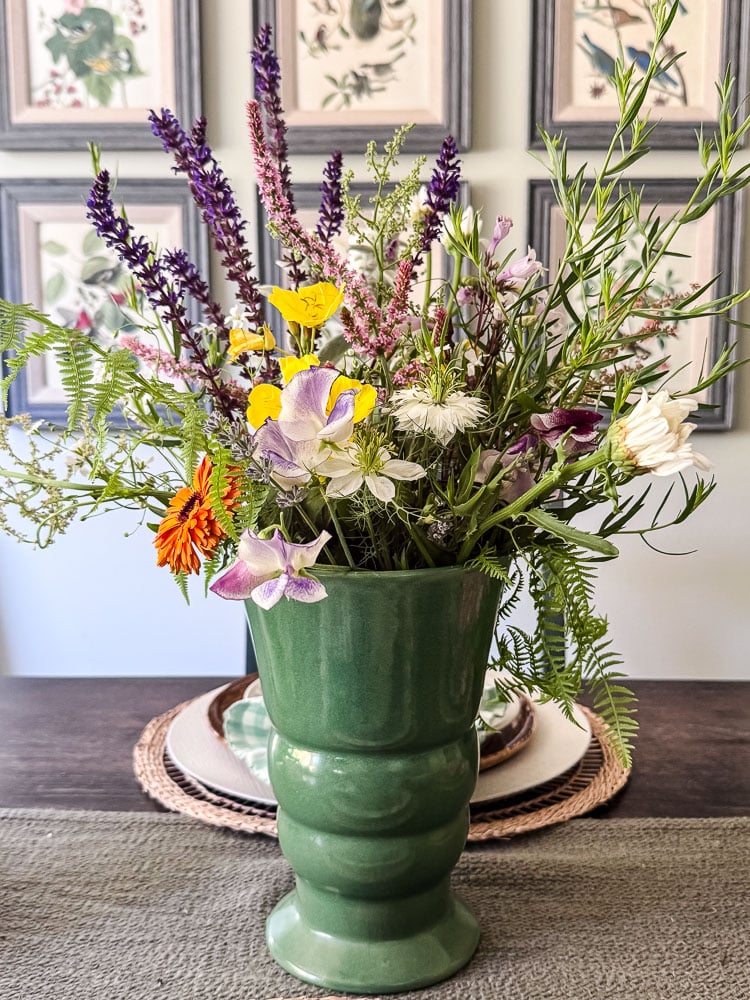
Fresh-cut flowers from the garden or the farmers’ market. This is the obvious one. Zinnias, dahlias, lisianthus, sunflowers, sweet peas. The vessels are working hard, and the vases are never empty
Late Summer Into Fall
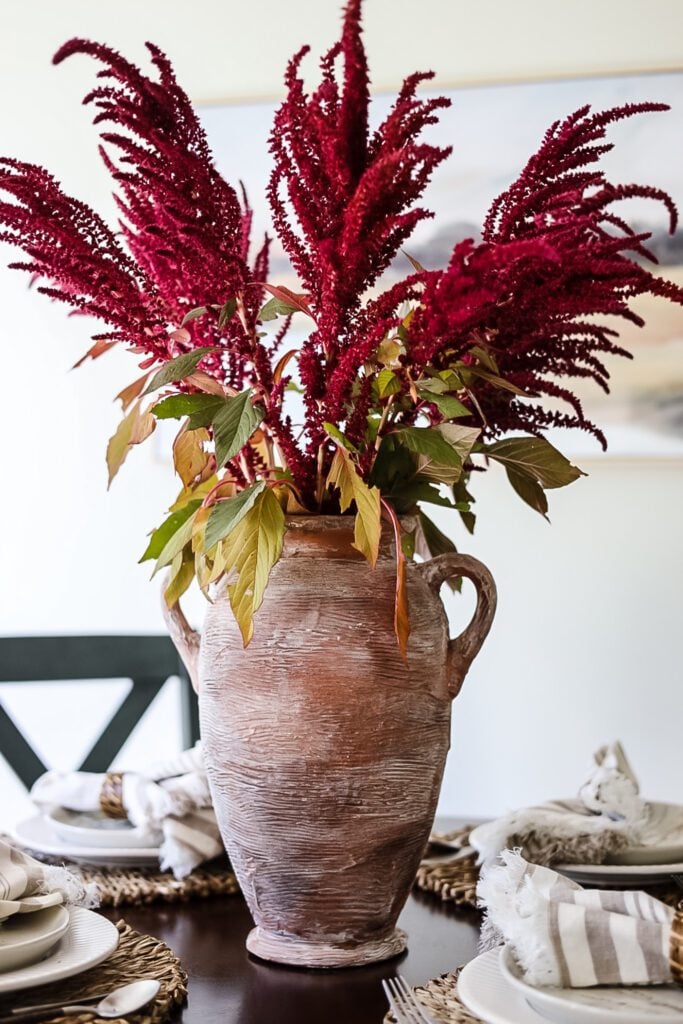
This is when I start transitioning to dried elements alongside fresh ones. A tall, handled urn filled with long branches of amaranth is one of my favorite Fall moments in the house. Dramatic, architectural, and completely from the garden.
Flea Market Flip Vase Makeover
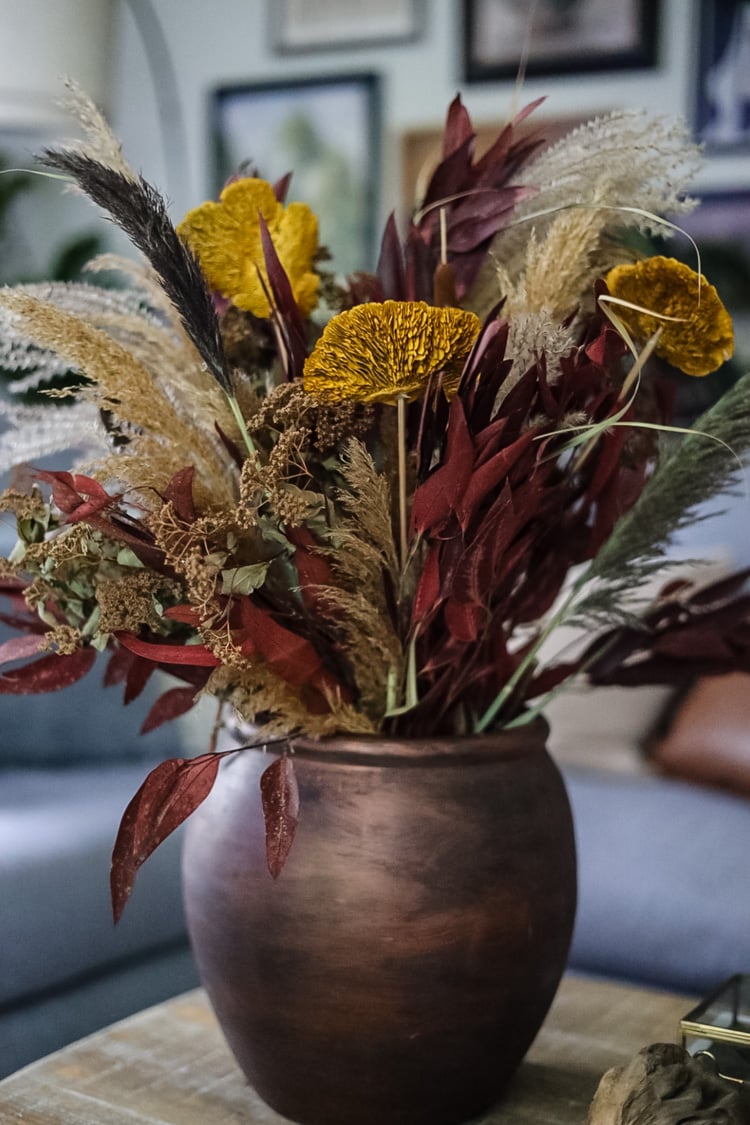
A big vessel filled with ornamental grasses, seedheads, and flowers; all of these move beautifully into vessels as the season shifts. See how I put this arrangement together
Fall
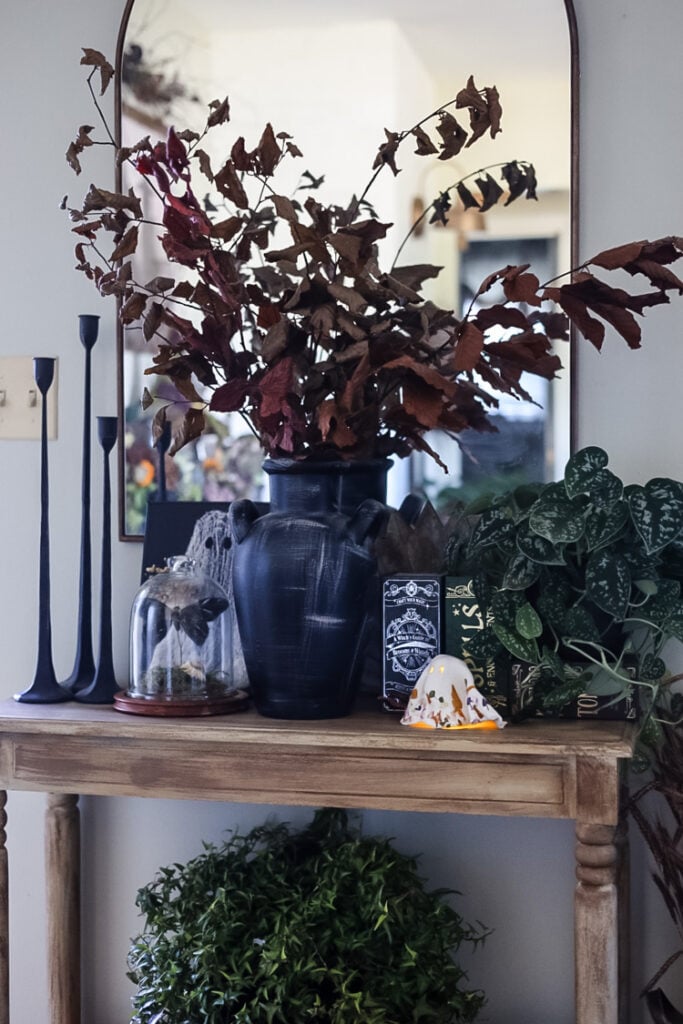
Branches with their turning leaves, dried hydrangea stems. A tall vessel with interesting handles was made for this kind of arranging.
Fall Decorating Ideas Including This Entryway Table
Winter

Evergreen branches, bare branches with interesting structure, dried elements from the summer garden. Some of my most beautiful winter arrangements are the simplest: a handful of pine branches in a dark urn, a cluster of dried flowers in a small stoneware crock.
Holiday Decorating Ideas For A Small Space
Shop Vases:

A Few Vessel Pairings I Love
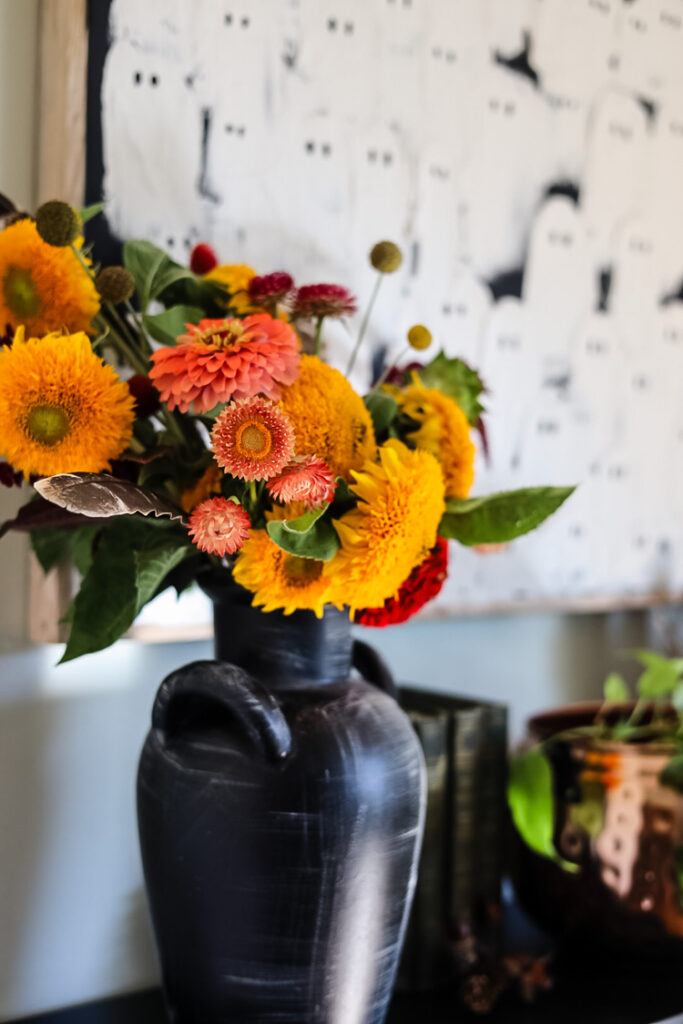
The black matte urn → bold fall arrangement. Teddy bear sunflowers, red zinnias, coral dahlias, amaranth. Dramatic and moody and completely from the cutting garden. Thrift store find, painted over.
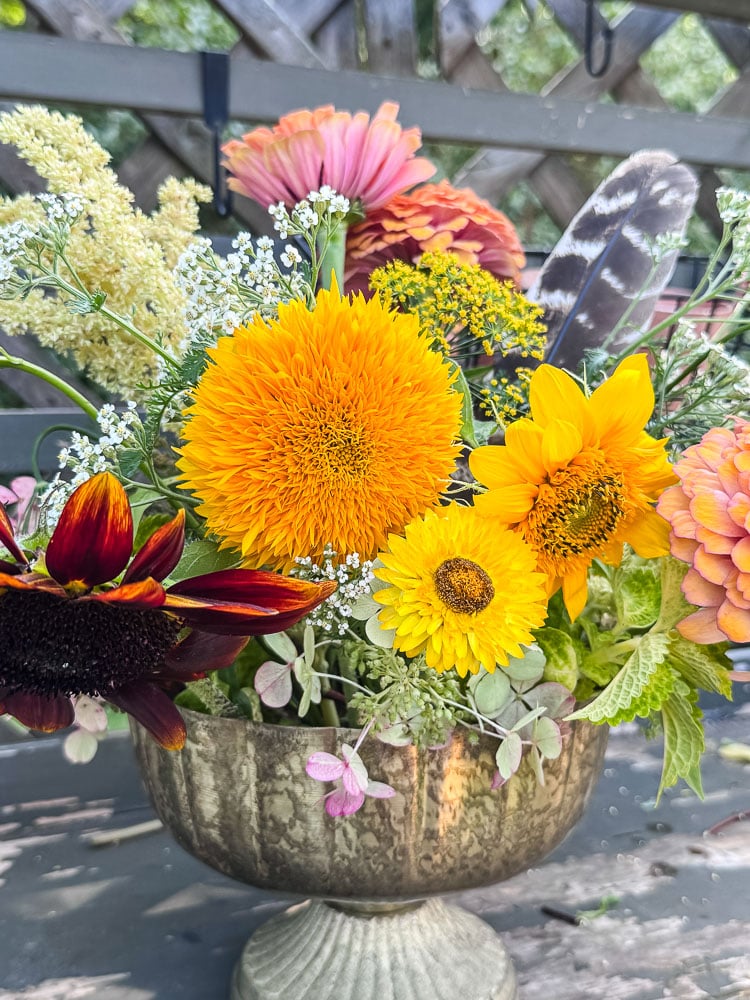
The brass footed compote → abundant late summer mix. Sunflowers, warm zinnias, yarrow, and turkey feathers dropped courtesy of my frequent visitors. Looks like it belongs in a magazine. Also a thrift store find.
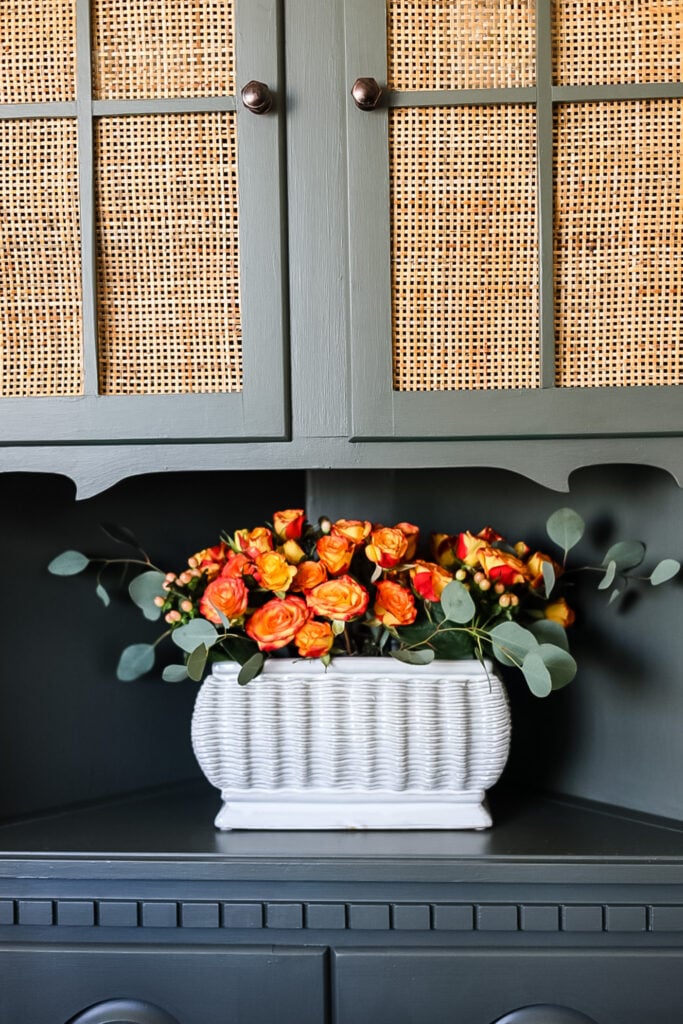
The white oblong vessel → low coral tea rose arrangement. Shape does all the work here. Low and wide, the roses pool inside it like they were meant to be there. Thrift store find.

The tall handled vessel → flowering cherry branches. The branches are enough, and the height of the vessel lets them do their thing. This is what I mean about vessels working beyond fresh flowers.
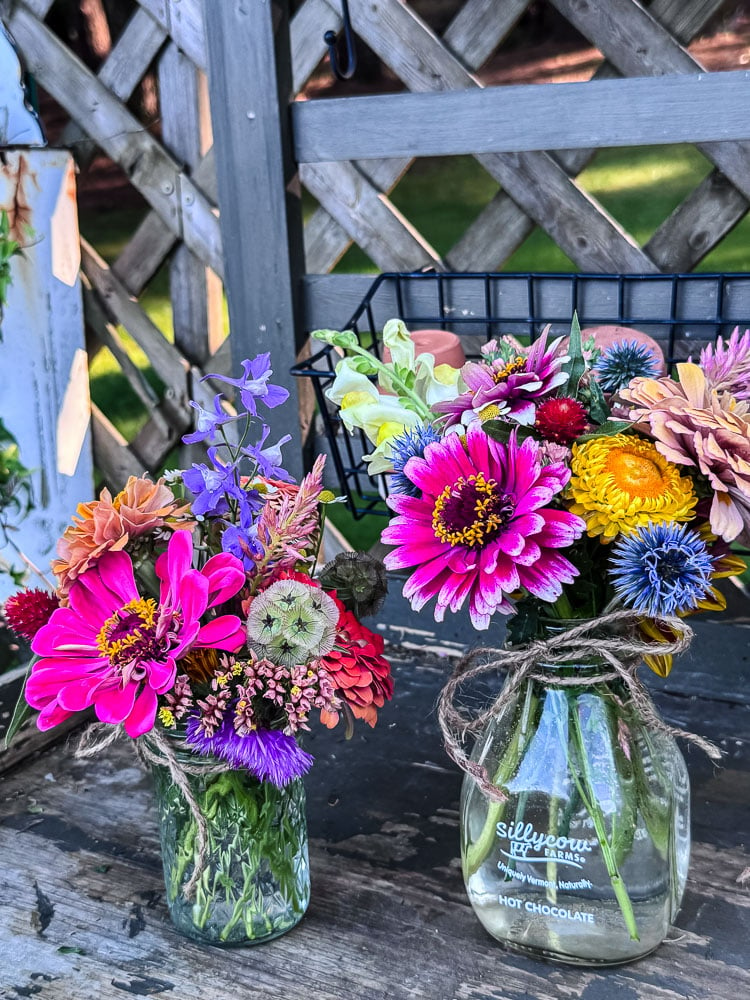
The wide-mouth mason jar → loose colorful summer bouquet. Put a lid frog in it, fill it with whatever is most abundant that day, and you have something cheerful and effortless on any surface.
You don’t need a matching set of vessels or anything expensive. You need to just create your own small stash of a few containers in different heights, widths and colors, collected slowly from thrift stores and estate sales and your own kitchen shelves, and you need to start looking at them as year-round tools, not just flower holders. The flowers, the branches, the grasses, the dried things. They’ll take care of the rest.
What’s your favorite vessel to arrange in? Drop it in the comments. I’d love to know.
See your projects featured! If you were inspired by this or any of my other DIY projects I would love to see them and add you to the Reader’s Spotlight gallery. Send a photo to me at jennifer@cottageonbunkerhill.com
xo, Jennifer
Love projects like this? Don’t miss out! Join my newsletter family for more cozy, budget-friendly DIY ideas delivered right to your inbox. You’ll get exclusive tips, early access to tutorials, and all the inspiration you need to make your home feel handmade and heartfelt.