

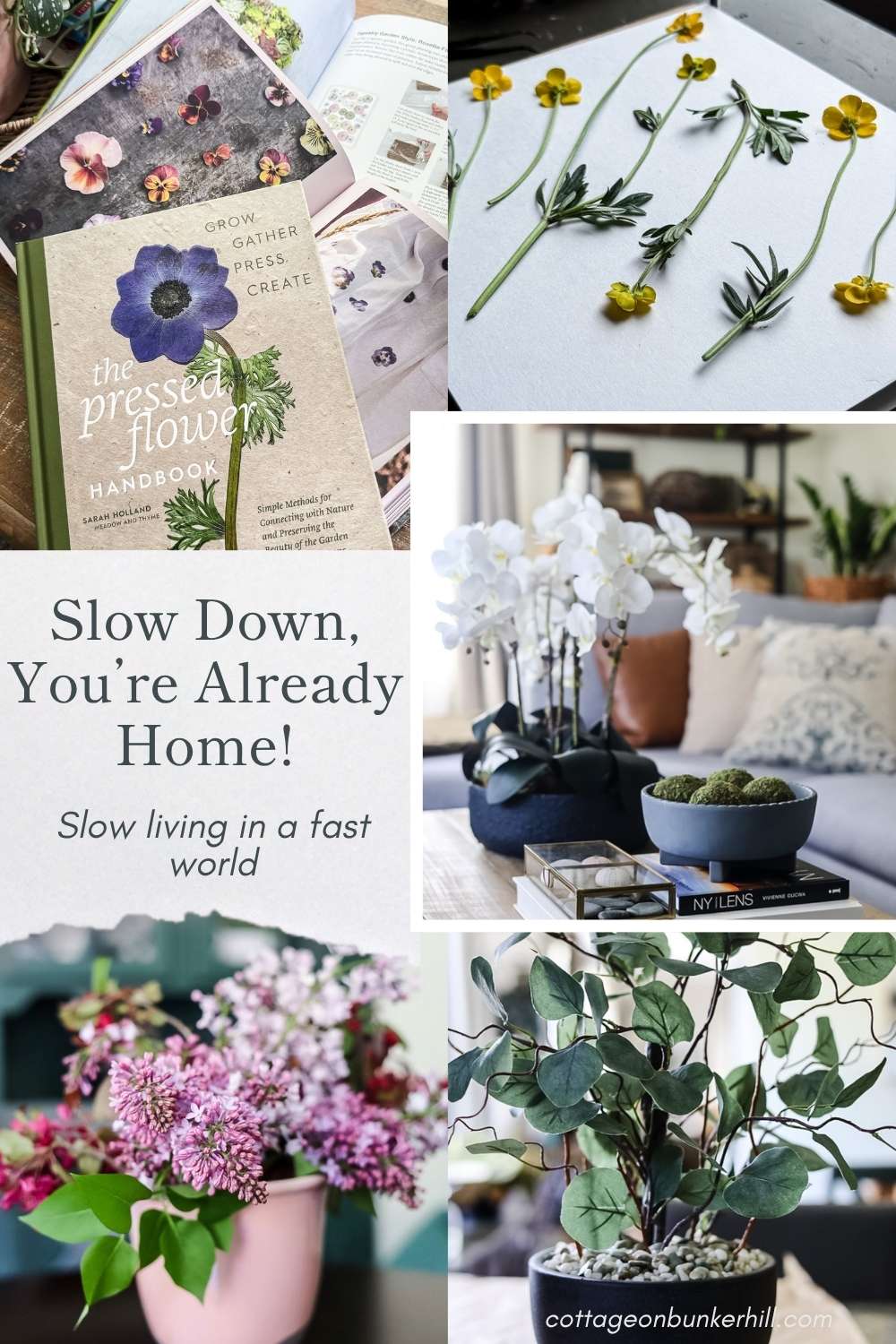
The Art of Slow Living In A Fast World
There’s a particular kind of tired that sets in after too much scrolling.
You know the one. You open Instagram to kill five minutes and somehow emerge thirty minutes later convinced your living room is a disaster, your garden is behind, and everyone else is already decorating for a season that hasn’t started yet. By February, the internet wants you thinking about summer. By July, it’s pushing fall throws.
I’ve been there. And for a while, I played along.
But somewhere between my garden and my thrift store habit, I stumbled into something that felt more like me, slower, more intentional, a little more rooted in what’s actually happening outside my window right now. Are the dahlias blooming? Bring them inside. It’s November in New Hampshire, and everything is grey and bare? Light a candle and lean into it.
Slow living isn’t a new concept, and I’m not going to pretend I invented it. But I do think it’s worth talking about in the context of a home and garden blog, because this space can so easily become another source of more. More projects. More things to buy. More rooms to refresh.
So instead, let’s talk about less. Intentional less. The kind of home that tells a story, not the kind that arrived in an Amazon box.

Hi, I’m Jennifer. To me, home is an ongoing practice in intentional living. Through the rhythms of the New England year, I look for ways to make our spaces not only beautiful, but truly nurturing. I’m so glad you’re here to explore it with me.
This post may contain affiliate links, which means we receive a small commission if you purchase through our links. See our disclaimer page for more information.
Section 1: Slow Decorating & Curating
Does Your Home Tell a Story?
Walk into a slowly decorated home, and you can feel the difference, even if you can’t immediately name it.
There’s the lamp that came from a thrift store two towns over, the one you almost passed up twice before finally tucking it under your arm. The framed botanical print you pressed yourself from something you grew. The quilt, folded over the chair that belonged to someone’s grandmother, bought for $20 at a church sale and was worth more than anything in a catalog.
Now walk into a room assembled in an afternoon from a mood board and a cart full of Amazon impulse buys. It’s fine. It might even be pretty. But it doesn’t have anything to say.
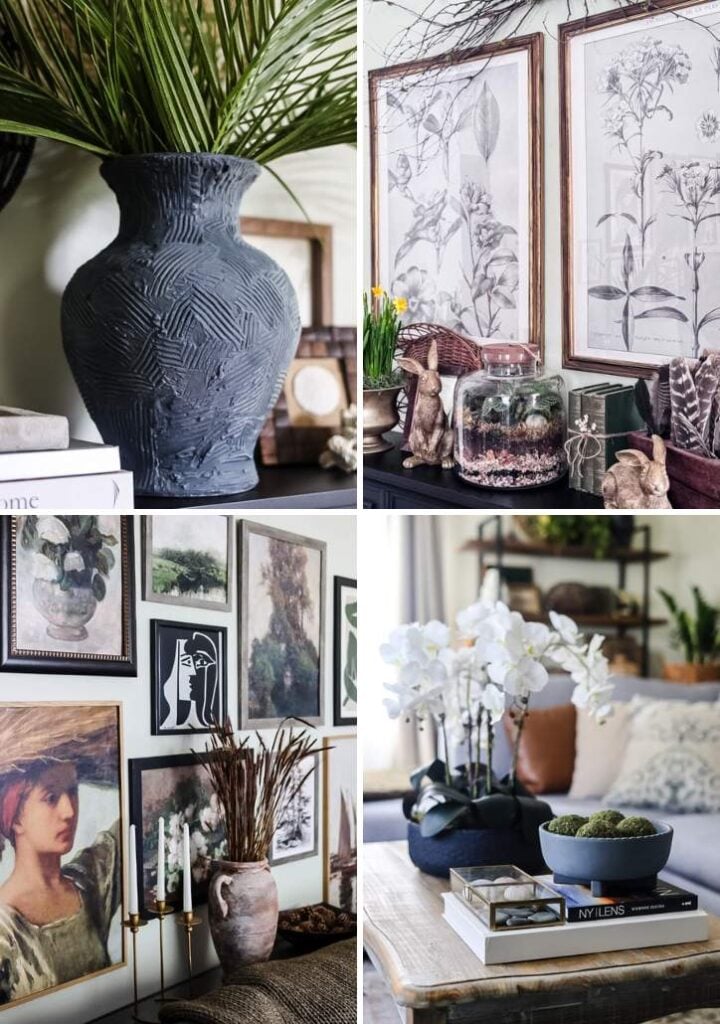
Slow decorating is the antithesis of fast-fashion home decor, and it’s a lot more accessible than it sounds. It doesn’t require a big budget or a design degree. It mostly requires patience, which, I’ll be honest, is the hardest part. We’ve been conditioned to want the finished room now.
But here’s what I’ve learned from years of thrifting, making things by hand, and bringing things in from the garden: a room that came together slowly, piece by piece and season by season, is a room you’ll actually love living in. Not just photographing. Living in.
A few things that have shaped how I think about this:
•Buy less, but better. “Better” doesn’t mean expensive. It means intentional. It means asking why before you buy, not just where does this go.
•Let rooms be unfinished. An empty wall isn’t a problem to solve. It’s an opening for the right thing when you find it.
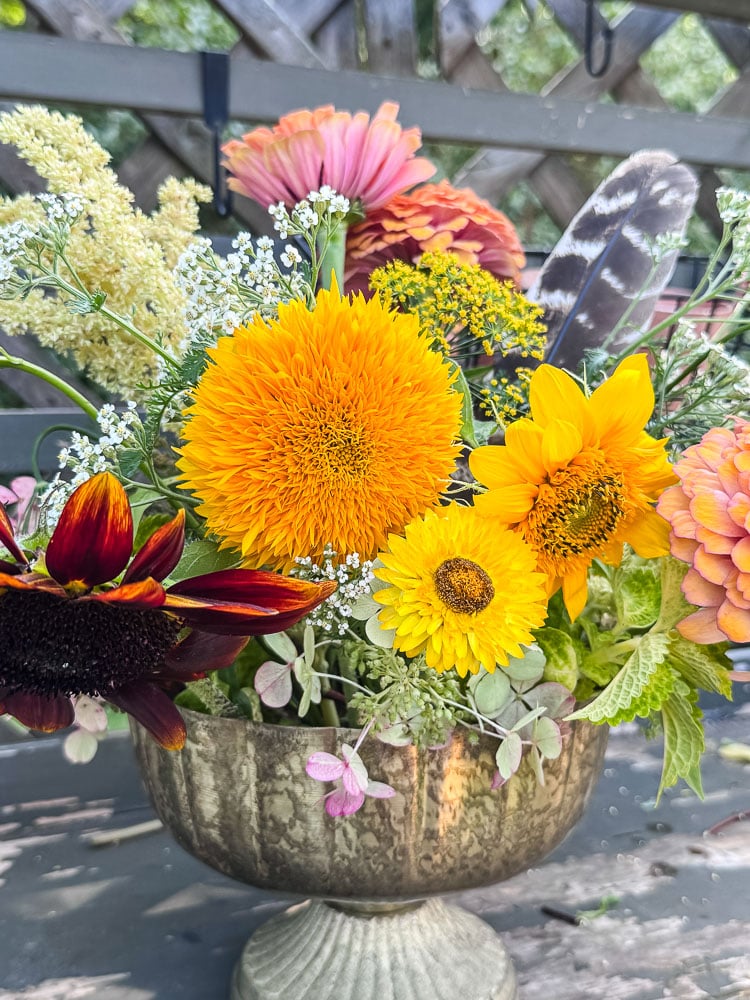
•Bring in what you grew. A glass jar filled with zinnias from the garden costs nothing and changes a room more than a new throw pillow ever will.
•Thrift first, buy new last. The hunt is part of the story. And the story is the whole point.
Section 2: Seasonal Rhythms & Rituals
Let Your Home Follow the Calendar – Nature’s Calendar
Here’s something the home decor industry doesn’t love me saying: you don’t need to buy new things to make your home feel seasonal.
I know. Revolutionary.
The idea behind slow living is that you’re already surrounded by everything you need to mark the turning of the year; you just have to pay attention to it. And if you have a garden, even a small one, you’re genuinely spoiled for options.
In my world, the seasons don’t change when Target puts out a new endcap display. They change when the first tulips push up through the cold ground in April, when the dahlias hit their stride in late August, when the seed heads dry on the stems and start rattling in the October wind. That’s the calendar I decorate by.
And it looks different every single year, which is kind of the whole point.
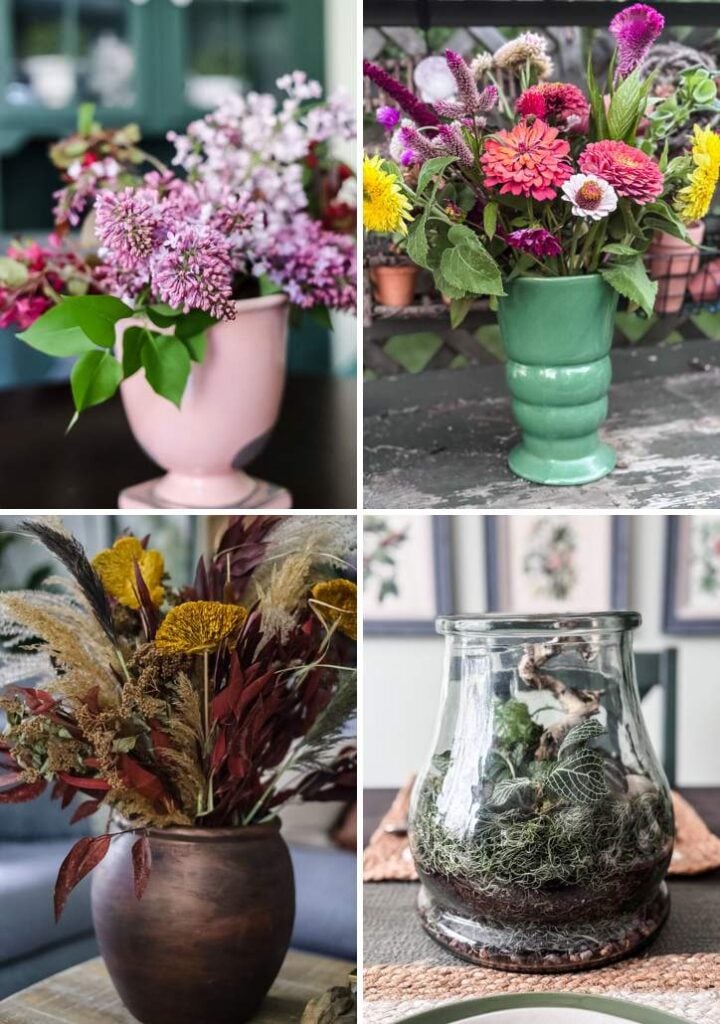
Some of my favorite seasonal rituals are almost embarrassingly simple:
•Spring: The first flowers come inside before they’re even fully open. I clip forsythia branches to force & I love a vase of lilacs on the table. Done.
•Summer: Flowers everywhere, constantly, in every container I own. The garden basically decorates the house for me from July through frost.
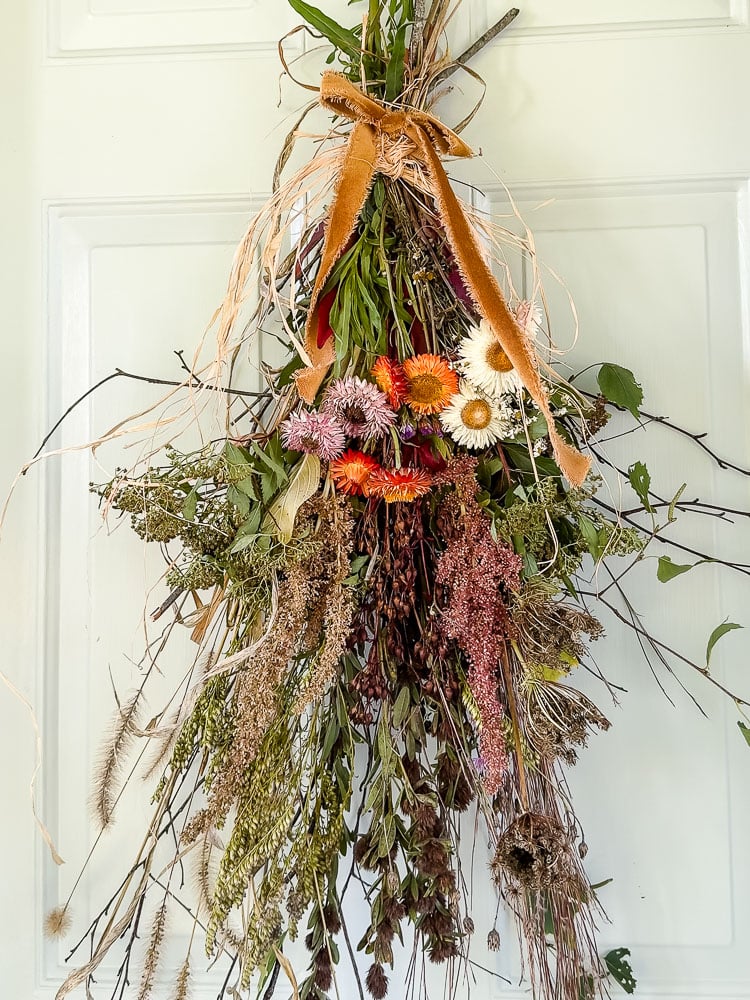
•Fall: Drying what’s left standing. Seed heads, grasses, the last of the strawflowers. The garden transitions from fresh to preserved, and the house follows along.
•Winter: This is actually my favorite season for slow living. Forced bulbs on the windowsill. A terrarium project. Books I’ve been meaning to read are stacked on the coffee table like an intention. The house gets quieter, and so do I.
None of this costs much. Most of it costs nothing. All of it feels more meaningful than a seasonal throw pillow, I promise you that.
The shift I’d invite you to make is simply this: before you reach for the cart, look out the window. What’s happening out there right now? How can you bring a little of that inside?
Fine Art Printables
29 Free Downloads
exclusively for email subscribers
Section 3: The Art of “Enough”
Permission to Stop
I want to say something that feels slightly dangerous to say on a home decor blog:
Your room might already be done.
Sit with that for a second.
We exist in a content ecosystem that is specifically designed to make you feel like your home is always one purchase away from being right. One new lamp. One better rug. One accent wall. The algorithm serves you a beautifully styled room, and something in your brain quietly files your own living room under “needs work.”
But does it? Does it really?
I’ve caught myself mid-scroll, perfectly content with my home five minutes earlier, suddenly making a mental list of everything that needs updating. That’s not inspiration. That’s manufactured dissatisfaction, and the home decor industry runs on it.
Slow living pushes back on that. Hard.
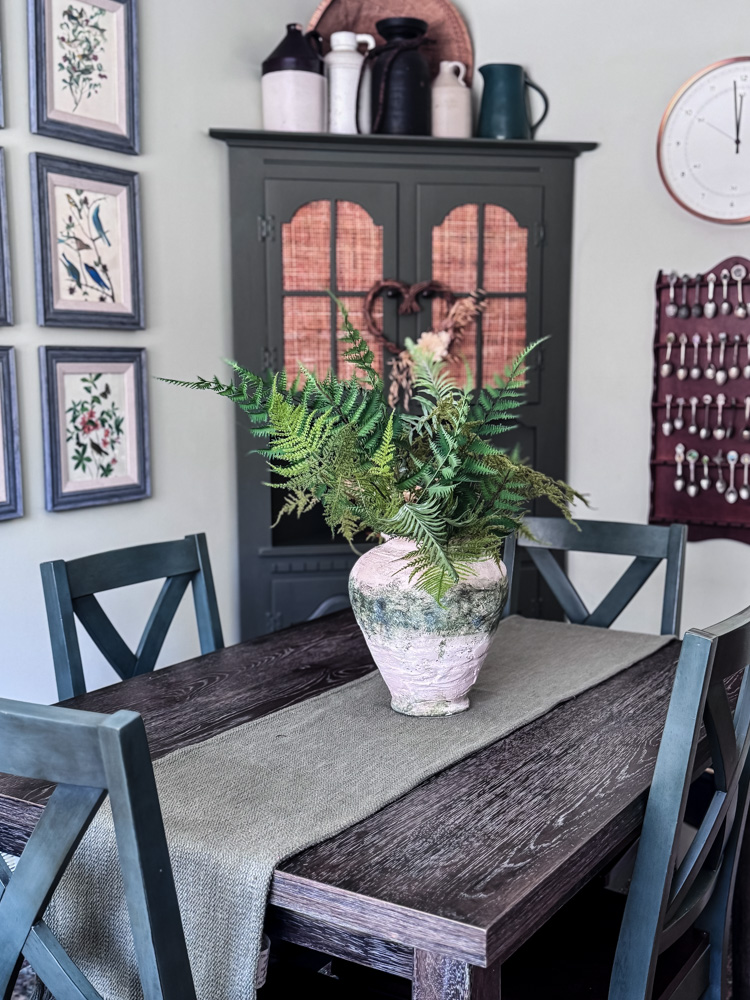
The art of “enough” isn’t about giving up on your space or stopping caring. It’s about being able to look around a room and genuinely think “aahh, this is good. I like it here”. And then just… staying there for a while. Not fixing, not refreshing, not re-doing.
This is something I’ve had to practice, honestly. As someone who makes things and writes about making things, there’s a constant internal pressure to have a new project, a new before-and-after, a new transformation. But some of my favorite corners of my home haven’t changed in years. They just keep being good.
A few things that have helped me find the “enough” threshold:
•Ignore the trend cycle entirely. Seriously. Mute the words “trending,” “aesthetic,” and “2026 home decor” and see how much more satisfied you feel with what you already have.
•Do a slow lap of your own home. Not with a critical eye but with a curious one. What do you actually love? What makes you happy when you walk past it? Start there.
•Sit in your rooms more. Actually sit without your phone. Notice what works. Notice what feels right. You might be surprised how much is already good.
The most beautifully curated home I’ve ever been in belonged to a woman in her seventies who hadn’t bought a single new thing for her living room in fifteen years. Every piece had a story. Nothing matched perfectly. The whole room felt like her. I think about that room a lot.
That’s the goal. Not a showroom. Not a mood board. A room that feels so much like you that a stranger could walk in and learn something true about who you are.
Section 4: Handmade & Heartmade
The Thing About Making Things
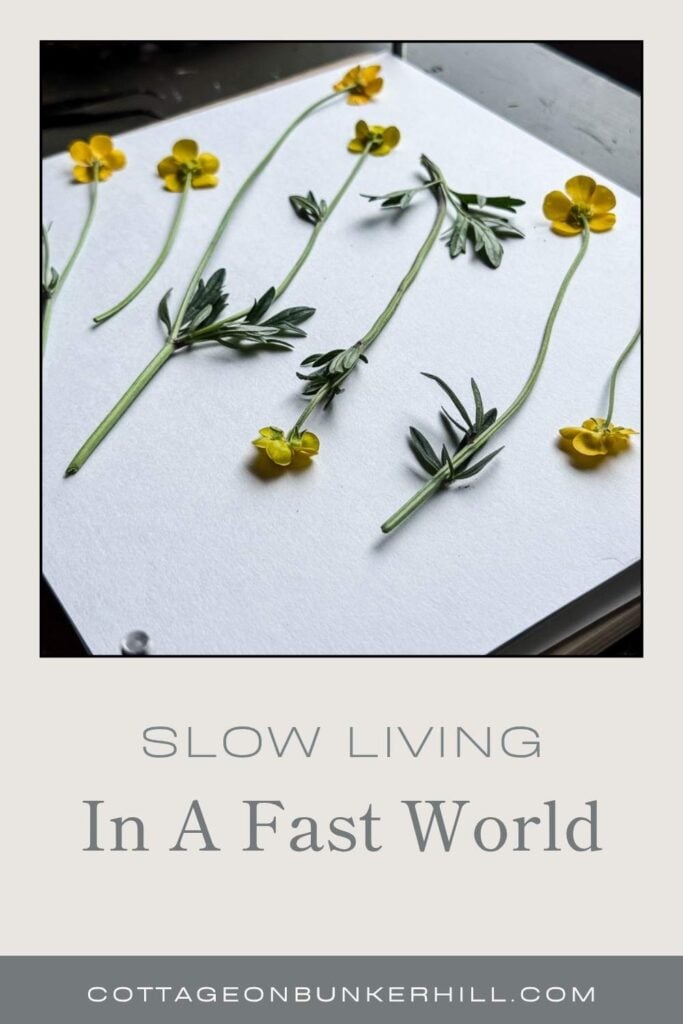
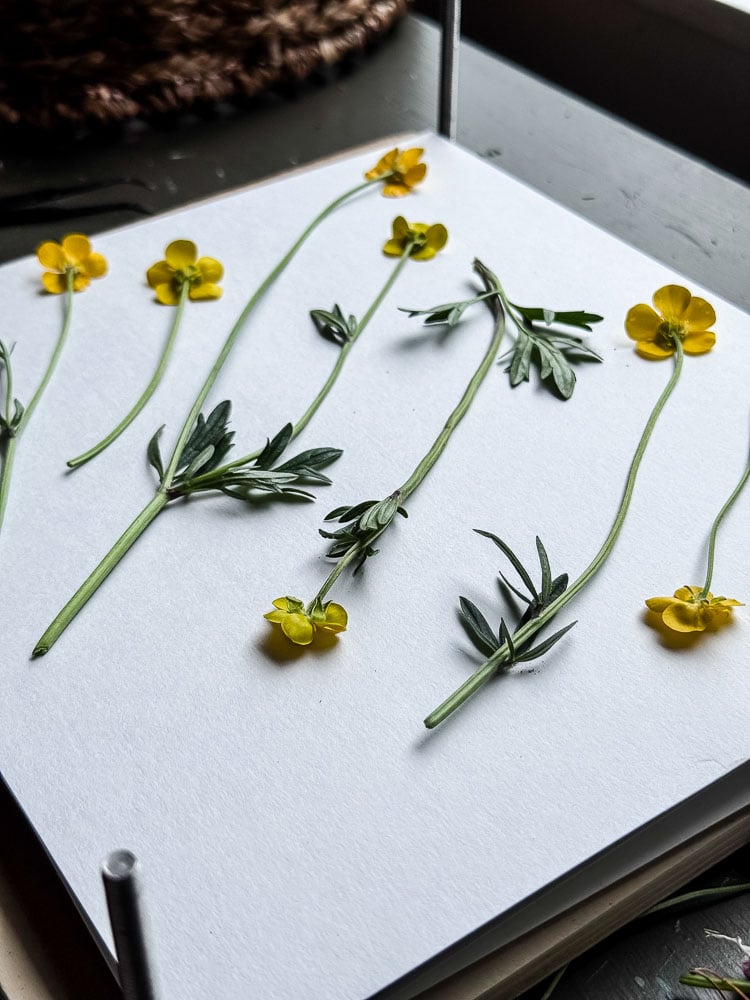
There’s a pressed flower on the shelf next to me that I grew, harvested, pressed, and framed myself. It cost me almost nothing. It also happens to be just a small, handmade touch that I really love!
Not because it’s particularly perfect, it isn’t. But because every time I look at it, I know exactly where it came from. I remember planting the zinnias. I know what the garden looked like that summer. That flower has a whole story attached to it, and that story lives in my house now.

That’s what handmade does, that purchased things almost never can.
Slow living has a deep and genuine appreciation for the made thing, not because handmade is always prettier or better, but because the process of making something changes your relationship to it. You’re not a consumer in that moment. You’re a creator. And there’s a kind of quiet satisfaction in that which is genuinely hard to find anywhere else.
I’ll be honest: I came to this gradually. I started making things mostly because I needed a creative outlet and also because I wanted stuff I couldn’t afford to buy. Pottery Barn had beautiful things. My budget did not match Pottery Barn’s vision for my home. So I figured things out. I upcycled secondhand finds. I made wreaths. I figured out clay. I learned to work with what the garden gave me.
And somewhere along the way, the making became the point- not just the having.
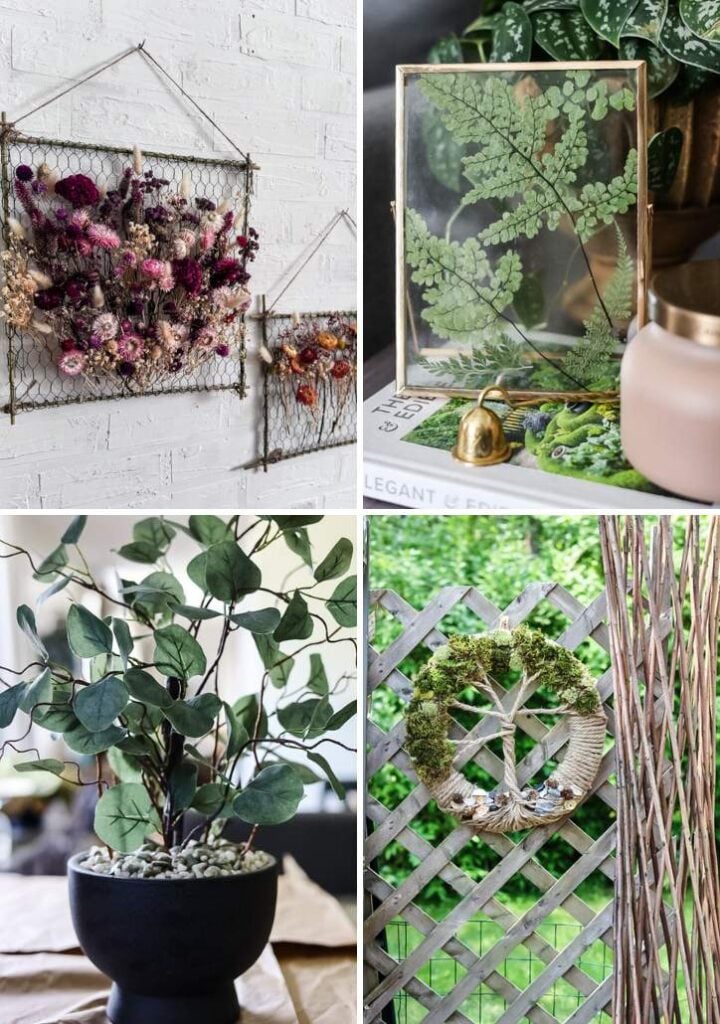
What I love about a handmade home is that it’s inherently slow. You cannot rush a pressed flower. You cannot speed race through making a dried wreath. The project takes as long as it takes, and the pace of it is actually good for you in a way that’s hard to explain until you’ve experienced it.
A few things worth saying about this:
•Imperfect is the point. A slightly uneven clay magnet, a wreath that isn’t perfectly symmetrical, these are features, not flaws. They’re proof that human hands made this thing.
•You don’t have to be “crafty.” I reject this word entirely. Making things is a skill you build, not a personality trait you’re born with. Start simple. Start small. Start with something you grew.
•The process is the reward. I know that sounds like something you’d read on a motivational poster, but I mean it practically. The hour you spend pressing flowers or assembling a wreath is an hour you were present, offline, and making something real. That has value completely independent of the finished object.
•Give yourself permission to learn slowly. I’ve been teaching myself paper flowers for a while now. I’m not good at them yet. I’m completely okay with that. The learning is part of the living.
Your home doesn’t need to look like a craft fair. But one or two things you made yourself, really made, with intention and your own hands, will anchor a room in a way that nothing you can buy ever quite manages.
A Note From Me
Here’s something I’ve had to come to terms with, and I suspect some of you who also create, whether for a blog, social media, or just for the people in your life, might relate to: I make things that I never share.
Not everything. Not even most things. But some.
There are projects sitting in my house right now that were never filmed, never photographed, never documented for a tutorial. They exist purely because I wanted to make them. Because the making felt good and the having feels good, and that is, it turns out, completely sufficient.
It took me longer than I’d like to admit to reach that conclusion. When your job is to create projects and film them and photograph them and share them with the world, there’s a creeping feeling that an undocumented project is somehow… unfinished. Like it didn’t count. Like the making only matters if someone else can see it.
That’s a lie, by the way. A very modern, very online lie.
Some of the most satisfying things I’ve ever made were made purely for myself. No camera. No tutorial. No before-and-after. Just me, making something, because I wanted to. And I think protecting a little of that by keeping some small corner of your creative life just for you is one of the most genuinely radical acts of slow living there is.
Section 5: Creating Tech-Free Zones & Times
Put the Phone Down. Seriously.
I say this as someone who is literally on the internet for a living.
We talk a lot about slow living in the abstract: the intentional home, the handmade thing, the seasonal ritual, but all of it is undermined pretty quickly if you’re doing it with one eye on your phone. You cannot be present in your home and simultaneously be somewhere else entirely, which is what scrolling essentially is. Somewhere else. Someone else’s home. Someone else’s garden. Someone else’s perfectly styled selfie at golden hour.
I’m not here to lecture anyone about screen time. I have a phone. I use it constantly for work. I am not living in a cabin in the woods, making my own candles and churning butter. But I have found, genuinely and practically, that protecting certain times and certain spaces from the pull of the screen changes the quality of everything else.
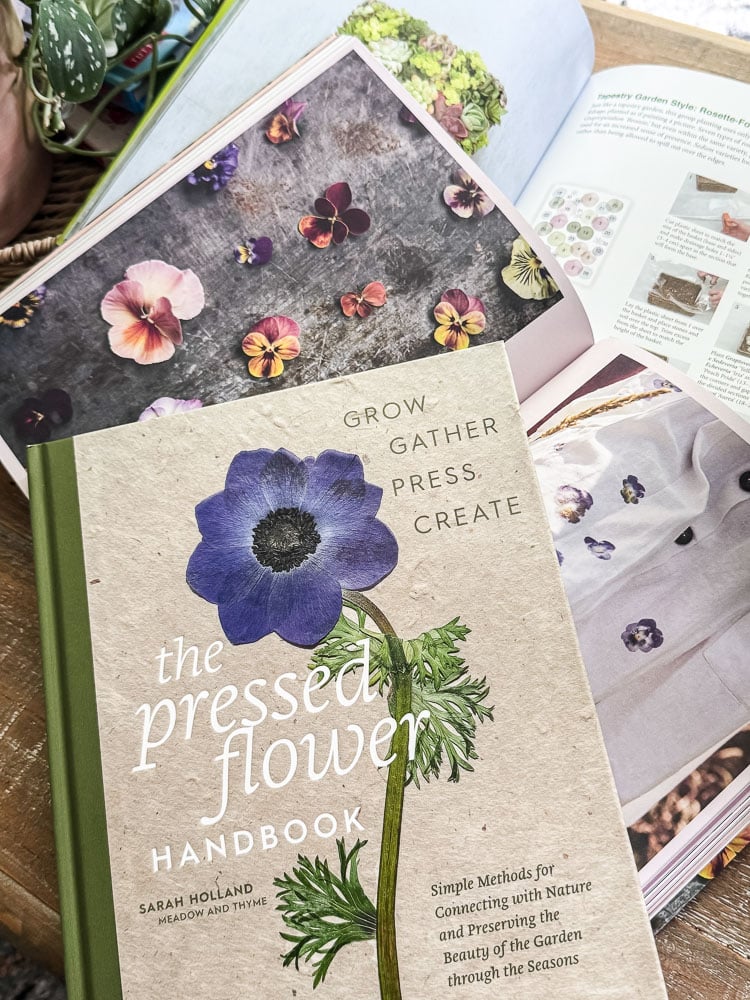
For me, it looks like this: I read actual books. Physical, hold-in-your-hands, no-notifications books. And not just any books, I read books about things I want to learn. Right now, my stack includes everything I could find on terrariums, succulents, pressed flowers, and flower crafts. I am slowly, imperfectly teaching myself things at the pace of a person who reads instead of watches tutorials at 1.5x speed.
It is slower. It is also so much better.
There’s something about reading as a learning method that feels deeply aligned with slow living. You have to sit with the information, turn it over, and come back to it. You can’t skip to the good part. The whole thing is the good part.
Some practical ways to carve out tech-free time and space that have actually worked for me:
•Designate one room or space as phone-free. For me, it’s wherever I’m reading or working in the garden. The ringer is silent. Shockingly, nothing bad has ever happened as a result.
•Replace the scroll with a skill. Instead of thirty minutes of Instagram before bed, spend thirty minutes with a book about something you’ve been curious about. Terrariums. Botanical illustration. The history of cottage gardens. Whatever pulls at you.
•Let your hands be busy. Pressing flowers, working with clay, and arranging a vase are all naturally screen-incompatible activities. When your hands are occupied with something real, the phone loses its gravitational pull almost entirely.
•Give yourself a slow morning, even occasionally. Coffee, no phone, just the window and whatever’s happening in the garden or on the street. Even twenty minutes of this resets something in your nervous system that a hundred motivational reels cannot touch.
The tech-free zones in my life aren’t about being anti-technology. They’re about being pro-attention. Pro-presence. Pro-actually-being-in-the-room-I-worked-so-hard-to-make-feel-like-home.
That’s the whole point, really.
Slow Down. You’re Already Home!
Here’s the thing about slow living that nobody tells you: it’s not something you achieve. There’s no finish line, no perfectly curated Instagram grid that signals you’ve arrived. It’s just a series of small, quiet choices made over and over again.
Choose the thrifted lamp with the good story over the fast-shipping alternative. Spending time filling your flower press. Make the thing you want to make, even if especially if you never share it with anyone. Let the room be done for a while. Put the phone in the other room and read the book.
None of this is dramatic. None of it will go viral. But accumulated over weeks and months and years, these choices shape a home that feels genuinely, deeply like you. Not like a mood board. Not like a trend. Like the actual life you are actually living, right now, in this season, in this place.
I live in New Hampshire. My garden tells me when the seasons change. My thrift store finds tell me what I’m drawn to. My handmade things tell me what I’ve been curious enough to try. My home is the sum of all of that: imperfect, evolving, and completely mine.
Yours can be too.
It doesn’t require a bigger budget or a better eye or more time. It mostly just requires slowing down enough to pay attention to what you already have, what’s already growing, what’s already good.
Your home is already trying to tell a story.
Give it a little time to find the words.
xo, Jennifer
If this resonated with you, here are a few more posts in this same spirit:
- My Mindful Home Manifesto: My personal promise to choose curiosity over consumption and build a home that feels like me, not a trending aesthetic. This is where it all started.
- Anti-Haul: What I’m Not Buying for My Home in 2026: The Manifesto in action. A practical list of what I’m consciously skipping this year and what I’m doing instead.
- Style With Soul: How I Really Decorate: A look at the six pillars behind my decorating philosophy: thrifting, DIY, garden-to-home living, and buying with intention. A beautiful home on any budget-this is the how.


Love projects like this? Don’t miss out! Join my newsletter family for more cozy, budget-friendly DIY ideas delivered right to your inbox. You’ll get exclusive tips, early access to tutorials, and all the inspiration you need to make your home feel handmade and heartfelt.


Very well said. I agree with everything 100%. I’m in my 70s so have been blessed to start out home keeping in a zero internet/cell phone/screen era. Also we were not yet financially able to just shop so we used it up, wore it out and made do which fuels the creativity like nobody’s business 🙂 you’re definitely on the right track to living a life of inner delight and sustainable contentment.