

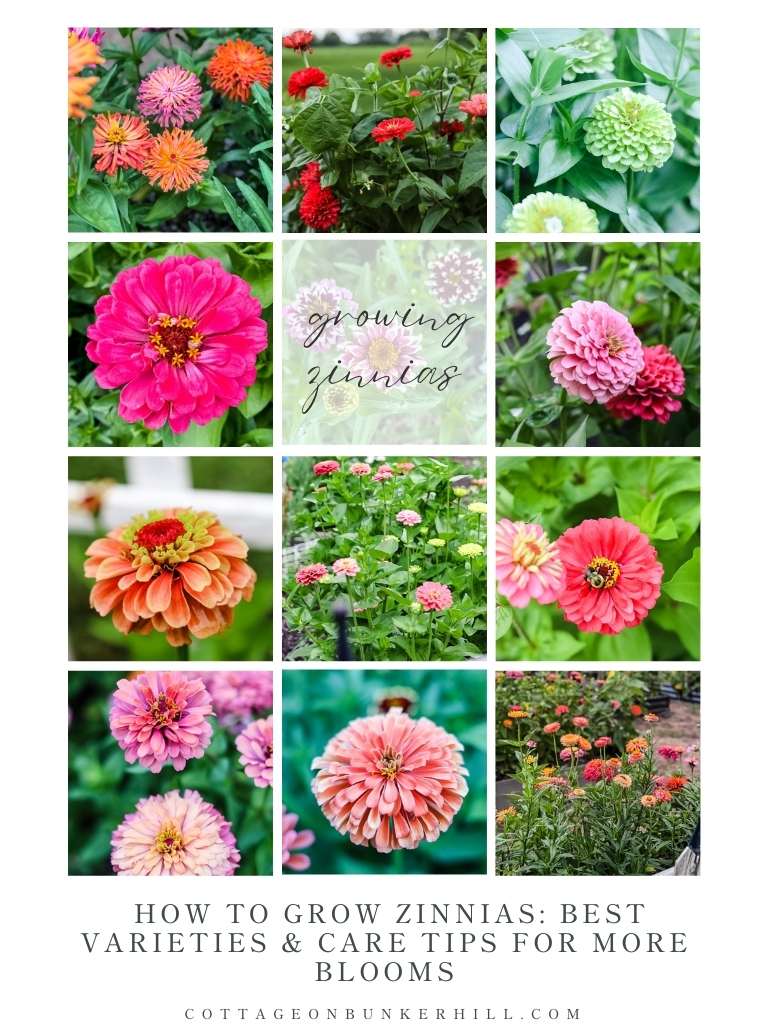
Zinnias are the flower that got me hooked on cutting gardens, and years later, they’re still a non-negotiable in my garden every single summer. Here’s everything I’ve learned about growing them well, including the varieties I can’t stop planting!
Why Every Cutting Garden Needs Zinnias
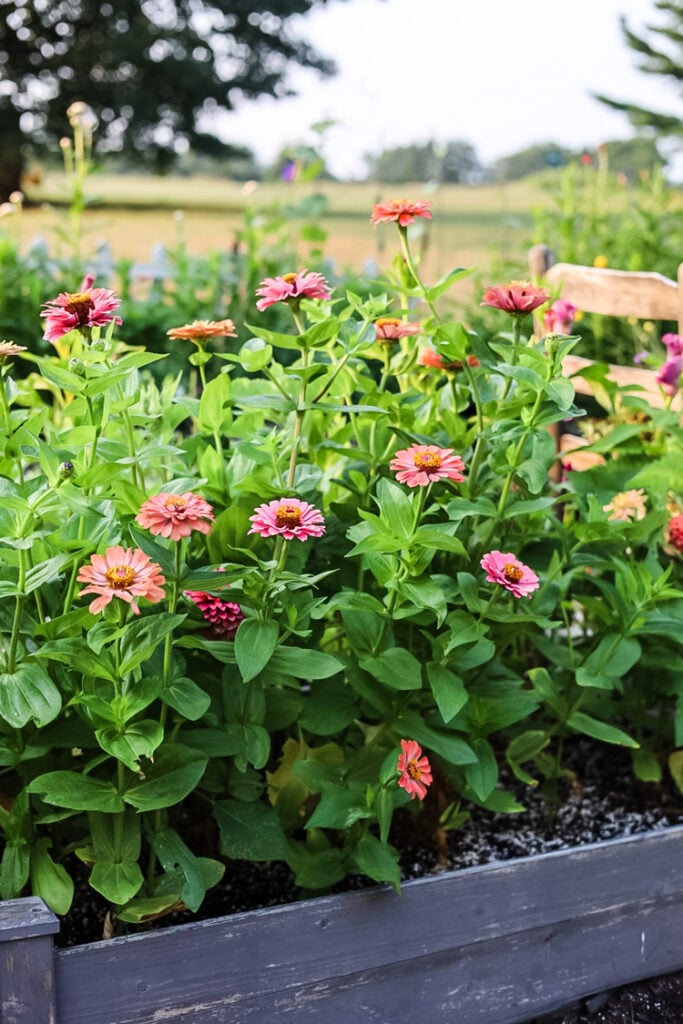
I’ve grown zinnias every single summer for years, and every year I’m convinced all over again that they belong in every cutting garden. No flower gives you more for less: they’re forgiving of imperfect soil, they laugh at heat waves, they shrug off neglect, and by August you’ll be cutting armloads of blooms for the kitchen table while the plants just keep going as if nothing happened.
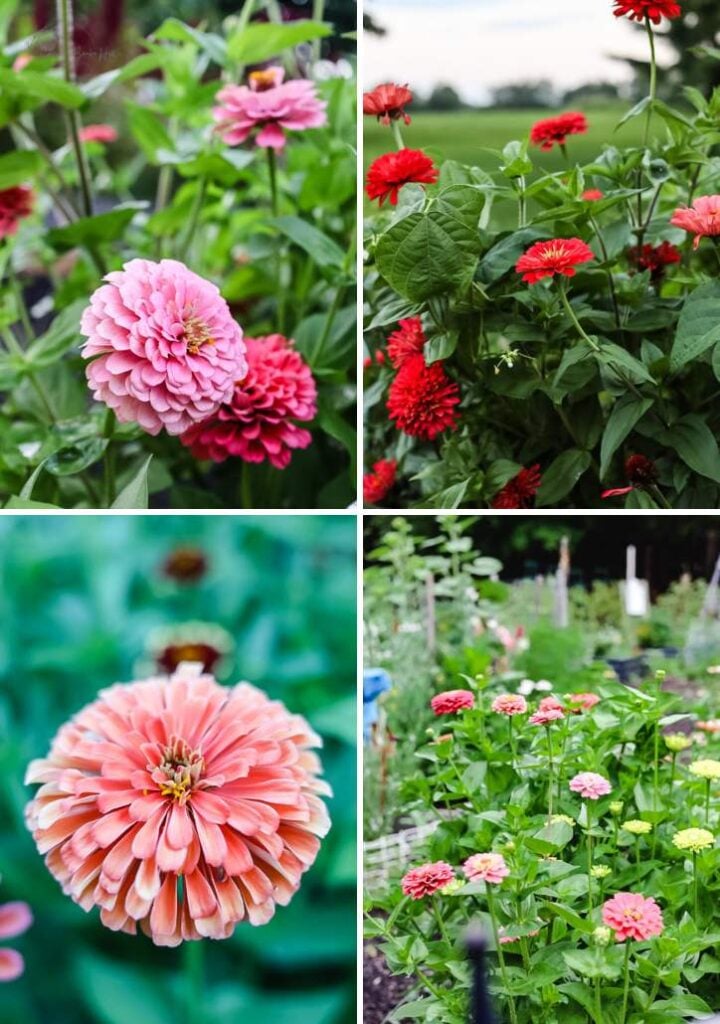
Last summer, I grew almost a dozen varieties in my New Hampshire Zone 6a cutting garden, including three brand-new ones from Johnny’s: Aurora, Agave, and Ballerina that completely stole the show. I’ve also grown my share of duds over the years, learned which varieties actually hold up as cut flowers (not all of them do!), and figured out the timing tricks that make a real difference here in New England’s shorter growing season.
Whether you’re planting your very first zinnia seeds or you’ve been growing them for years and want to level up your variety choices, this is everything I know and have tried in a real garden, in a real New Hampshire summer, by someone who is out there cutting flowers three times a week from July through frost.
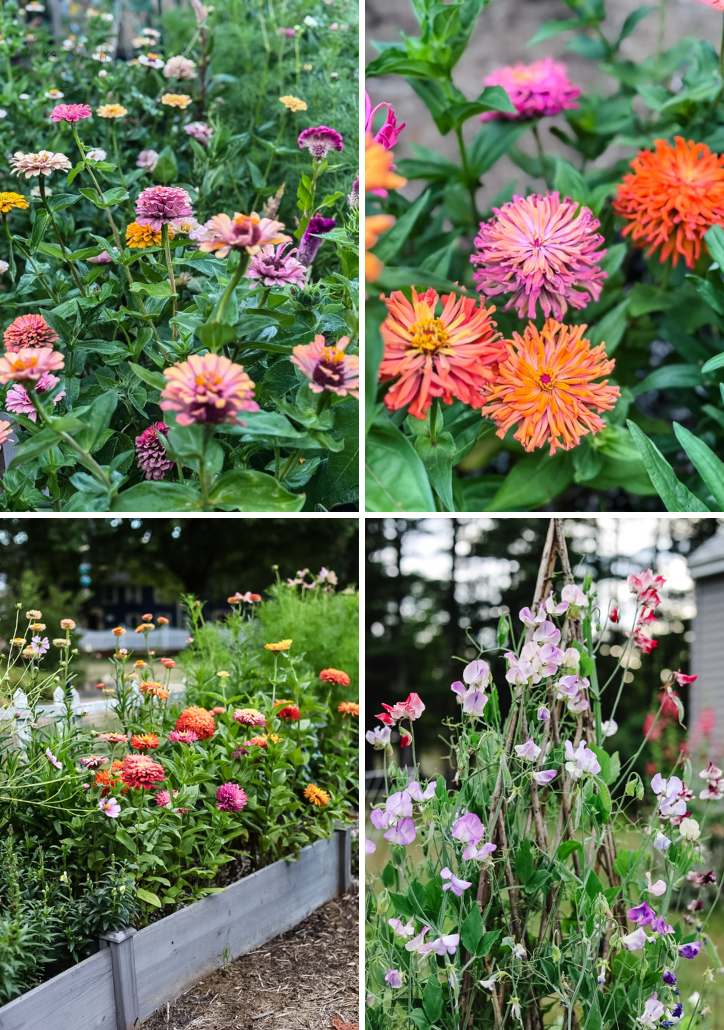
But the real showstopper is their dazzling variety of colors that you can grow: from vivid reds, fiery oranges, sunshine yellows, cool purples, and even lime greens. The bloom sizes range from petite 2-inch charmers to whoppers like the ‘Benary Giant’ series of zinnias.
These beauties aren’t just eye candy; they also attract butterflies and bees to your garden, serve as long-lasting cut flowers, and are even deer-resistant.
A pack of zinnia seeds is just a few dollars, making them an affordable way to add a burst of color and benefits to your garden. Best of all, they’re easy to grow from seed, whether you start indoors early or sow directly outdoors in warmer months.
Welcome! I’m Jennifer from Cottage on Bunker Hill. A home gardener for over 20 years, I’ve spent the last 5 specializing in our cut flower garden, learning through trial, error, and a lot of dirty knees what actually works. My focus is on growing flowers with a purpose, whether for a vase on the kitchen table or for lasting projects, using simple, repeatable methods that fit into a real, busy life.
This post may contain affiliate links, which means we receive a small commission if you purchase through our links. See our disclaimer page for more information.
Essential Growing Tips for Lush Zinnias
Let me share my best planting and growing tips for zinnias. If you are a new gardener, I think zinnias are a great first flower for you to try. They are easy to grow and come in so many colors and varieties.

Best Soil Conditions for Zinnias
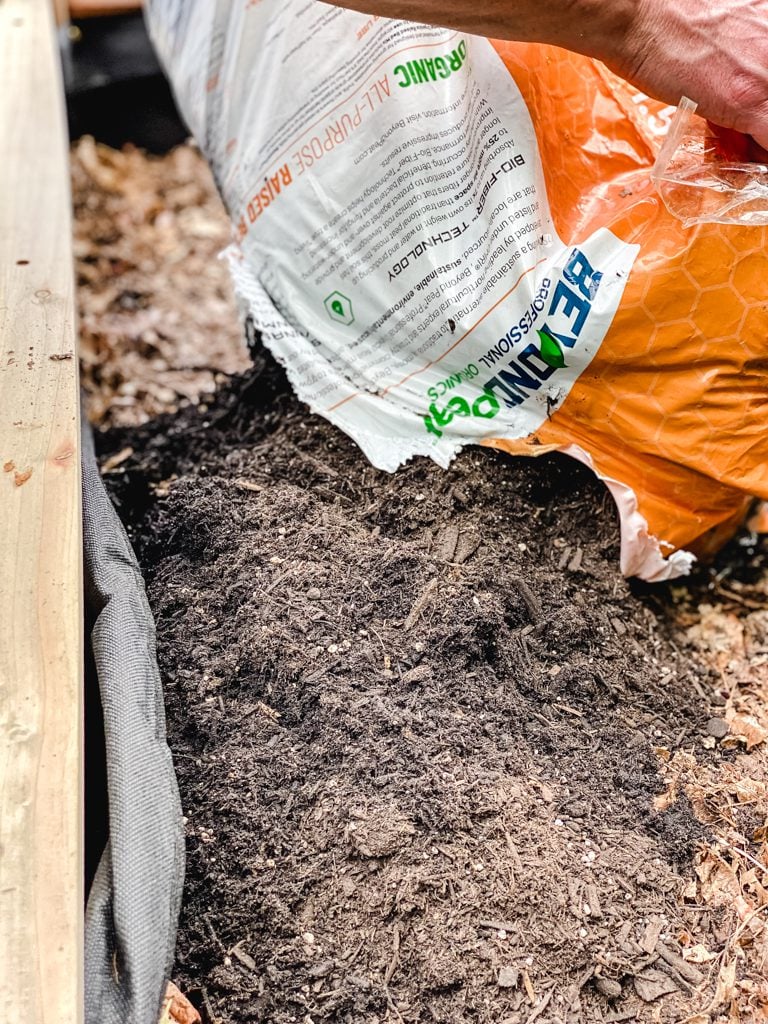
Zinnias are genuinely low-maintenance when it comes to soil; they’re not fussy. I refresh my raised beds each spring with a layer of organic compost and a slow-release fertilizer before planting, and that’s really all they need to get off to a strong start.
The one thing they do care about is drainage. Zinnias will not tolerate soggy roots, so good drainage is the difference between plants that thrive and plants that sulk and rot. If your soil is heavy clay, work in some compost to loosen it up, or consider a raised bed. I’ve grown zinnias in raised beds for years, and it’s honestly the easiest way to give them exactly what they want.
Zinnias Love Warm Soil: Here’s When to Plant for Best Results
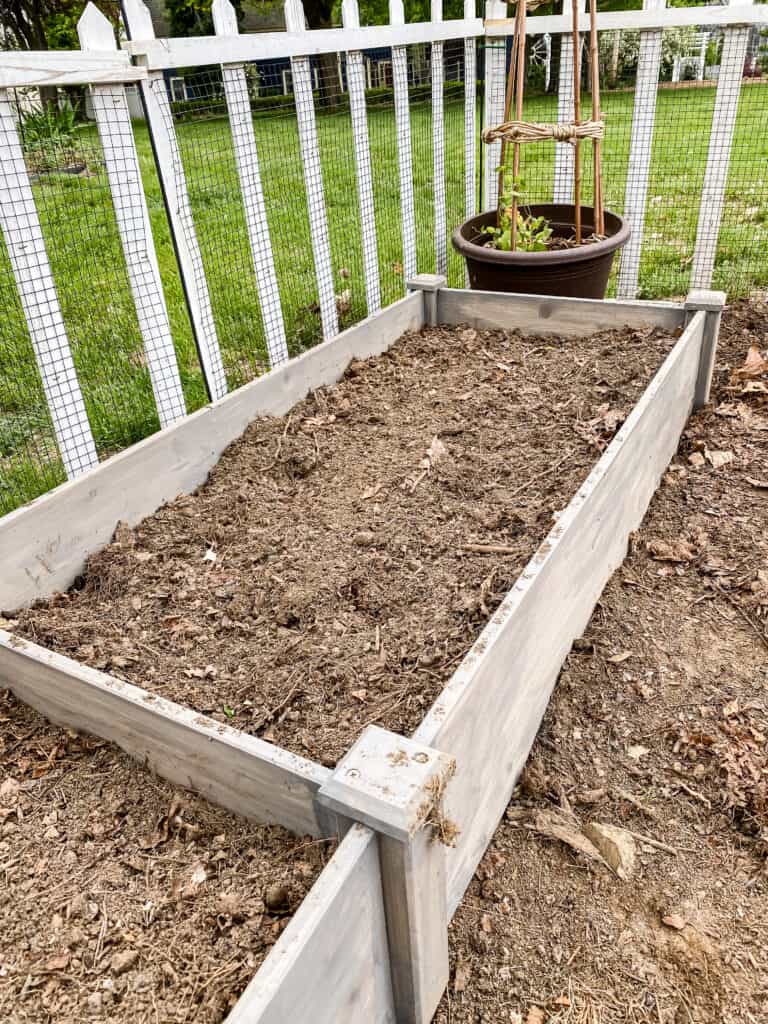
Zinnias are sun-worshippers that crave warm soil. For the best results, wait to sow your seeds until the ground reaches at least 70°F. Planting too early in cool soil can lead to slow germination or weak seedlings.
Why Temperature Matters:
- Zinnia seeds germinate best when soil temperatures reach at least 70°F
- Planting too early in cool soil can lead to:
• Slow or uneven germination
• Weak seedlings
• Increased susceptibility to rot
My Zone 6a Planting Schedule:
While our last frost date here in New England is typically mid-May, I’ve learned through experience that waiting until early June to plant zinnia seeds gives me the healthiest plants and most spectacular blooms. That extra couple of weeks makes all the difference in soil warmth!
A little patience ensures your zinnias get the warm welcome they deserve!
When to Plant in Your Area:
- Check the 2026 Frost Dates By Zipcode (via The Old Farmer’s Almanac).
- Confirm your USDA Plant Hardiness Zone to time annual planting perfectly.
Pro Tip: One of my best tips for growing zinnias successfully? Wait until both the air and soil are properly warm before planting.


Planting Zinnias: Simple Secrets for Success
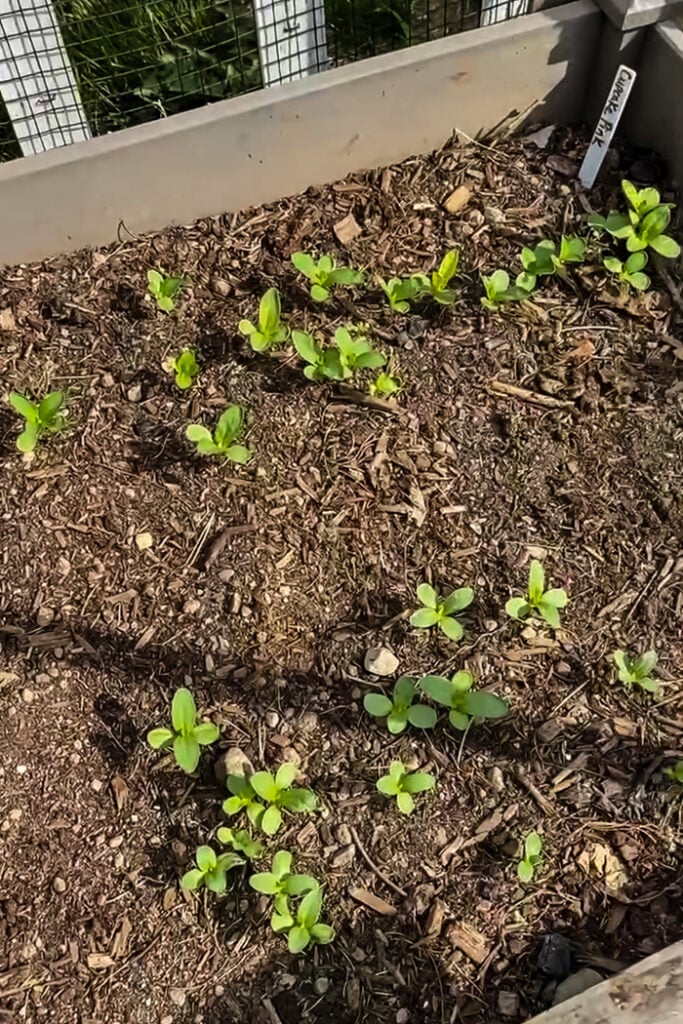
Zinnias are direct-sowing superstars! Their seeds sprout with impressive speed (often in just 5-7 days!). While you can start them indoors, I’ve learned through trial and error that these vibrant blooms prefer to stay put.
While indoor seed-starting is possible (especially in cold climates), zinnia transplants can be delicate and prone to transplant shock.
My Experience: Though I’ve tried both methods in my Zone 6a garden, direct-sown zinnias consistently outperform transplants with stronger stems & healthier plants.
Why Direct Sowing Wins
- Faster germination in warm soil
- No transplant shock (zinnias resent root disturbance!)
- Less fuss than indoor seed-starting
How to Plant Like a Pro
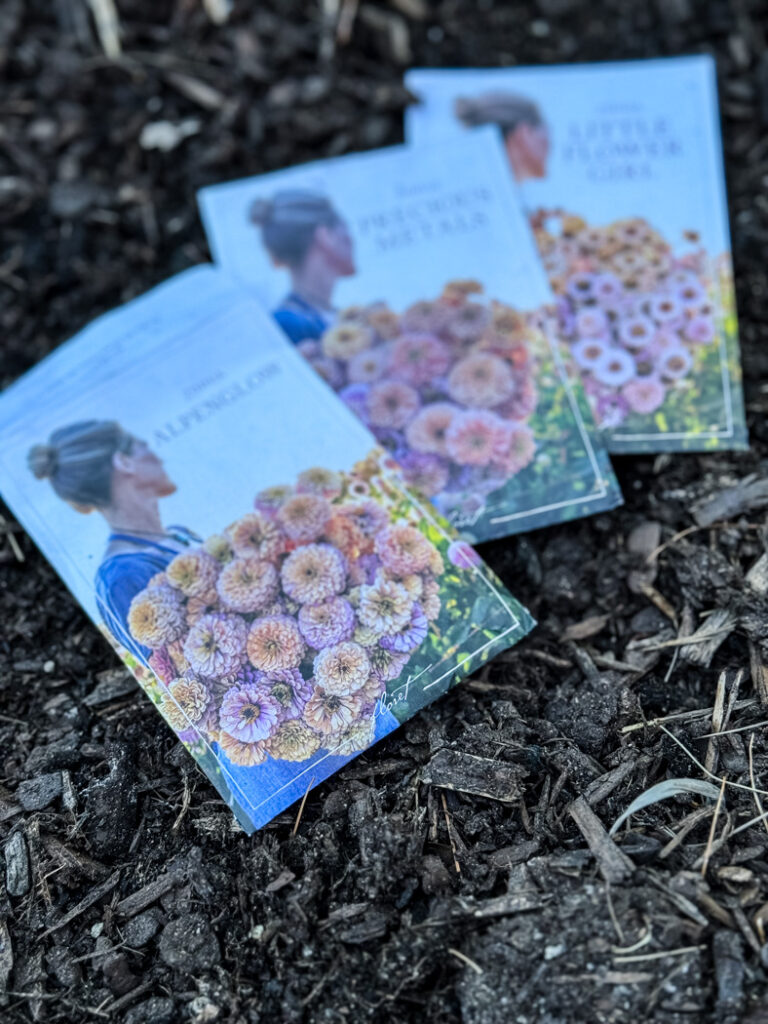
- Timing is Everything
- Wait until after the last frost (check your USDA zone)
- Soil should be warm to touch (~70°F) – I test mine with a kitchen thermometer!
- Perfect Planting Technique
- Sow seeds ¼ inch deep (I put a seed on my fingertip and poke it gently into the soil)
- Follow packet spacing (usually 6-8″ apart, depending on variety)
- Post-Planting Care
- Water gently with a mist nozzle to avoid displacing seeds
- Mark rows with plant markers
for your garden

Quick Tips
- Wait until after the last frost and the soil has warmed.
- Gently plant seeds about 1/4 inch deep.
- Follow the spacing recommendations on your seed packet for optimal growth.
Watering Zinnias: Finding the Perfect Balance

Zinnias may be drought-tolerant troopers, but they’ll reward you with more vibrant, long-lasting blooms with the right watering strategy. Here’s how I keep mine thriving through New England’s unpredictable summers:
Germination & Seedlings
- After planting seeds, I deeply soak the bed to ensure even moisture for germination
- Maintain damp (not soggy) soil until sprouts appear, usually 5-7 days
- My trick: I use a gentle mist nozzle or watering can to avoid disturbing seeds
Established Plants & Drought Times:
- Once rooted, zinnias often thrive on rainfall alone
- During last summer’s intense NH heatwave, when rain was scarce, I watered:
• 1-2x weekly focused at the base of plants (avoiding leaves to prevent mildew)
• Early morning for best absorption - Mulching helps to lock in moisture

Here’s the part I love telling new gardeners: if you follow these steps, you’re looking at first blooms in as little as 4–5 weeks in a hot summer. That’s it. In a season that flies by anyway, zinnias are one of the few flowers that actually keep up with your impatience.
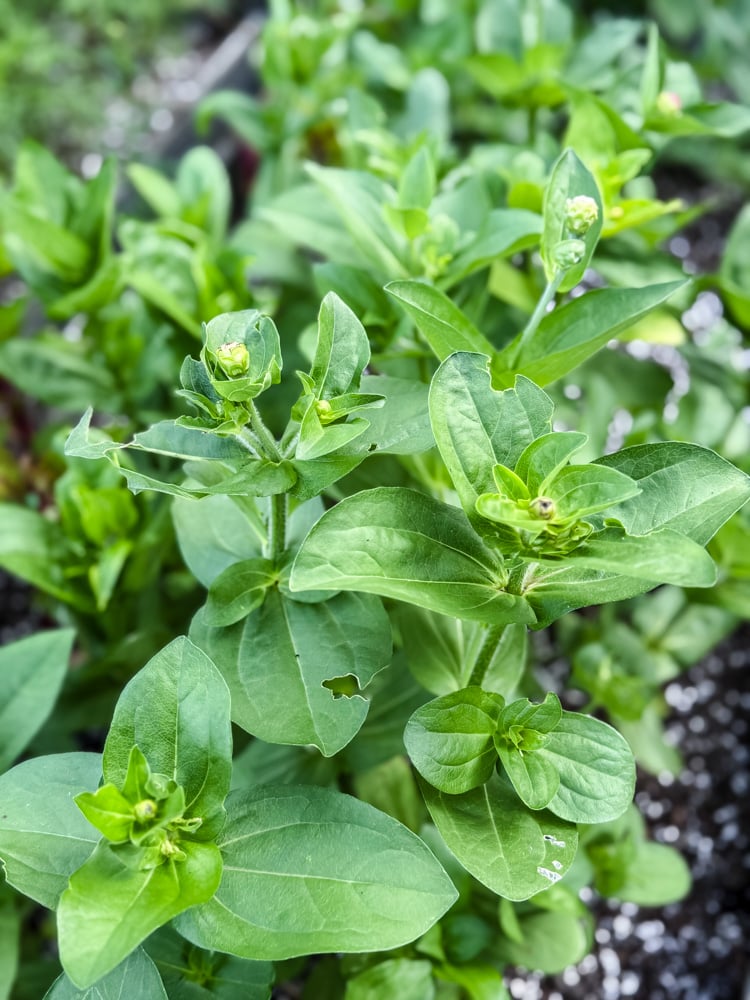
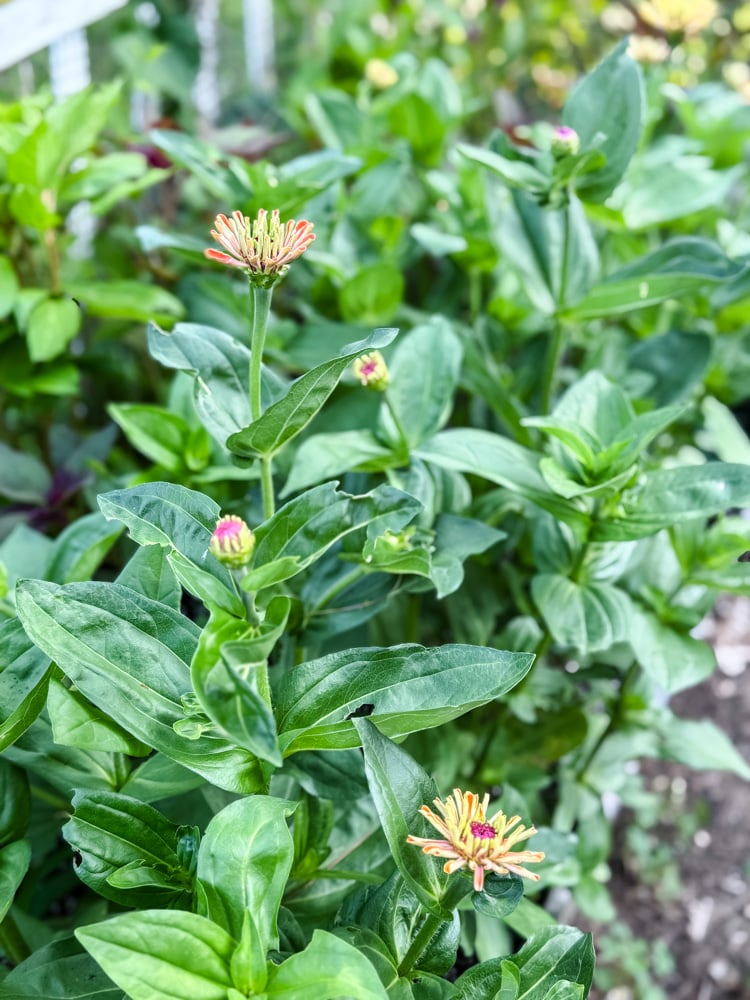
Pro Tip: Zinnias dislike “wet feet” but appreciate drinks during extreme heat. When in doubt, check soil 2 inches down—if it’s dry, it’s time to water!
Keeping Zinnias Healthy: Disease Prevention & Solutions
While zinnias are generally hearty, even these tough beauties can face a few fungal and bacterial challenges. Here’s how I protect my blooms naturally and keep problems under control.
Common Zinnia Diseases to Watch For:
Powdery Mildew:
- Looks like: White, powdery coating on leaves (common in humid weather)
- Prevention: Don’t overcrowd your zinnias, but by the end of the growing season, most of us will start to get powdery mildew.
Alternaria Blight & Bacterial Leaf Spot:
- Signs: Dark brown/black spots with yellow halos
- Prevention: Morning watering (so leaves dry by nightfall)
Botrytis Blight (Gray Mold):
- Triggers: Cool, wet conditions
- Defense: Remove faded flowers promptly

3 Proactive Steps That Work
- Give Them Room to Breathe
- Space plants 6-8″ apart (depending on variety)
- Why it matters: Airflow reduces humidity around leaves
- Water Like a Ninja
- Always water at the soil level (I use a long-spout hose nozzle)
- Bonus: Drip irrigation keeps foliage perfectly dry
- Clean Garden Hygiene
- Snip off infected leaves with sterilized pruners
- Dispose of diseased debris in trash (not compost!)
These preventive measures have helped me maintain healthy zinnia beds for years. If you do encounter disease, consider the following organic solutions:
- Neem oil (effective against multiple fungal issues)
- Copper fungicide (for bacterial problems)
latest video
The Secret to Bushier Zinnias? A Little Tough Love!
I’ll be honest, the first time I pinched my zinnias, I felt terrible about it. You’re snipping off the top of a perfectly healthy young plant, and it feels completely wrong. But trust me on this one: pinching is the single best thing you can do for your zinnia plants, and within two weeks you’ll see exactly why.
When your plants reach about 10–12 inches tall, take a clean pair of snips and cut the main stem just above a set of healthy leaves. That’s really all there is to it. What happens next is the good part! Instead of one main stem, the plant pushes out two or three new branches from that cut. More branches mean more flower stems, and more flower stems mean more bouquets all season long.
A couple of things I’ve learned along the way: disinfect your snips with rubbing alcohol first, and try to pinch in the morning on a dry day. Both help prevent any disease from getting into the fresh cut. It’ll delay your first bloom by a week or so, but the payoff is a fuller, sturdier plant that produces far more flowers than it ever would have on its own.
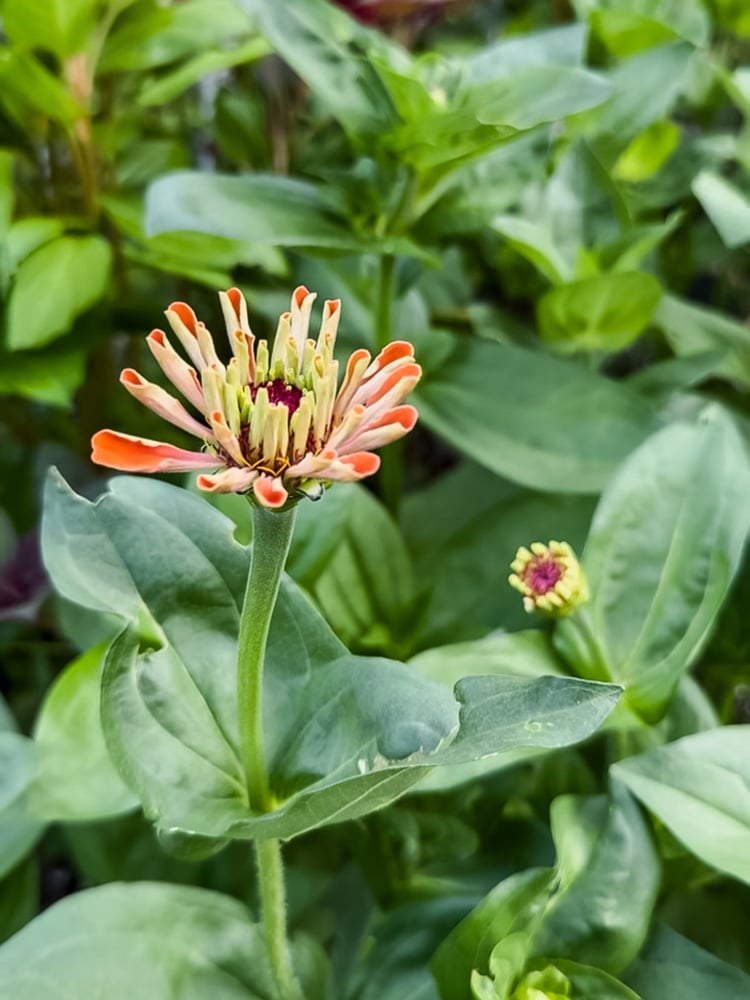
When to Pinch:
- Wait until plants reach 10-12 inches tall (about 4-6 sets of leaves)
- Ideal time: Morning on a dry day (helps prevent disease)
How to Pinch for Perfect Results:
- Grab sharp, clean snips (I disinfect mine with rubbing alcohol)
- Locate your cutting point – Find a spot just above a set of healthy leaves
- Make the cut – Snip the main stem cleanly (don’t crush it!)

Why This Works:
- Triggers branching – Forces 2-3 new stems to grow from each cut
- Delays flowering slightly – But you’ll get 3x the blooms later!
- Prevents floppiness – Creates sturdier, wind-resistant plants
Best Zinnia Varieties for Your Garden
I’ve tried a lot of zinnia varieties over the years. Some were instant favorites, some were one-season experiments, and a few surprised me completely. What I love about zinnias is how much variety there actually is within one flower: compact little button blooms and dinner-plate-sized giants, flat single petals and fluffy dahlia-like layers, classic brights and the most unusual dusty, muted tones you’ve ever seen in a garden.
In my cutting garden, I like to grow a mix of heights and colors together: shorter varieties up front, taller ones in the back, all tumbling into each other by August. It gives the beds that full, overgrown cottage garden look that I’m always chasing. These are the varieties I’ve actually grown and would plant again without hesitation.
01. Queeny Series
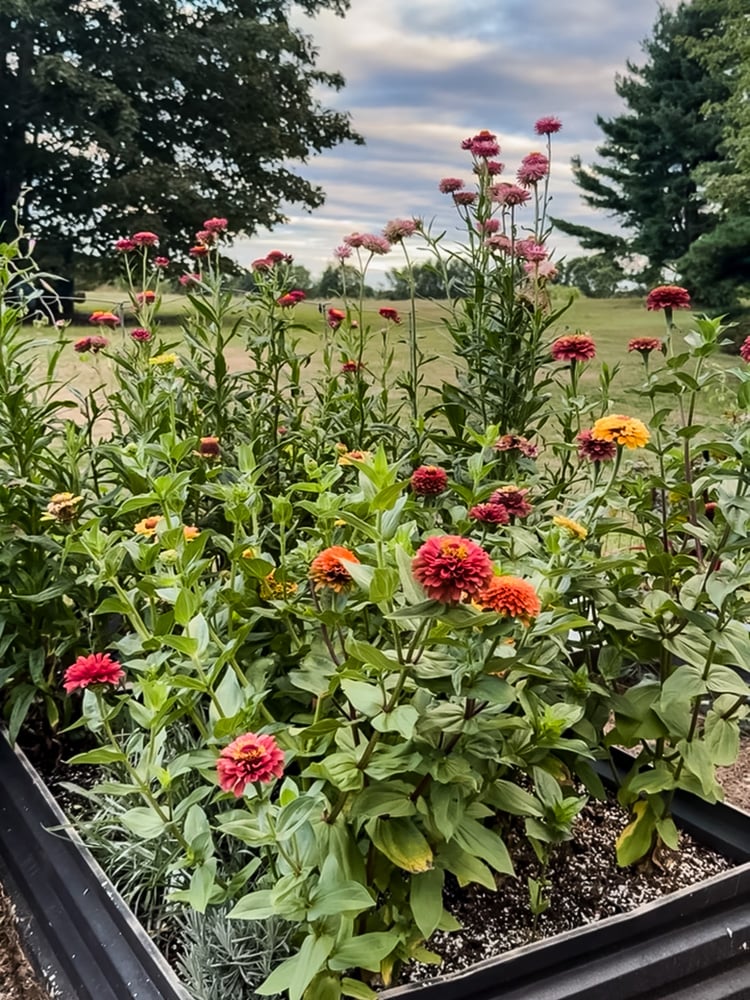
The Queen/Queeny series is one of my all-time favorites and a staple in my cutting garden. These are the zinnias that stop people in their tracks! The color palette is unlike anything else, all dusty roses, soft limes, warm blush, and peachy coral tones that look completely different from your typical zinnia brights.


I’ve grown Queen ‘Orange Lime’, Queeny ‘Lime w Blush’, and Queen ‘Red Lime’ as individual varieties, and last summer I planted the Queeny Mix, which gives you the full range of the series all in one packet. Honestly? The mix is the way to go. You get that beautiful variation of tones all growing together, and they look incredible both in the garden and in a vase.
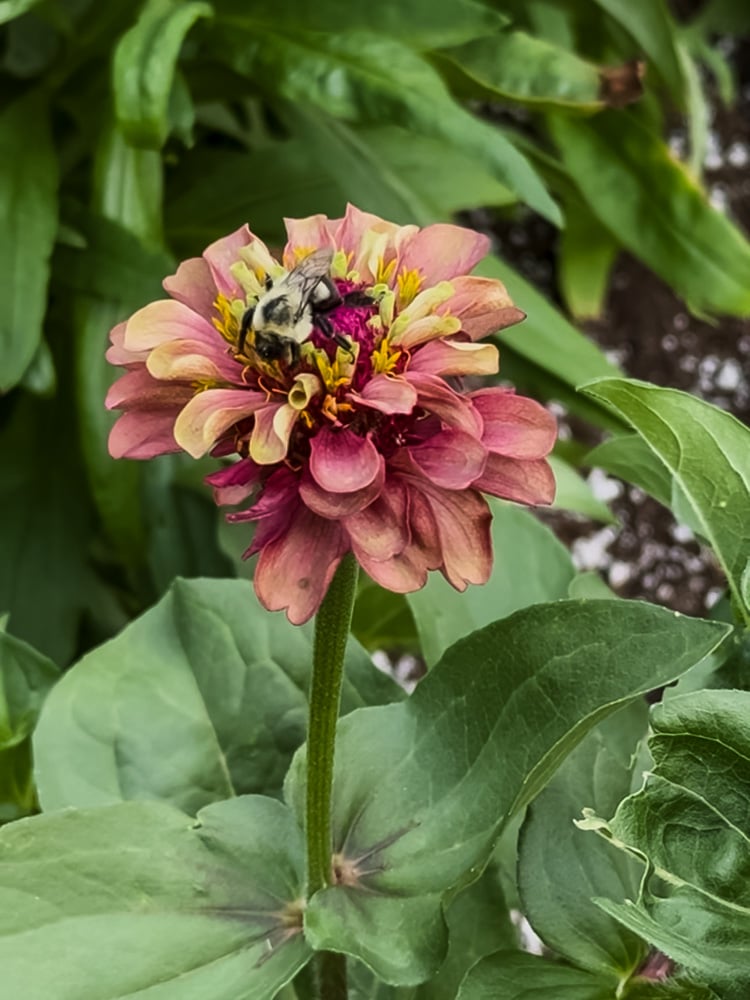
Find the Queeny Mix at Johnny’s Seeds
02. Aurora
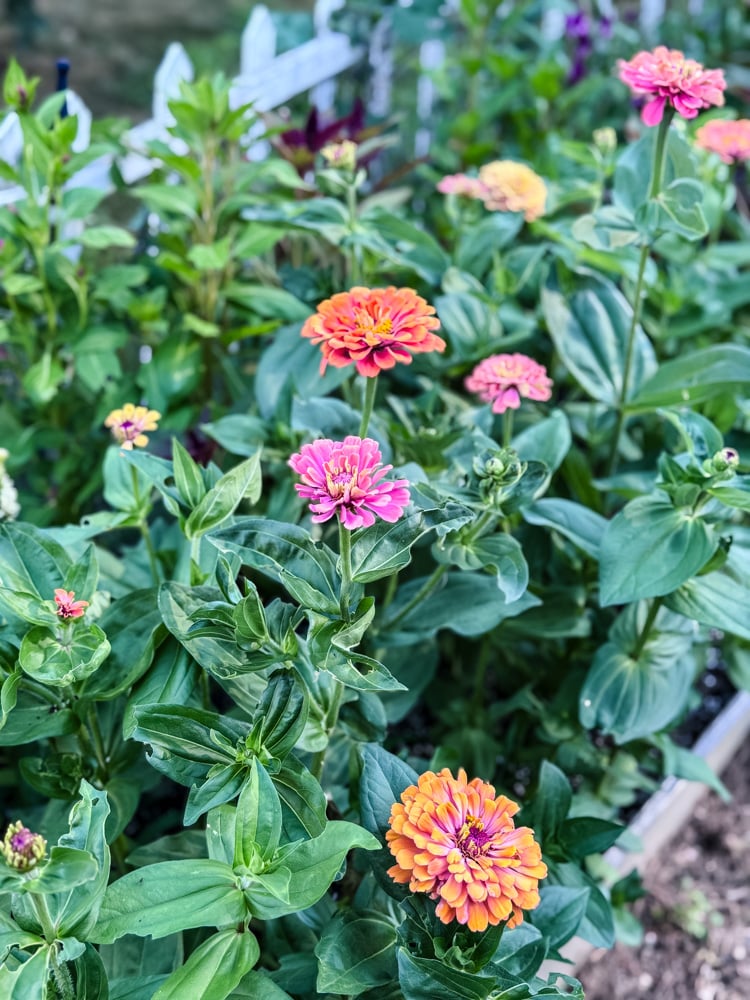
I have grown a lot of zinnias over the years, and Aurora has claimed the top spot. I was not prepared for how beautiful these blooms would be and what really got me was how different each flower looked from the next. The color palette is warm and vintage: apricot, coral, butter yellow, gold, soft orange, and pink, all swirled together in large 4–6 inch dahlia-shaped double blooms with contrasting centers. No two flowers looked exactly alike, which made every single stem feel like its own little discovery.
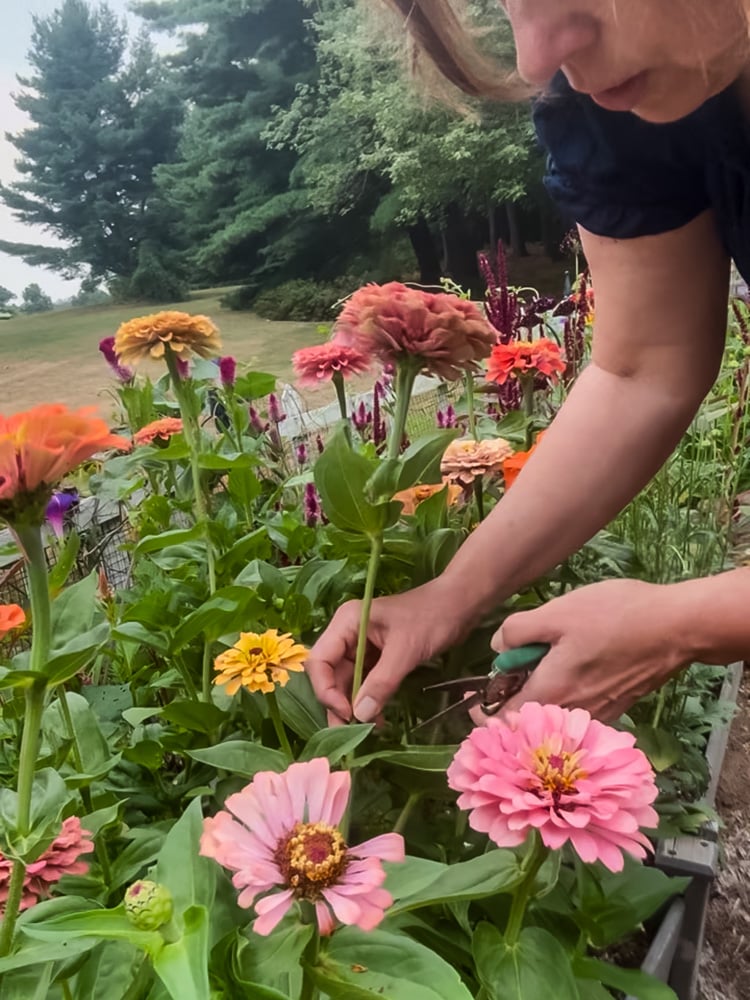
It’s early flowering, incredibly prolific, and the stems are long and sturdy, which makes it the perfect cutting flower and long-lasting in my vases. If you only try one new zinnia variety this season, let it be this one. I can’t recommend it enough.
03. Isabellina

If your zinnia bed is anything like mine, it can get a little intense lots of hot pinks, bold oranges, and saturated reds all competing for attention. That’s exactly why Isabellina earns its spot every year. That soft, buttery yellow is a breath of fresh air in the middle of all that color, and it’s one of those flowers that makes everything around it look better.
In a vase, Isabellina is the peacemaker. I love pairing it with the deeper, more saturated zinnia: the carmine reds, the bright pinks, and it softens the whole arrangement without disappearing into it. It’s also just a lovely garden flower on its own, especially in the late afternoon light when that pale yellow almost glows.
Seeds available at Select Seeds
04. Benary’s Giant Lime

Don’t let the name fool you, Benary’s Giant Lime isn’t really lime green; it’s more of a bright chartreuse yellow with warm undertones, and it is one of the most eye-catching flowers in my cutting garden. The blooms are enormous, easily 3–4 inches across, on strong, tall stems that are perfect for cutting.
What makes Benary’s Giant Lime so valuable in the garden is how it plays with color. Plant it next to hot pinks, bold oranges, and deep carmines, and it makes everything pop. It’s the same principle as Isabellina, but with more intensity, where Isabellina softens an arrangement, Benary’s Giant Lime electrifies it. In a mixed zinnia bouquet, it’s always the stem that people notice first.
The Benary’s Giant series, in general, is one of the most reliable cutting zinnia series you can grow: large blooms, long stems, and incredibly prolific. The Lime is the funnest one!
Seeds available at Select Seeds
05. Benary’s Giant Salmon

I have a lot of zinnia favorites, and Benary’s ‘Giant Salmon’ is right up there on the list. I took an embarrassing number of photos of these last summer, and I’m not even slightly sorry about it.
What makes this variety so special is the way the color moves through the petals. It’s not a flat, uniform salmon — it’s layered, with deeper rose tones at the base fading out to softer, peachy blush at the tips. Each bloom looks slightly different from the next, and in certain light, they’re almost luminous. The flowers are large, the stems are long and sturdy, and they look absolutely stunning in a vase with the Benary’s Giant Lime or paired with deep burgundy blooms for contrast.

If you’re someone who gravitates toward the softer, more romantic end of the color spectrum, this one is a must. It’s been in my garden every year since I first grew it, and that’s not changing anytime soon.
Seeds available at Select Seeds
06. Benary’s Giant Carmine Rose

If your garden needs a jolt of pure, unapologetic color, Benary’s Giant Carmine is your flower. Carmine is a deep, vivid reddish-pink, not a true red, not a hot pink, but somewhere gloriously in between, and on a large 3–4 inch bloom with those sturdy Benary’s Giant stems, it is impossible to ignore.
In the garden, it’s a showstopper, full stop. It holds its color beautifully all season without fading, and in a vase, it anchors a mixed arrangement in the best possible way. I love it paired with Isabellina or Benary’s Giant Lime for maximum contrast. That deep carmine next to a soft yellow is one of my favorite color combinations in the cutting garden.
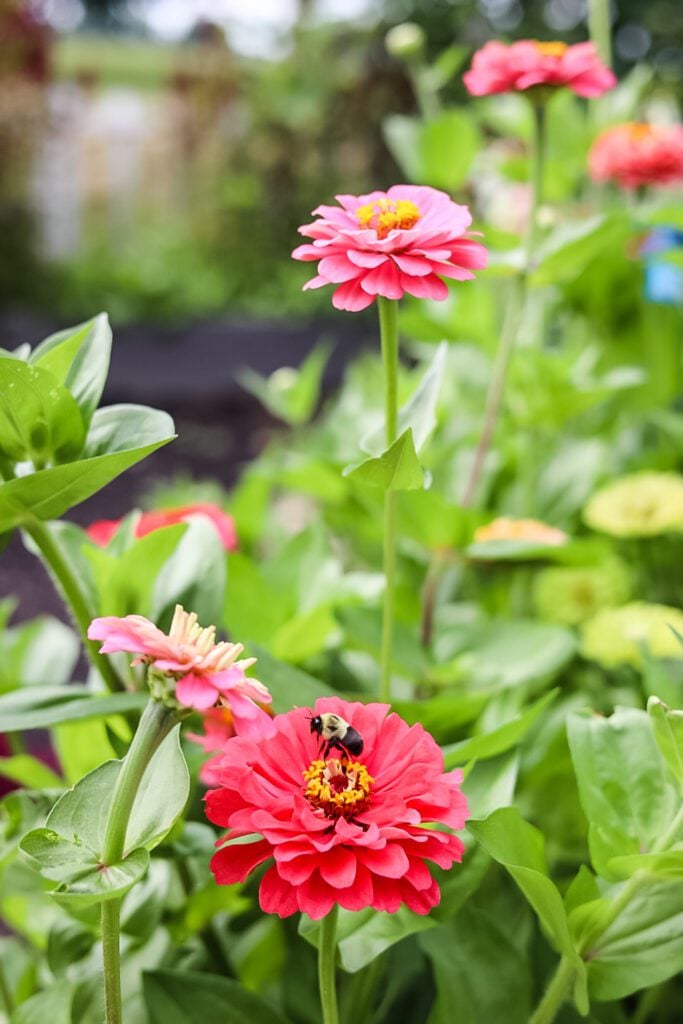
If you’re building a zinnia bed and want one variety that will make people stop and stare, this is it.
Seeds available at Select Seeds and Johnny’s Seeds
07. Benary’s Giant Bright Pink

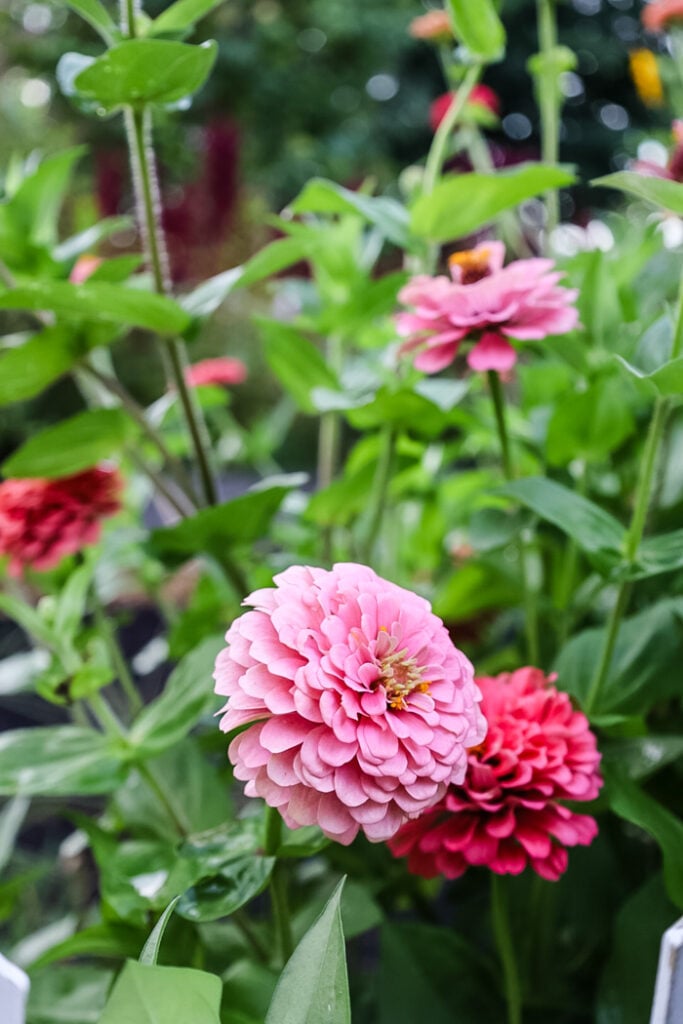
Sometimes a flower doesn’t need to be unusual or unexpected to earn its place in the garden; sometimes it just needs to be exactly what it is, and be it perfectly. Benary’s Giant Bright Pink is that flower. It’s a classic, fully double zinnia in a clean, true bright pink no muddy tones, no dusty undertones, just a bold, saturated pink that looks incredible from across the garden.
The blooms are large and full with layer after layer of petals, which makes them one of the best zinnias for bouquets. A stem of Benary’s Giant Bright Pink in a vase with Isabellina, Ballerina, and Benary’s Giant Lime is honestly one of my favorite summer arrangements. The pink anchors everything and makes the softer tones around it sing.
It’s also one of the most reliable performers in the Benary’s Giant series: prolific, sturdy stems, and it just keeps going all season. A classic for a reason.
Seeds available at Johnny’s Seeds
08. Bernary’s Giant Scarlet
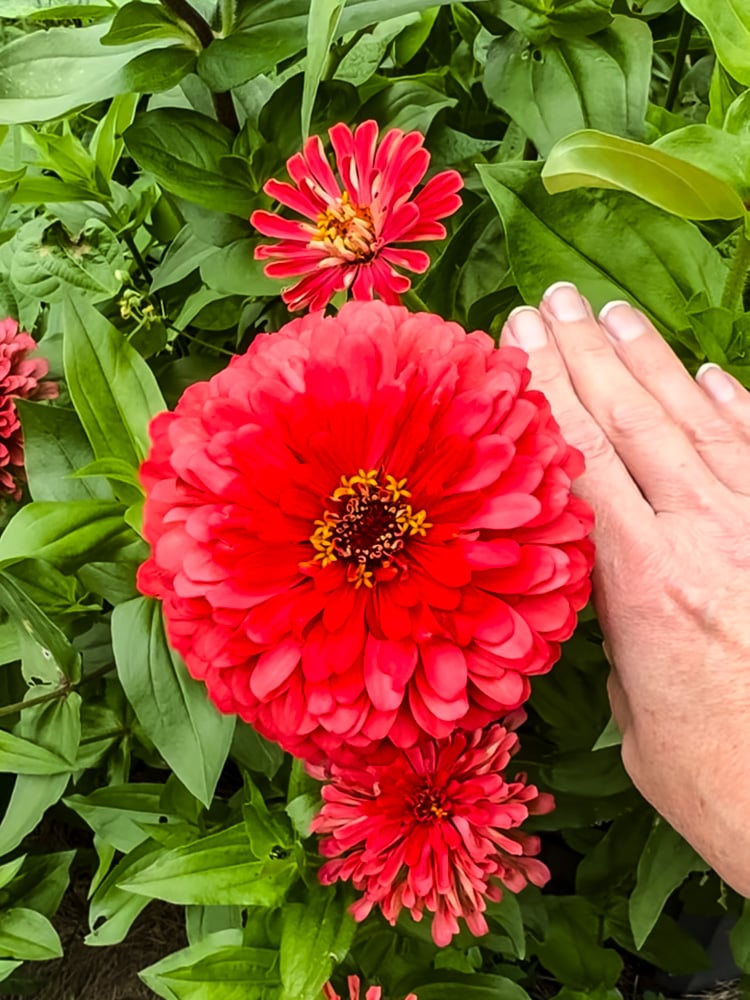
Benary’s Giant Scarlet is the bright, cheerful anchor that every zinnia bed needs. The color is a rich red that adds real depth and drama to both the garden and the vase.
What I love most about this variety is how versatile it is as a cut flower. Pair it with Benary’s Giant Bright Pink, and the combination is romantic and lush. Put it next to Benary’s Giant Lime or Isabellina, and the contrast is stunning. That deep red against a soft buttery yellow is one of those color pairings that just works every single time. It’s also a beautiful companion to the softer tones of Ballerina and Aurora, where it adds just enough drama without overwhelming the arrangement.
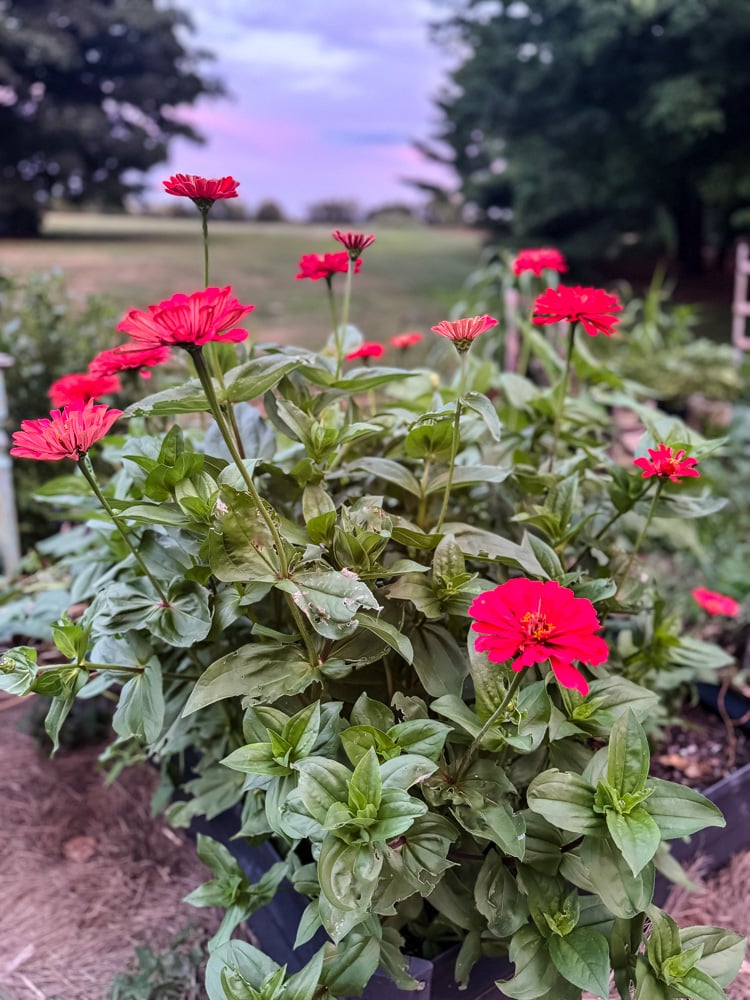
Like all the Benary’s Giants, the stems are long and sturdy, and the plants are incredibly prolific. If you’re building a cutting garden with bouquets in mind, this is one of those varieties that makes everything else in the vase look better.
Seeds available at Johnny’s Seeds
09. Agave
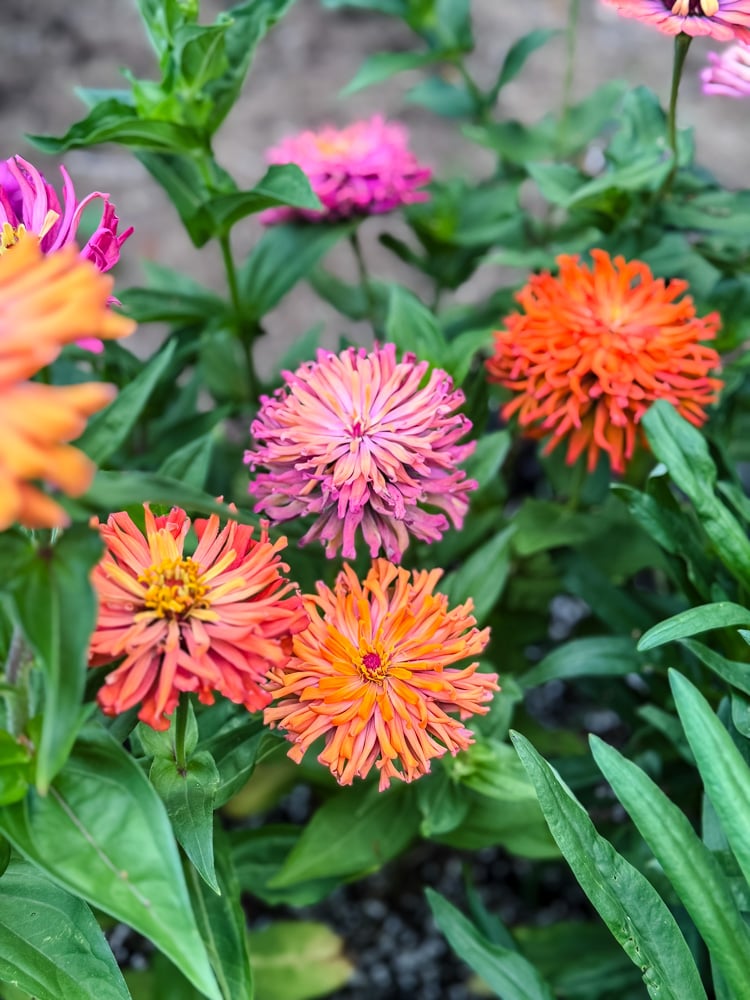
Agave is not like any zinnia I had grown before, and that is exactly why I loved it. This is a cactus-flowered variety, which means instead of the smooth, layered petals you’d expect from a zinnia, the petals are heavily quilled and spiky, almost architectural. Paired with the color palette (a cohesive blend of muted buff, coral, gold, peach, pink, and orange in large 4–6 inch blooms), the overall effect is something that looks like it belongs in a Dr. Seuss garden. Unusual, a little wild, and completely captivating.
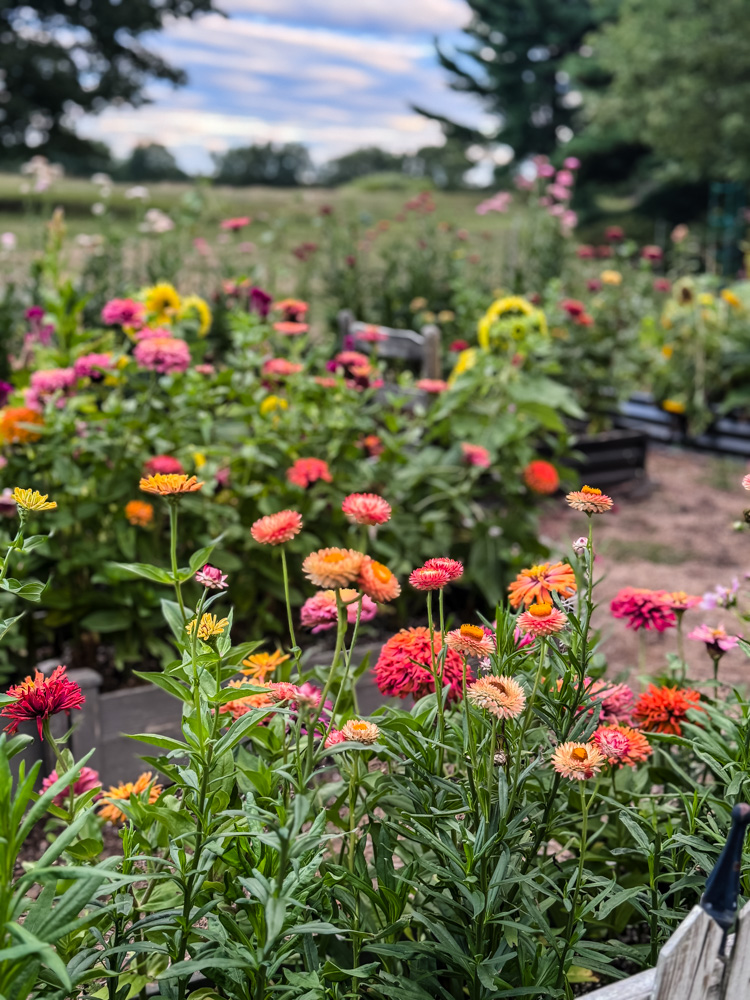
In the garden, it was a real conversation starter, and in a vase alongside Aurora and Ballerina, the spiky texture added incredible visual interest. If you love flowers that make people stop and ask, “What is that?”, grow Agave.
Find Agave zinnia seeds at Johnny’s Seeds
10. Jazzy Mix Zinnia

The Jazzy Mix is the odd one out in my zinnia lineup, and I mean that in the best possible way. While everything else in my cutting garden is reaching for 3–4 feet with dinner-plate blooms, Jazzy is doing its own compact, abundant thing right at the front of the border, and it’s absolutely covered in flowers all season long.
This is a Mexican zinnia (Zinnia haageana) rather than the common zinnia (Zinnia elegans) that most of the other varieties on this list belong to. The difference shows: the plants stay under 18 inches tall, the flower heads are small and button-like at about an inch wide, and the overall look is more wildflower than cutting garden showpiece. But what Jazzy lacks in size, it more than makes up for in sheer quantity. These plants are relentlessly prolific, and the pollinators absolutely swarm them all summer.
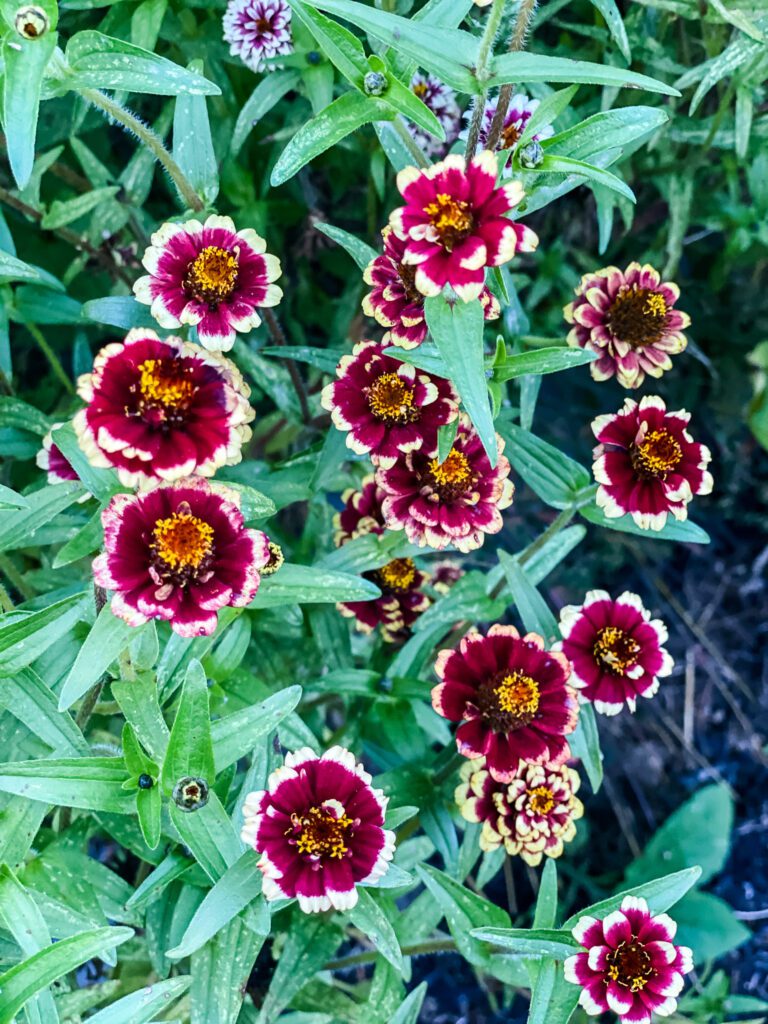
They’re not your best cut flower option given the shorter stems, but as a border plant or front-of-bed filler, they’re hard to beat. And honestly, having something at a different scale breaks up the visual monotony of a bed full of giant blooms in the best possible way.
Find Jazzy zinnia seeds at Johnny’s Seeds
11. Ballerina-The One That Looks Like A Dahlia
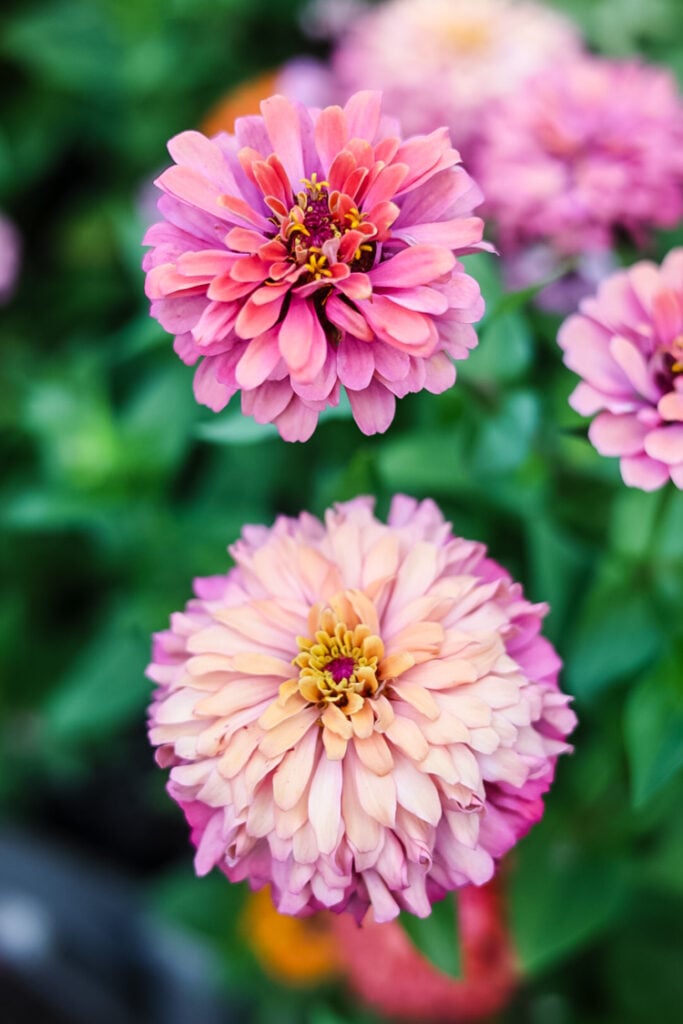
Ballerina was a pleasant surprise, and the name suits it perfectly. The blooms are soft pink and pale peach, large at 4–6 inches, and they have that full, layered dahlia-and-cactus-type form that looks so luxurious in a bouquet. Where Aurora gives you warm vintage tones, and Agave gives you drama, Ballerina brings the romance.
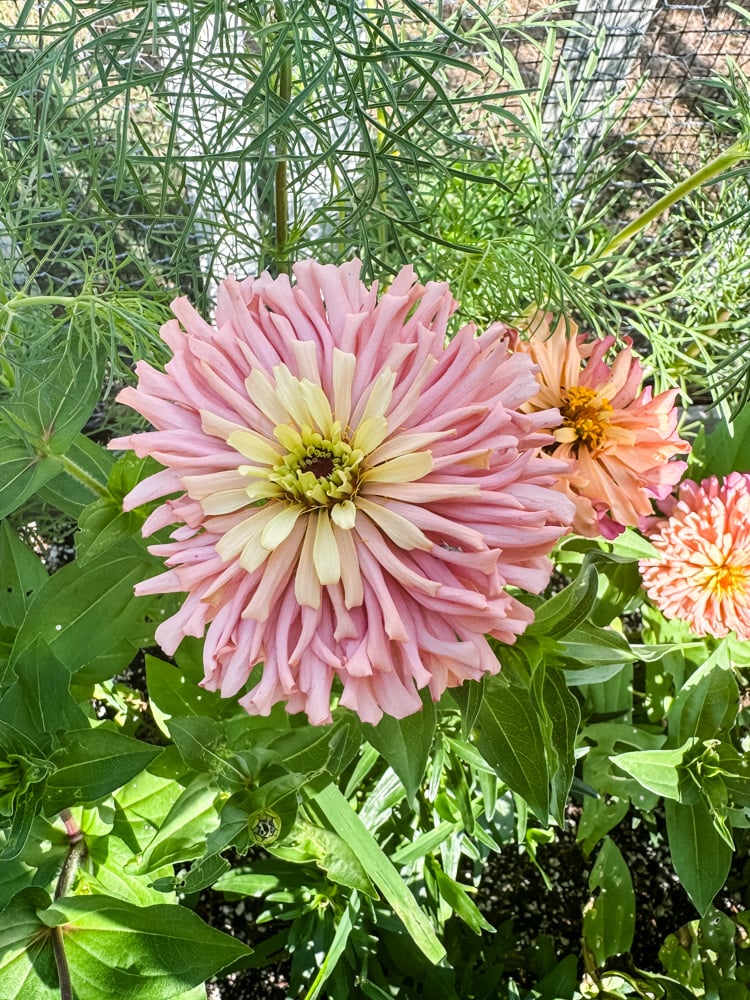
The blooms are consistently beautiful, with a high percentage of doubles. Grown together in a vase, Aurora, Agave, and Ballerina complement each other perfectly: warm tones, unusual texture, and soft pastels all playing off each other. I’ll be growing all three again without question.
Find Ballerina zinnia seeds at Johnny’s Seeds
12. Mazurkia
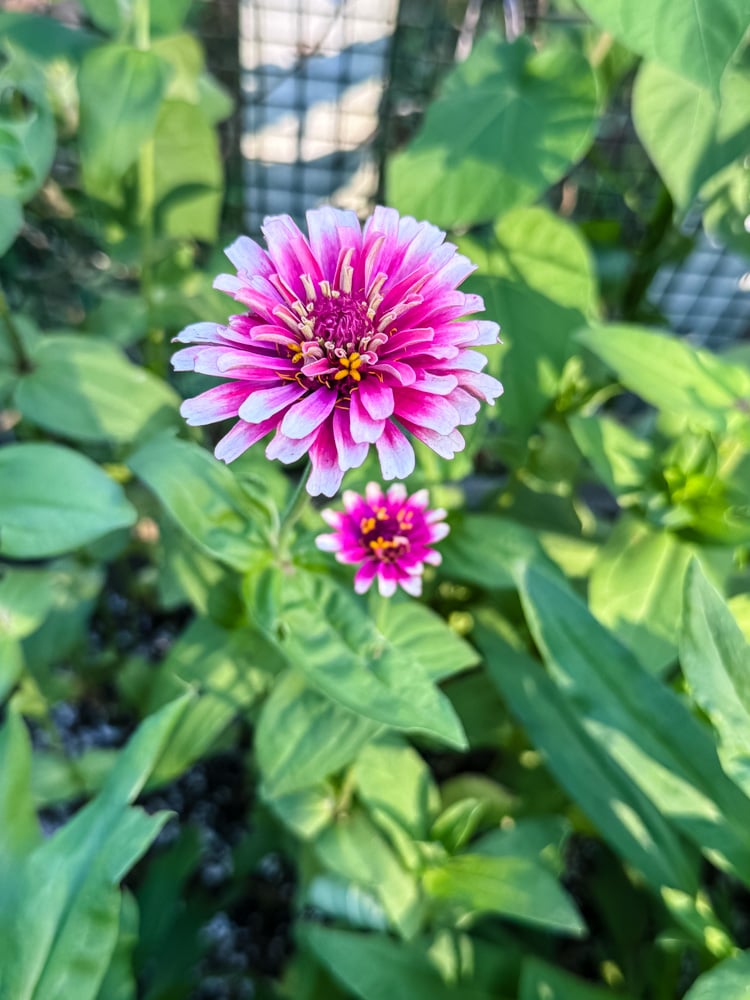
Mazurkia is one of those varieties that has been in my cutting garden since the very beginning, and it earns its spot back every single year. The blooms are unlike anything else on this list: a true cherry red with beautiful cream and white variegation running through the petals, giving each flower an almost vintage, two-toned look that stands out in both the garden and the vase.
It’s not a giant the blooms are smaller than the Benary’s Giants, and the stems are a bit more delicate, but at 3–4 feet tall, it holds its own in the cutting garden. I reach for it when I want something with a little more refinement in an arrangement those cherry and cream tones pair beautifully with the deeper burgundy of Benary’s Giant Wine or the soft peachy tones of Aurora.
If you love flowers with a cottage garden, old-fashioned feel, Mazurkia is absolutely worth adding to your zinnia lineup.
Find Mazurkia seeds at Select Seeds
Beginner-Friendly Zinnias
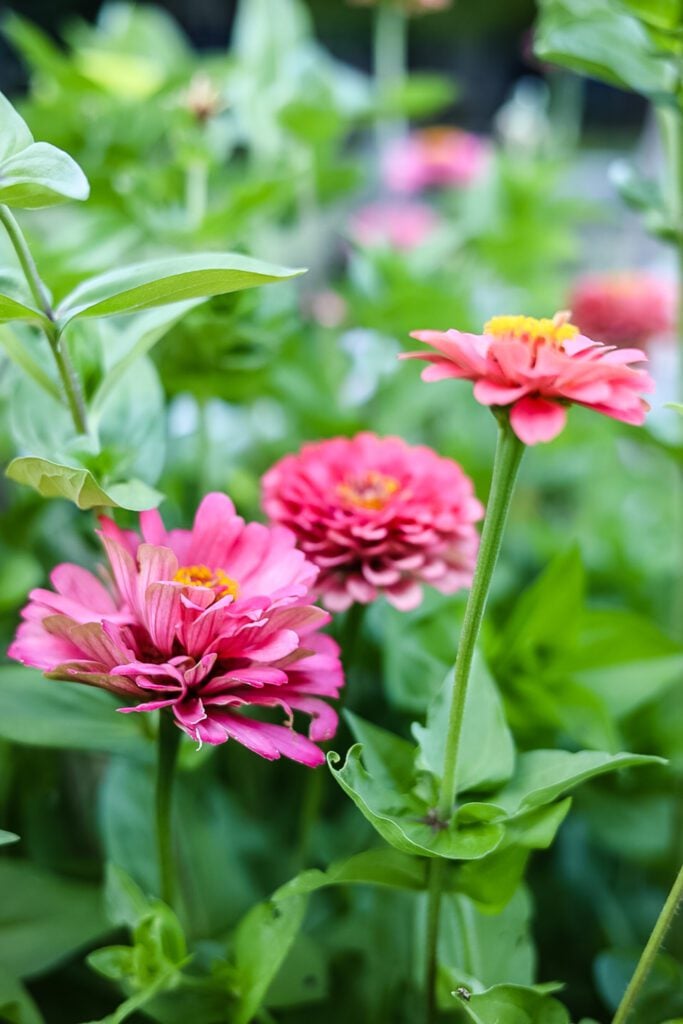
Benary’s Giant
Why? Huge, dahlia-like blooms (3-4″) on sturdy 3-4’ stems
Bonus: Excellent cut flower, comes in vibrant hues like coral and lime green
Queeny (Series)
Why? Romantic, soft-colored blooms (dusty pinks, limes) with great mildew resistance
Zinderella (Series)
Why? The fuzzy dome in the center makes this a fun & interesting zinnia to grow
Oklahoma (Series)
Why? Drought-tolerant with cute, button-like blooms on strong stems
Zahara (Series)
Why? Disease-resistant and long-blooming in bold colors like ‘’Raspberry Ripple”
Thumbelina
Why? Charming dwarf variety (6-8″) ideal for pots and kids’ gardens
State Fair
Why? Classic giant zinnia (4-5″ blooms) that’s incredibly easy from seed
Persian Carpet
Why? Bi-color, cottage-style blooms that attract pollinators like crazy
My Favorite Places Online For Zinnias: Johnny’s & Select Seeds
Want More Zinnia Blooms? Snip & Enjoy!

Here’s a win-win garden tip: cutting your zinnias for bouquets actually makes them bloom more! Instead of just deadheading spent flowers, grab your shears and:
- Cut stems at a 45° angle just above a leaf node
- Take long stems (8-12″) for arrangements
- Remove all foliage that would sit below water
Why this works:
Now you get double the pleasure – a fuller garden and fresh bouquets all season!
Pro Tip: Cut in the morning when stems are hydrated, and change vase water every 2 days for longer-lasting blooms.
Questions? I have answers!
Zinnias: The Gateway to Gardening Joy
Zinnias have been in my cutting garden every single summer for years, and I don’t see that changing anytime soon. They’re so easy to direct sow, the last flowers standing before frost, and the ones that fill more vases on my kitchen table than anything else I grow. Every season, I try a few new varieties, and every season they surprise me all over again. This year, it was Aurora that stopped me in my tracks, but next year it’ll be something else entirely. That’s the thing about zinnias. There’s always another variety worth trying.
If you’re new to cutting gardens, start here. If you’ve been growing zinnias for years, I hope something on this list gives you a new favorite to add to your lineup this season. Either way, grab some seeds, get them in warm soil, and prepare to spend the rest of your summer cutting armloads of blooms and wondering why you didn’t plant more.
See your garden featured! If you are inspired by this or any of my other DIY projects, I would love to see them and add you to the Reader’s Spotlight gallery. Send a photo to me at jennifer@cottageonbunkerhill.com
xo, Jennifer
How to Grow Zinnias
•Zinnias are warm-season annuals that thrive in full sun and well-drained soil. •Direct sow seeds outdoors after your last frost date, once soil reaches at least 70°F.
•Plant seeds ¼ inch deep, 6-8 inches apart depending on variety.
•Water at the base (not overhead),
•Pinch plants at 10–12 inches for bushier growth, and cut stems regularly to keep blooms coming.
•In Zone 6a New England, late May to early June is the ideal planting window.

If you want to start a cut flower garden but are not sure where to start, then check out How to Start a Cutting Garden to see how I turned this patch of grass into this beautiful space! Can you believe this is only the second season of this garden?
More Gardening Articles:
Cottage Garden
Favorite Products
Shop my gardening favorites! Raised beds, plant supports, & tools to make your garden grow.





Hi Jennifer, I save my zinnia seeds every year. Not sure about some of your varieties but mine come back true in the Lime series. That being said, I usually pick up a couple new varieties every spring. Can’t resist. Marigolds and Cosmos are easy to save also. Happy gardening
I saved some of my Floret zinnia seeds last year (because they were so expensive in the first place!) and I only have a few open but they look true to what they were. But I found out this year that Bells of Ireland self seed (some of the stems went to seed last Fall) and make it through the cold winter here! I have half a bed filled with them!
Great blog on zinnias! I’ve been growing them for 20+ years – using seeds collected from the previous year. I pinch off flower heads, pull petals off & dry them on a screen. Stored in a coffee can in basement, they do not get moldy. At planting time (late May) I just grab handfuls of seeds and spread them on the soil, pat gently in the ground & cover with a thin layer of soil. I have every variety & color imaginable – there can be 3 or more different colors growing on the same stalk! These are the perfect flowers for butterflies, bees & other pollenators.
I saved a bunch of my favorite flower heads last season, I bought a few of the Floret zinnia seeds that they developed–they were so $$ that I had to save some!! I would love to see your pretty zinnias, you have to send me a picture! Yes, they are such a great pollinator, the monarchs just love visiting.
Love those zinnias beautiful colors
They really are such joyful flowers!
I love growing zinnias and yours are so beautiful Jennifer. I’d love to feature this post on my Saltwater Sounds blog post this Sunday.
I swear I’m going to double the zinnia space next year because they are just so fun!
Your zinnias are so pretty! I love the lime orange colored ones, too! I definitely need some of that color for next year. Big Al wants to save the seeds from the one you sent me, get some more, and “fill the garden with them” next summer. 🙂